Behind the Scenes of Auction Operations — Editorial Insights into the Process from Listing to Bidding and Pricing Structure
Consignment, Appraisal, Catalog Creation, Pre-Auction Viewing, Main Auction, Settlement — Deconstructing the Standard Processes of the Numismatic Auction Industry and How Market Prices are Formed
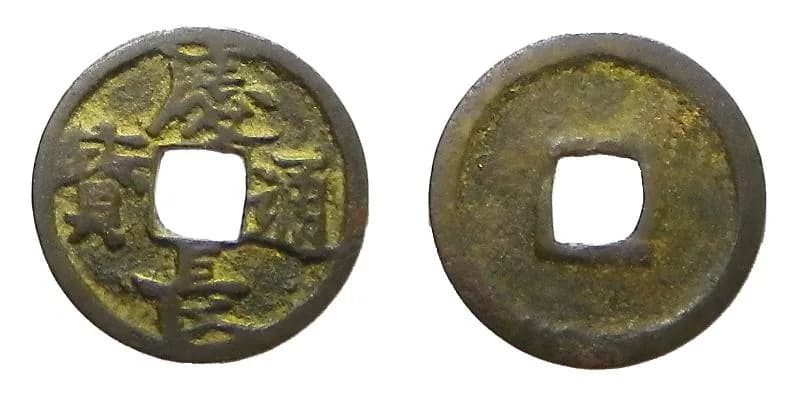
Numismatic auctions involve multiple steps from the reception of consignments to bidding and settlement. Editorial insights reveal decision-making in catalog production, authenticity verification in pre-auction viewings, differences in bidding methods, and the structure of buyer's premiums — explaining the standard processes of the industry and the mechanisms of market price formation.
The Six Stages from Consignment to Main Auction — The Industry's Standard Flow
The operation of numismatic auctions generally consists of the following six stages in the industry.
The first stage is "Consignment Reception." This is where sellers bring their coins to an auction house and express their intent to sell. In large auction houses, accepting consignments for each auction can involve several hundred to a thousand lots, starting 6 to 12 months before the event. For consignors, it is crucial to confirm the presence or absence of listing fees, the commission rate upon sale (usually 10-15% for sellers, 10-20% for buyers), and preliminary estimates of the selling price.
The second stage is "Appraisal." Here, the auction house's specialist staff meticulously evaluates each lot to determine authenticity, condition, and the estimated selling price (estimated price). In Japanese numismatics, specialists like Ginza Coin, Taisei Coins, and Japan Coin Auction have their own appraisal criteria. Slabbed specimens by NGC or PCGS skip detailed appraisals, facilitating smooth estimated price settings.
The third stage is "Catalog Creation." This involves creating paper or PDF catalogs listing the lots. Each lot is given a sequential number (lot number), name, age, condition, estimated price (start to upper limit), and photograph. Catalogs for large auctions can extend to several hundred pages, incurring printing, photography, and editing costs amounting to several million yen.
The fourth stage is "Pre-Auction Viewing." A period shortly before the main auction allows potential bidders to physically inspect the items. This is a critical opportunity for bidders to confirm the surface condition, color, and any fine scratches that might not be visible in photographs. Discovering discrepancies at the viewing may lead to a decision to refrain from bidding on certain lots at the auction.
The fifth stage is the "Main Auction." Traditionally conducted as an ascending bid (English auction), in recent years, paper bidding (written maximum bid submission), phone bidding (instructions by phone during the auction), and online bidding (live stream bidding) are often combined. Generally, the highest bid from all forms is consolidated to determine the winner.
The sixth stage is "Bidding, Settlement, and Delivery." Once confirmed, the bidder pays the hammer price plus the buyer's premium (generally 10-20%) and consumption tax. Settlement is typically due within two weeks, with additional customs and import/export procedures required for overseas shipping.
How Estimated Prices are Determined — The Auction House's Decision-Making Process
In auctions, the "estimated price" is presented as a range of "low estimate" and "high estimate." For example, if a range of "1,000,000 to 1,500,000 yen" is given, the low is 1,000,000 yen, and the high is 1,500,000 yen. If a lot is unsold below the low, it will remain unsold, and if it significantly exceeds the high, it makes headlines in industry papers as a "remarkable high price."
How are these estimated prices determined? Based on the editorial team's compilation of industry insights, the following four factors work in combination.
First is "Past Auction Data." The past selling prices of coins of the same type and condition serve as a benchmark. Major operators like Japan Coin Auction, Ginza Coin, and Taisei Coins retain past auction data spanning 20 to 30 years, forming the basis for calculating estimates.
Second is "Rarity." Minting numbers, existing quantities, and grading company Pop Reports (statistics on authenticated specimens from NGC or PCGS) are referenced. For a rare grade with only 10 MS65s confirmed on the Pop Report versus a grade with 500 confirmed, the estimated price can differ by several times.
Third is "Market Sentiment." Recent bidding trends over 6 to 12 months in the same category, currency effects (a weaker yen encourages overseas collectors' entry and pushes the market upwards), and gold market trends (increased bullion value raises the floor price of Edo era coinage) are considered. During periods of yen weakness from 2024 to 2025, notable increases were seen in auction prices for Japanese numismatics overseas.
Fourth is "Story." Even among the same Keicho Koban, factors such as whether it was part of a renowned collector's collection, past auction history in famous sales, or being exceptionally well-preserved in a unique case can elevate the estimated price by 1.5 to 2 times. This factor, known as "provenance," is highly regarded in the contemporary high-value numismatics market.
Bidding Tips and Cautions — Beginner's Guide by the Editorial Team
Based on editorial investigations, here are key points for first-timers to auctions to consider.
First is "Budget Management." In addition to the hammer price, the buyer's premium (typically 10-20%) and consumption tax are added, making the actual payment 1.2 to 1.3 times the hammer price. If you decide "I can spend up to 1,000,000 yen," and the hammer price should be set around 800,000 yen.
Second is "Utilizing the Pre-Auction Viewing." Attending the viewing and examining the items in person is recommended. If attending is not possible due to distance, you can request additional photos (close-ups, edge photos, reverse side photos) from the auction house. Most houses have a system to respond to such pre-requests.
Third is "Checking the Pop Report." On NGC or PCGS official websites, check the number of authenticated specimens of the target grade or higher. Bidding on rare grades is worthwhile, while for grades with high circulation, waiting for the next auction might be a reasonable decision.
Fourth is "Currency Risk." When bidding in overseas auctions (such as Heritage Auctions or Stack's Bowers), bids are in US dollars, subjecting them to currency fluctuations. Significant movements in exchange rates from auction closure to settlement can alter the effective purchase price.
Fifth is "Storage and Insurance." After purchase, it's advisable to store items securely without removing them from slab cases. For high-value items, professional insurance is recommended. Bank safety deposit boxes, costing 10,000 to 30,000 yen annually, offer better climate control than home safes.
Generally, it's advised for newcomers to start with beginner lots priced at tens of thousands of yen, gaining experience gradually rather than aiming for high-value items in one go. Engaging in multiple auctions over time helps appreciate the market sentiment, aiding in long-term collector journeys.
The History and Market Structure of Japanese Numismatic Auctions — From Showa to the Present
The formal establishment of the domestic numismatic auction market in Japan occurred after the coin collecting boom of the 1960s (Showa 40s), with major operators regularizing events by the 1970s (Showa 50s). This marked a shift from antique markets and art dealers to specialized auctions for coins from the Edo to Meiji periods, laying the foundation of the current market.
Entering the Heisei era (1989-2019), coins like the Keicho Koban, Genroku Koban, and Kyoho Koban emerged as prominent high-valuation items, with top-lot cover features reaching several hundred million yen. Following adjustments post-b Bubble economy (after 1991), from the 2000s, the spread of grading companies saw increased participation from international collectors, leading to globalization of prices.
In the modern market, whether a participant possesses knowledge of coin grading creates an informational gap among auction attendees. Slabbed specimens by NGC or PCGS exclude the costs of appraisal, making them cost-effective at auction. Conversely, ungraded raw items (nama-hin) carry appraisal risks and are generally set at lower estimated prices than authenticated counterparts of the same quality.
Editorial investigation into the hosting records of the country's top three companies (Ginza Coin, Taisei Coins, Japan Coin Auction) shows a continuous increase in total annual sales into the 2020s. The weak yen has structurally favored international collector participation, especially for items like the Keicho Koban and domain-specific Tenpo Tsuho coins, placing them in an international price range where European and East Asian buyers compete. As we enter the Reiwa era, the Japanese numismatic auction market is steadily transitioning from a "domestic market" to a "global market involving Asia and Europe."
Conclusion
Behind the scenes of numismatic auctions lies a six-stage standard process encompassing consignment, appraisal, cataloging, viewing, main auction, and settlement, each backed by industry knowledge and experience. Estimated prices are calculated from four factors: past data, rarity, market sentiment, and provenance, with final prices determined by participant judgment within this range. For those new to auctions, attending preview viewings and starting with beginner lots are recommended by the editorial team. Understanding market structures transforms auctions from mere "speculation" into opportunities for encountering cultural assets.
Related Editorials
Dealers
Dealers Handling This Category
A reference when considering a sale or appraisal. All are dealers and auction houses with a proven track record.
Ginza Coins
Ginza, Chuo-ku, Tokyo
One of Japan's most established numismatic dealers. The scale and variety of their regular auctions is among the largest in the country. Their catalogs are considered a benchmark for market pricing.
Japan Coin Auction (JCA)
Tokyo
Holds regular auctions with reliable hammer price data, making it a useful resource for tracking market values. Caters to a wide range of collectors from beginners to advanced buyers.
Taisei Coins
Tokyo
A dealer with an international network. Offers advanced services such as consignment to overseas auctions and NGC/PCGS grading submission. Recommended for high-value or internationally recognized coins.