Interview with a Town Coin Shop Owner — Insights into Japan's Coin Culture Over 30 Years
Seiji Tanaka, who has run the specialist coin shop 'Senkado' in Ueno Ameyoko for 30 years, talks about market changes, the relationship between Japanese people and currency, and a message to beginners.
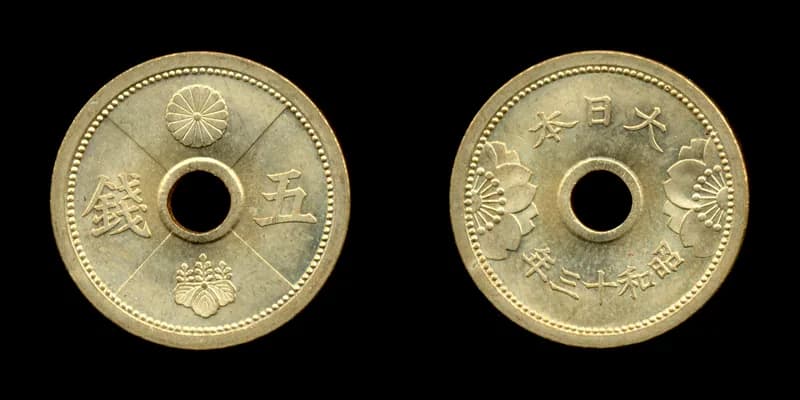
Seiji Tanaka, who has run a specialist coin shop in Ueno Ameyoko for over 30 years, discussed changes in the market, shifts in customer demographics, and the relationship between Japanese people and currency. His veteran testimony, having consistently observed from the bursting of the economic bubble to the rise of the digital generation in the 2020s, offers a multidimensional look at Japanese coin culture.
The Festival Coin That Changed His Life — The Beginning 30 Years Ago
Tanaka entered the world of coins in 1993, during the lingering scent of the bubble era in Tokyo. “The initial trigger was a Kan'ei Tsūhō coin given to me by my grandfather when I was in elementary school. The four characters '寛永通寳' on its surface felt like they carried a different kind of weight compared to today’s 100-yen coin. The shapes of the characters were subtly different on each coin. I couldn't stop being fascinated by that,” Tanaka recalls.
After graduating from university, he worked for a regular company, but spent weekends visiting the coin shops in Ameyoko, and at 28, he boldly decided to become independent. He invested most of his capital in sourcing Kan'ei Tsūhō coins and put up the sign for 'Senkado'. “I was worried about making a living at first. But in the world of coins, there’s a special feeling of conversing with history through a single coin, and that became my axis.”
In 1993, the market was still under the influence of the bubble-era boom. Top-quality Keichō gold coins commonly exceeded 10 million yen, and Tanaka recalls, “Back then, many customers were interested in coins for speculative purposes, talking more about prices than admiring the coins themselves. I couldn’t go along with that trend,” he says. However, his cautiousness later helped protect his business during the market crash.
Witnessing Market Tides — From Bubble Collapse to 30 Years of Deflation
From the late 1990s through the 2000s, the coin market went through a significant downturn. “Customers who had bought during the bubble came to sell. There was a period when people wanted to sell even at less than half the value. Around 2000, the market was really quiet,” says Tanaka.
During this quiet period, Tanaka noticed the existence of “genuine collectors” unaffected by price fluctuations. “Even when the economy was bad, regulars would add a few antique coins to their collection each month. They didn’t go for high-priced items but spent years collecting variations in scripts and mint marks of Kan'ei Tsūhō. Those customers supported me through that time.”
The market began recovering in the 2010s. The rise in gold prices increased the bullion value of Edo-period gold coins like Keichō Koban, and the enhancement of Japanese coin sessions by Western auction houses led to foreign demand. “After 2015, the atmosphere clearly changed. More overseas resellers seemed to come, buying without looking at the price. This became especially noticeable after the yen's depreciation in 2022.”
However, Tanaka doesn’t fully welcome this price rise. “When prices go up, fakes also increase. If you look at the Fake Alert Database, you'll see recent counterfeits are getting more sophisticated, particularly those targeting Edo-period gold coins.” From his 30-year experience, Tanaka repeatedly emphasized that market excitement and forgery risks are two sides of the same coin.
Changing Customers — The Rise of the Digital Generation and Intergenerational Inheritance
Entering the 2020s, Tanaka observed significant changes in customer demographics. “From the COVID pandemic's onset in 2020 to 2021, there was an increase in new customers in their 30s and 40s. Probably, more people developed an interest in history or investment during the pandemic lockdowns. They come already having researched market prices on their smartphones, and they make decisions on relatively high-priced items instantly. Their approach is completely different from before.”
This generation, according to Tanaka, is characterized by a “high ability to gather information” and a “willingness to invest in experiences.” “Because they come having looked up market prices online, you can’t surprise them with prices. Instead, if you teach them about history and how to discern authenticity from scratch, they get really engaged. They seem like a generation that doesn’t spare investment in knowledge.”
However, Tanaka also discussed a concern: the “break in intergenerational inheritance.” “There’s been an increase in consultations from those wishing to handle coins collected by their parents or grandparents. Many cases involve people inheriting large collections of antique coins but lacking knowledge about their value or how to manage them. It’s regrettable, even for the industry, when collections that have been built over years end up dismantled.”
Recently, upon consulting with the families of regular customers, Tanaka started offering a “record organization service,” where he doesn’t just buy coins but writes notes about the collection’s background. “I came to think it’s part of our job to pass on the thoughts someone put into each coin to the next generation. By matching them with Auction Sale Records to check the price paid during different eras, one can see that person’s collecting journey. Its value is significant.”
What 30 Years Revealed About the Relationship Between Japanese People and Coins — The Culture of 'Admiring Money'
After handling coins daily for 30 years, Tanaka was asked the broad question of the “relationship between Japanese people and coins.”
“I think Japanese people, uniquely in the world, see money as an art form. For instance, there was a custom among townspeople in the Edo period to display oval gold coins as art in their tokonoma alcove. Many also carried them as charms. Coins were not just a means of payment but had three faces: a symbol of wealth, good luck objects, and artwork.”
This feeling is said to carry on into the present day. “Among customers, some decide ‘I won’t sell this’ after purchasing a Keichō Koban. They aren’t considering financial returns but want to keep the weight of real history at home. Explaining this unique Japanese sense to foreign collectors is quite challenging.”
According to Tanaka, since the start of minting Keichō gold coins in 1601, the Japanese people have treated coins as “blocks of trust” for over 400 years. “The emblem of the Gotō family on oblong gold coins is not just a certification mark. It’s an engraved promise that ‘this one is guaranteed by the state.’ People trusted that promise, did business, traveled, and lived their lives. Holding a coin is also touching that chain of trust.”
In terms of evaluating authenticity, Tanaka particularly stresses the importance of “continuously handling real pieces.” “The theoretical basis is found in The Concept of Authenticity Judgment, but the weight and quality of real items felt through the body cannot be conveyed in words. So I always tell new collectors, ‘First buy one genuine piece from a trustworthy store.’”
For Beginners — Patience and Consistent Interaction with Genuine Pieces
Finally, Tanaka was asked for a message to those looking to start collecting coins. After some thought, he said:
“The most important thing is not to rush. Coins aren’t going anywhere. Collections that appear on the market have thirty, fifty years of history behind them. You can face them with a similar amount of time.”
As a specific approach, Tanaka recommends “starting small, cheaply, and with genuine pieces.” “You can obtain Kan'ei Tsūhō for a few hundred yen. First, acquire ten or twenty, and with your own hands, feel the differences in script, weight, and minting locations. As you build upon this, the sense of what’s genuine enters your body. With that sense, the likelihood of buying fakes even at a stage where you handle high-priced items is significantly reduced.”
Regarding finding trustworthy sellers, he advises to use information sources like the “List of Coin Dealers” and actually visit shops. “Don’t try to complete everything online. By talking with the shopkeeper, you can gauge their level of knowledge and sincerity. A shop with high knowledge attracts good items. This is a timeless truth over 30 years.”
He suggests about grading, “After learning Basics of Grading, your understanding deepens by seeing NGC or PCGS slab pieces.” According to Tanaka, “A certificate is a guarantee of trust, but what’s more important is to hone your eye. Don’t rely too much on slabs, and develop the discernment to judge by yourself.”
Having handled tens of thousands of coins over 30 years, Tanaka leaves one final comment: “Coins invariably choose their owners. Coins that fall into knowledgeable and affectionate hands continue to inspire someone even in a hundred years. I take pride in continuing the work of connecting such coins.”
Conclusion
Seiji Tanaka's 30-year testimony is not only a 'market history' of the coin industry but also a cultural history of how Japanese people have engaged with money. Despite the bubble fervor, 30 years of deflationary quietude, and the rise of the digital generation, the value of continuously handling genuine items hasn’t changed. “Don’t rush, and continue to engage with the genuine” — this simple phrase might encompass all the answers for coin collecting.
Related Editorials
The Allure of Edo Gold Coins — Why Oban and Koban Still Captivate People
Approach to Authenticity Judgment - Compilation of Modern Japanese Coin Appraisal Standards by the Editorial Department
Behind the Scenes of Auction Operations — Editorial Insights into the Process from Listing to Bidding and Pricing Structure
Dealers
Dealers Handling This Category
A reference when considering a sale or appraisal. All are dealers and auction houses with a proven track record.
Ginza Coins
Ginza, Chuo-ku, Tokyo
One of Japan's most established numismatic dealers. The scale and variety of their regular auctions is among the largest in the country. Their catalogs are considered a benchmark for market pricing.
Japan Coin Auction (JCA)
Tokyo
Holds regular auctions with reliable hammer price data, making it a useful resource for tracking market values. Caters to a wide range of collectors from beginners to advanced buyers.
Taisei Coins
Tokyo
A dealer with an international network. Offers advanced services such as consignment to overseas auctions and NGC/PCGS grading submission. Recommended for high-value or internationally recognized coins.