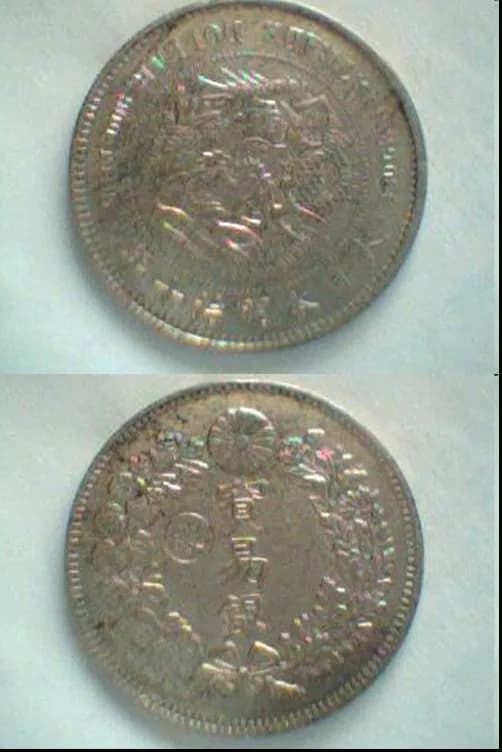
Image: Modern Japanese coinage / photographed by Samuel Ho / Wikimedia Commons / CC BY-SA 3.0(source)
Yamato-minted Kan'ei Tsuuhou — The Phantom Coin That Supported the Temple Markets of Ancient Nara
A Rare Regional Coin That Lived With the Bustle of Tōdai-ji and Kōfuku-ji
Subject coin: 大和鋳寛永通宝
Overview
In the early Edo period, as the shogunate progressed with its currency unification policy, the demand for coins increased throughout Japan. Amidst this, there existed a rare coin quietly minted in the ancient capital of Nara, which supported people's lives. This is the 'Yamato-minted Kan'ei Tsuuhou (大和鋳寛永通宝)'. The coin is said to have been minted in Yamato Province (present-day Nara Prefecture) during the Kan'ei (1624-1645) to Kanbun (1661-1673) eras, when Kan'ei Tsuuhou coins began to circulate nationwide. Nara, with major temples like Tōdai-ji and Kōfuku-ji at its center, had an active economy and thriving markets, which gathered many people. However, the coins minted centrally couldn't meet the demands of this local economy, leading to the minting of Yamato-minted Kan'ei Tsuuhou to fulfill local demand. The calligraphy and thickness of these coins display unique features, distinguishing them from Kan'ei Tsuuhou minted elsewhere and classifying them among coin researchers as 'Yamato-ji production'. It is believed that some of the coins used in the markets in front of temples like Tōdai-ji and Kōfuku-ji were these Yamato-minted coins. Types and Differentiation of Hole Coins further exemplifies their diversity. Presently, debates among researchers continue over their rarity and precise identification methods, exciting collectors with their mysterious history. This tale traces the unknown footsteps of currency rooted in Nara's rich history and culture.
Specifications
- Denomination
- 1文銭
- Minting period
- 寛永年間〜寛文年間(1636年頃〜1670年代頃、諸説あり)
- Metal composition
- 銅(主に銅、錫、鉛の合金)
- Weight
- 2.0g〜3.5g程度(個体差大、諸説あり)
- Dimensions
- 直径約23mm〜25mm程度(個体差大)
- Mintage
- 不詳(諸説あり、地方銭座のため記録が少ない)
- Mint supervisor
- 不詳(地方の銭座工人)
- Market price
- 数千円〜数十万円(状態、書体、稀少性による。判別が難しく研究者間の議論が続く)
Chapter 1: The Pulse of the Ancient Capital — Nara's Economy and the Thirst for Coins
Image: Modern Japanese coinage / Coindesmonnaies / Wikimedia Commons / CC BY-SA 4.0(source)
In the early Edo period, the Tokugawa shogunate, having achieved national unification, aimed for economic stabilization and growth. One of its key policies was the organization of the currency system. Following the coinage of Keichō Kobans in Detail during the Keichō era (1596-1615) or the Keichō Chōgin, in Kan'ei 13 (1636), the innovative copper coin 'Kan'ei Tsuuhou' began to be minted. This was intended to unify coin circulation nationwide, facilitating economic activity. However, as commerce became more active across regions, some areas could not fulfill their needs with centrally minted coins alone. Nara, with its historical background, especially formed a special economic zone. Temple complexes like Tōdai-ji and Kōfuku-ji not only served as places of worship but also owned vast temple lands and multiple gate towns. During the Genna (1615-1624) to Kan'ei eras, Nara's population increased, and markets in front of temples saw daily crowds of merchants and worshippers. For instance, the area around Kōfuku-ji developed the commercial district called 'Naramachi', where a variety of goods were traded, from essential items like rice, salt, textiles, and lumber to crafts offered to temples. Large volumes of coins were crucial for these vibrant transactions, yet those supplied from Edo or Kyoto were barely sufficient, leading to price fluctuations and sometimes stagnation of business. This backdrop heightened the necessity for minting coins locally to stabilize the economy and protect local residents' livelihoods. Initially, the shogunate strictly restricted minting outside of public mints, but acknowledging the dire local situations, it shifted towards tacitly permitting minting at local coin mints under certain conditions. The Yamato-minted Kan'ei Tsuuhou was born in response to such demands, from the Kan'ei to Kanbun eras in Yamato Province, as a currency echoing the heartbeat of the regional economy.
Chapter 2: The Breath of Craftsmen — The Evidence of Coins Engraved in Yamato Land
Image: Modern Japanese coinage / Coindesmonnaies / Wikimedia Commons / CC BY-SA 4.0(source)
The minting of Yamato-minted Kan'ei Tsuuhou is believed to have taken place at smaller, more community-centric mints, unlike the large-scale central mints for gold or silver. No specific minting site records survive, but they are thought to have been minted to meet local needs at several mints around Nara City and nearby areas. Some of these mints were officially sanctioned by the shogunate, while others might have operated in a somewhat semi-legal capacity. The most notable feature of Yamato mint is its calligraphy and thickness. Among Kan'ei Tsuuhou coins minted nationwide, Yamato mint is known for the distinctive way the second stroke of '永' character is written and the unique form of the shinnyou of '通'. Moreover, while generally thicker, they often have a rustic impression. These characteristics attest to local artisans crafting molds by hand and minting coins with limited technology and equipment, resulting in a rustic beauty distinct from sophisticated central mint coins. The material used was mainly an alloy of copper, tin, and lead. While known copper regions like Bitchū Fukuya (present-day Okayama) or Ashio Copper Mine (present-day Tochigi) were prominent, the source of Yamato mint materials is unclear. Local mints sometimes reportedly melted down old coins or religious items for reuse. The minting process involved making molds from clay or plaster, into which molten alloy was poured, following traditional methods. After cooling, the coins were removed, unwanted parts cut off, and each piece polished by hand, creating slight variations contributing to the coin's diversity and charm. Variations can be seen, for example, in the diameter, ranging from 23mm to 25mm, and weight, from 2.0g to 3.5g, showing handwork traces from around 400 years ago, conveying the spirit of craftsmen. Types and Differentiation of Edo Gold Coins further highlights the contrast in technology and background.
Chapter 3: The Flourishing of Temple Markets — The Journey of Coins Nourishing Temple Economies
Image: Modern Japanese coinage / Coindesmonnaies / Wikimedia Commons / CC BY-SA 4.0(source)
Yamato-minted Kan'ei Tsuuhou mainly circulated in Yamato Province, especially in the Nara basin and surrounding areas. The centers of circulation were the markets in front of Tōdai-ji and Kōfuku-ji. These temples attracted many worshippers and pilgrims throughout the year, fostering surrounding commercial development. During the mid-Edo period, the path to Tōdai-ji was lined with about 100 souvenir shops and eateries, and merchants actively traded around Kōfuku-ji in 'Naramachi'. In these markets, local agricultural products, crafts, and travel souvenirs were actively traded, requiring large amounts of coin currency for payments. Yamato-minted Kan'ei Tsuuhou circulated in such everyday economic activities, moving hand-to-hand, enabling trade. Exact prices of that time are unclear, but during the Kanbun era (1661-1673), rice (1 koku or about 150kg) was typically traded for 1 ryo of gold or about 4 kanmon in coins. Yamato mint was treated like other Kan'ei Tsuuhou as a 1 mon coin, but differences in quality and calligraphy might have led it to be valued slightly lower than official mints. However, it played a vital role in supplementing local coin shortages, making it indispensable to local merchants and residents. Buddhist monks from Tōdai-ji buying goods at market fronts or Kōfuku-ji craftsmen procuring daily items likely used these Yamato mint coins. Travelers visiting Nara from afar, upon receiving these unique coins, might have noticed subtle differences in texture or calligraphy, perhaps surprised by the distinctiveness. Yamato-minted Kan'ei Tsuuhou not only functioned as currency but also reflected Nara's rich history and culture, showcasing its people's livelihood, echoing the contrast with Details of Edo Silver Coins and Types and Variations of Kobans, reflecting everyday life.
Chapter 4: The Phantom Coin — Enigmas and the Romance of Exploration Remaining for Posterity
Image: Modern Japanese coinage / Coindesmonnaies / Wikimedia Commons / CC BY-SA 4.0(source)
The minting of Yamato-minted Kan'ei Tsuuhou is thought to have declined by the Kanbun era (1661-1673). This decline is likely because of the shogunate reinforcing mint control and stabilizing nationwide coin supply, reducing the need for local mints. Particularly from the Genroku period (1688-1704) onwards, the shogunate reorganized and integrated regional mints, enhancing public coin distribution. Consequently, coins like the Yamato mint, with unique regional characteristics, gradually vanished from the historical scene. However, their existence wasn't completely forgotten. By the late Edo period, they were already recognized as ancient coins and became collection targets for enthusiasts. Today, Yamato-minted Kan'ei Tsuuhou holds a special place among antique coin collectors and researchers due to its rarity and difficult identification. Few survive, and many remain uncertain in mint numbers, circulations rare in the market. Given the close resemblance to other local and privately minted coins, verification by experts is critical. Researchers detail aspects such as the final stroke flare of '永' or the '用' part of '通', analyzing Yamato mint authenticity. However, without unified molds, variation is vast, necessitating further research for clear criteria, heightening its mystique. Recently, scientific methods like X-ray analysis have attempted to determine origins from material composition. As a historical artifact narrating Edo-era local economy, minting technique, and Nara's history, Yamato-minted Kan'ei Tsuuhou continues to captivate many today, conveying handmade warmth and historical weight distinct from Value and Differentiation of Modern Coins.
Value & Rarity
Yamato-minted Kan'ei Tsuuhou holds special value in antique coin markets due to its rarity and the challenge of identification. The primary factor elevating its value is its extraordinary rarity. Being minted at regional mints, there are barely any official records of its mint numbers, and mingled within regular Kan'ei Tsuuhou, it was sparsely collected deliberately. Consequently, market sightings are rare, and for collectors, it's often dubbed 'the phantom coin'. Identification methods remain debated among researchers, lacking definitive criteria, adding complexity to its valuation. While there are calligraphy and thickness characteristics, significant individual variation and difficulty distinguishing it from other regional or privately minted coins make it highly challenging. Expert knowledge and experience are critical for appraisal, with coins having certificates from reputable institutions fetching higher prices. Current market values vary significantly based on condition, calligraphy traits, and authenticity assurance. While typical Kan'ei Tsuuhou sells for hundreds to thousands of yen, recognized Yamato-minted pieces range from thousands to tens of thousands of yen, with rare prime-condition or highly distinctive features reaching the tens of thousands. Especially those verified with clear 'Yamato mint' traits and excellent preservation are highly prized, often achieving high prices in Fundamentals of Antique Coin Auctions, though Discerning Fakes and Altered Coins is also crucial, warranting caution in purchase. Yamato-minted Kan'ei Tsuuhou, beyond monetary worth, serves as an invaluable historical document on Edo local economic history, minting technology, and numismatic research depth.
Conclusion
Yamato-minted Kan'ei Tsuuhou, emerging amidst the currency unification wave of the Edo shogunate, is an unknown copper coin born to support the temple economy of ancient Nara. Its rustic calligraphy and thickness embody the breath of craftsmen and the enthusiasm to support the lives of local people. While flourishing in temple markets of Tōdai-ji and Kōfuku-ji, these coins circulated from hand to hand, enriching regional economies, and today stand as rare entities spurring researcher's and collector's curiosity. Imbued within each small copper coin is a timeless narrative of Nara from around 400 years ago, whose historical significance and profound allure transcend time to speak to us.
Related Stories
Fujushanpō — The End of Kōchōsen
The Story of the Fifth Kōchōsen Issued by Emperor Saga: Its Rise and Fall
Coin StoryKan'ei Tsuho Tetsusen — The Unorthodox Currency Born from Copper Shortage
A Historical Scene Where Edo-period Minting Techniques and Economic Struggles Intersected
Coin StoryKan'ei Tsūhō — "Japan's Longest-Lived Coin" in Circulation for 230 Years
The history of the hole coin that continued to be used from the unification of Edo coinage in Kan'ei 13 (1636) to Meiji
Dealers
Dealers Handling This Category
A reference when considering a sale or appraisal. All are dealers and auction houses with a proven track record.
Japan Coin Auction (JCA)
Tokyo
Holds regular auctions with reliable hammer price data, making it a useful resource for tracking market values. Caters to a wide range of collectors from beginners to advanced buyers.
Osaka Numismatic Auction
Osaka
A Kansai-based coin auction house with particular strength in regional and hole coins.
Ginza Coins
Ginza, Chuo-ku, Tokyo
One of Japan's most established numismatic dealers. The scale and variety of their regular auctions is among the largest in the country. Their catalogs are considered a benchmark for market pricing.