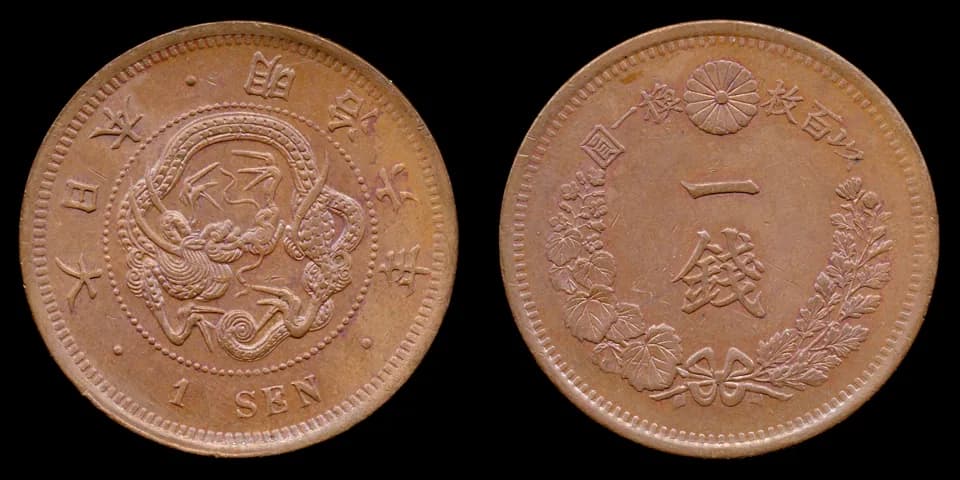
Image: Modern Japanese coinage / As6673 / Wikimedia Commons / CC BY-SA 3.0(source)
Shōwa Kōdō 1 Yen Coin — The Short-lived Coin as a Symbol of Post-war Reconstruction
Tracing the Brief History of the Brass 1 Yen Coin Born from Post-war Resource Shortages
Subject coin: 昭和黄銅1円貨
Overview
The Shōwa Kōdō 1 yen coin was a symbolic presence in Japan's economic revival during the post-war turmoil. Minted over a brief 10-year span from 1948 to 1958, this coin mainly utilized brass as its material. Due to post-war shortages of traditional coinage metals like silver and copper, the government opted for brass as an alternative. The obverse featured a design of rice ears, while the reverse bore the number '1' and the paulownia crest, symbolizing Japanese tradition and resolve for reconstruction. The period during which this coin circulated was when Japan rapidly rebuilt its economy and reemerged on the international stage. With the introduction of the current aluminum 1 yen coin in 1958, the brass 1 yen coin concluded its role. Even today, its historical significance is assessed within Understanding the Value and Identification of Modern Coins.
Specifications
- Denomination
- 1円
- Minting period
- 流通時代: 昭和23年〜33年(1948-1958年)
- Metal composition
- 黄銅(真鍮)
- Weight
- 4g
- Dimensions
- 直径22mm
- Mintage
- 不詳(諸説あり)
- Mint supervisor
- 不詳
- Market price
- 現在の相場: 100円〜数千円(状態による)
The Chaos of Post-war and First Steps Toward Recovery — Birth of the Brass 1 Yen Coin
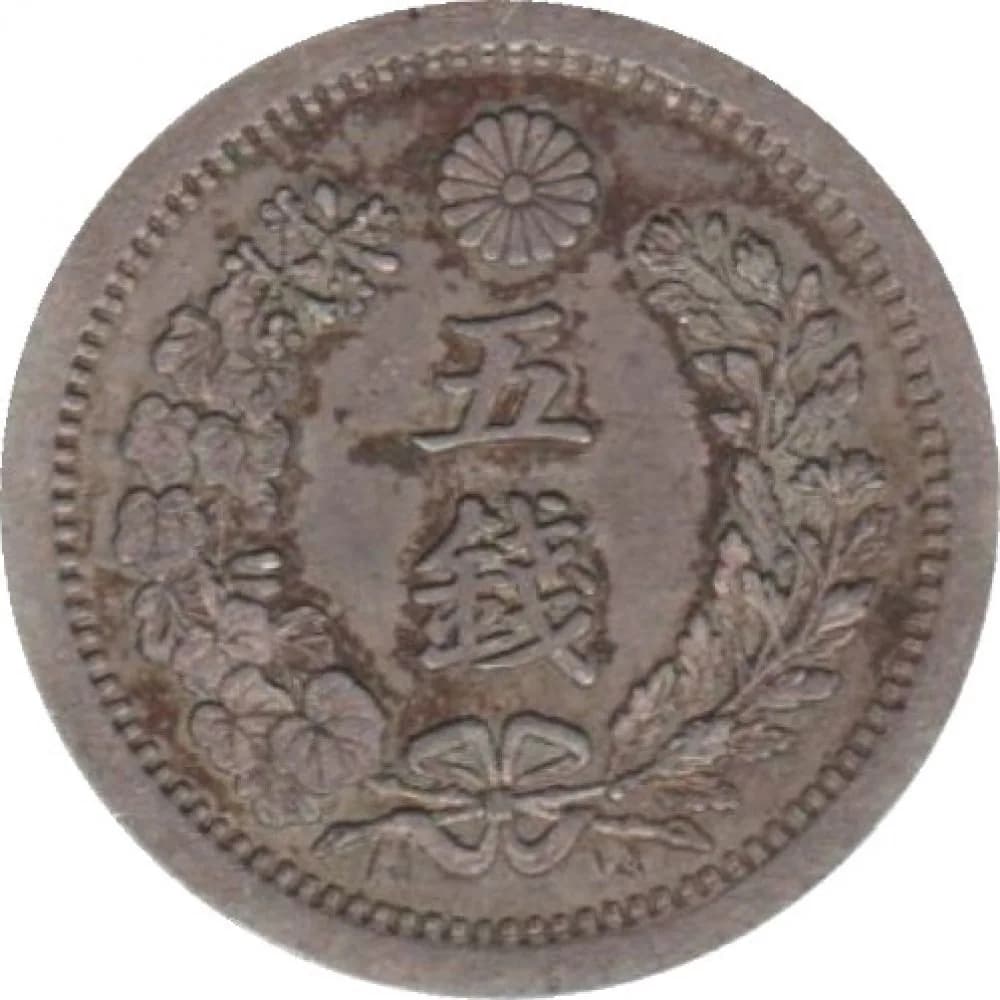
Image: Modern Japanese coinage / Coindesmonnaies / Wikimedia Commons / CC BY-SA 4.0(source)
In 1948, merely three years after Japan's defeat in World War II, the country faced severe shortages of resources. The shortage of metals needed for coinage was particularly critical, prompting the government to swiftly decide on introducing a new 1 yen coin made of brass (shinchū). Brass, an alloy of copper and zinc, was chosen for its durability and comforting weight in the hand. At that time, under the occupation of the Supreme Commander for the Allied Powers (GHQ), Japan sought paths for economic recovery, and coin minting was considered an essential part of that effort. In Shōwa 23 (1948), under the Japanese government's initiative, the minting of brass 1 yen coins began at the Mint Bureau in Tokyo. The design featured rice ears on the obverse and the number '1' with the paulownia crest on the reverse, symbolizing Japan's aim for economic revival rooted in agriculture. The coin weighed 4g and had a diameter of 22mm. These specifications were vastly different from the pre-war 1 yen silver coins, and the change in material and design impressed upon the public the advent of a new era. During the chaotic post-war period, this coin played a role in supporting economic activities. Especially amid resource shortages, the government worked diligently to ensure the procurement of technicians and workers involved in the minting process. As a result, from 1948 to 1958, the brass 1 yen coin became an integral part of people’s lives.
Minting Process and Technological Innovation — Behind the Production of the Brass Coin
Image: Modern Japanese coinage / Coindesmonnaies / Wikimedia Commons / CC BY-SA 4.0(source)
The production of the Shōwa Kōdō 1 yen coin also symbolized the technological innovation of post-war Japan. The minting of this coin was primarily conducted at the Tokyo Mint Bureau. At that time, the mint had introduced the latest minting technologies, particularly improvements in pressing machines and advancements in casting technology. For the production of the brass 1 yen coin, a process was employed where brass ingots were melted at high temperatures and poured into molds. During this, it was necessary to strictly control the ratio of copper to zinc to obtain a homogeneous alloy. Workers utilized pre-war experiences to make precise adjustments. Particularly, temperature control and pressure adjustments during the minting process were crucial elements that influenced coin quality. The surface designs of the coins, executed by the technicians of the time, were intricately engraved. The motifs of rice ears and the paulownia crest were meticulously finished in detail, resulting in coins that combined durability and beauty. It is believed that tens of millions of coins were produced between Shōwa 23 and Shōwa 33 (various estimates exist). During this period, the Mint Bureau constantly pursued quality improvement, contributing to the widespread adoption of the brass 1 yen coin. The production of coins served not only as a symbol of post-war recovery but also as an opportunity to showcase Japan’s high technological capabilities to the world.
Circulation and Economic Impact — The Role of the Brass 1 Yen Coin
Image: Modern Japanese coinage / Coindesmonnaies / Wikimedia Commons / CC BY-SA 4.0(source)
The Shōwa Kōdō 1 yen coin, introduced in 1948, played an important role in Japan's post-war economy. Stabilizing coin circulation was imperative for rapid economic recovery in post-war Japan. During this period, Japan’s prices were skyrocketing, and inflation was progressing, leading to relative fluctuations in the value of 1 yen. Due to its durability and usability, the brass 1 yen coin was widely accepted in daily transactions. Particularly in shopping streets and markets, where small transactions were frequent, the brass 1 yen coin played a central role. In rural areas, this coin with a rice ear design was also symbolic in regional economies based on agriculture. When Japan’s economy entered the 1950s and further industrialized, the volume of circulating currency continued to increase. By 1955, Japan's GNP surpassed pre-war levels, with economic stability gradually being restored. The brass 1 yen coin continued to play an important role during this growth process. However, with the introduction of the current aluminum 1 yen coin in 1958, the brass 1 yen coin gradually disappeared from the market. This transition was driven by economic reasons, as the new lighter coin allowed for more efficient circulation.
Impact on Future Generations — Transition to Aluminum 1 Yen and Its Evaluation
Image: Modern Japanese coinage / Coindesmonnaies / Wikimedia Commons / CC BY-SA 4.0(source)
In 1958, the Shōwa Kōdō 1 yen coin gave way to the aluminum 1 yen coin. This transition was the result of Japan, having achieved economic growth, seeking further improvements in circulation efficiency. Aluminum coins offered the advantages of being lightweight and having lower production costs, allowing for smoother currency flow. The aluminum 1 yen coin continues to function as part of Japan’s currency system to this day. This transition also demonstrated the flexibility and innovativeness of post-war Japan’s economic policy. Despite its short circulation period, the brass 1 yen coin fulfilled its role as a symbol of post-war recovery, and its significance remains for future generations. The evaluation of the brass 1 yen coin is highly regarded not only as mere currency but also as a result of the culmination of Japanese technological innovation and national effort. In particular, the ingenuity in manufacturing and circulation under the severe post-war conditions offered many insights for later coin production. Today, the brass 1 yen coin is of interest as a collector’s item, and its value is recognized in Basic Knowledge of Coin Auctions.
Value & Rarity
The Shōwa Kōdō 1 yen coin is highly popular in the collector market, and well-preserved items can be traded at high prices. Especially uncirculated or high-grade coins tend to trade for high amounts. In the market, they are often traded in the price range of 100 yen to several thousand yen, but particularly well-preserved pieces can fetch even higher prices. Although a large number of brass 1 yen coins were minted during the post-war period, making them relatively common, well-preserved ones are scarce, increasing their rarity. Among collectors, many are attracted to the unique design and material of this era, with its value being assessed in Understanding the Value and Identification of Modern Coins. Recognizing the authenticity of the coin involves checking the precision of the design, the luster of the material, and the clarity of the engraving. In the collector marketplace, the Shōwa Kōdō 1 yen coin is still highly valued as a precious item narrating Japan's history.
Related Guides: Overview of Meiji Era Coins / Check Price Trends on Market Charts
Conclusion
The Shōwa Kōdō 1 yen coin was an important coin symbolizing post-war Japan's recovery and economic growth. During its brief circulation period, the brass 1 yen coin supported Japan's economic activities and greatly influenced subsequent monetary policies. The introduction of this coin was a testament to Japan’s high technological capabilities and the effort of its people during the challenging post-war period. It remains popular in the collector market today, and its historical value will continue to be passed down. The brass 1 yen coin is etched in our memory not merely as currency but as a symbol of post-war Japan’s recovery. Its value will continue to be communicated to many people, transcending time.
Related Stories
60th Anniversary of Local Autonomy Law 500 Yen Bicolor – 10-Year Journey Across 47 Prefectures
Commemorative Coin Series Born from the Law of 1947
Coin StoryAichi Expo Commemorative Silver Coin — Hope for the Future Carved with the Wisdom of Nature
The History and Value of the 1000-yen Silver Coin Commemorating the 2005 Aichi Expo
Coin StoryCommemorative 500 Yen Cupronickel Coin for the Enthronement of the Heisei Emperor — A Bridge from Heisei to Reiwa
The Story of a Historic Commemorative Coin Celebrating the Enthronement of the Heisei Emperor
Dealers
Dealers Handling This Category
A reference when considering a sale or appraisal. All are dealers and auction houses with a proven track record.
Ginza Coins
Ginza, Chuo-ku, Tokyo
One of Japan's most established numismatic dealers. The scale and variety of their regular auctions is among the largest in the country. Their catalogs are considered a benchmark for market pricing.
Taisei Coins
Tokyo
A dealer with an international network. Offers advanced services such as consignment to overseas auctions and NGC/PCGS grading submission. Recommended for high-value or internationally recognized coins.
Tokyo Coin Club
Tokyo
A membership-based coin dealer known for carefully selected, quality inventory.