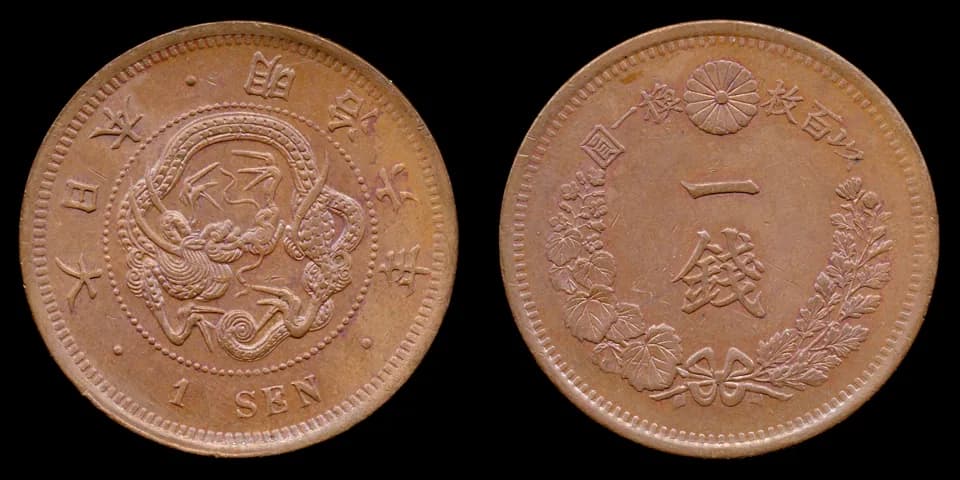
Image: Modern Japanese coinage / As6673 / Wikimedia Commons / CC BY-SA 3.0(source)
Meiji 20 Yen Gold Coin (New) — Tracing the History of Modern Currency
The 20 yen gold coin minted as the highest value coin after the currency law revision of Meiji 30. The birth and end of the 'symbolic coin' of the gold standard
Subject coin: 明治20円金貨(新)
Overview
The Meiji 20 yen gold coin (new) is an indispensable piece when discussing Japan's currency history around 1897-1932. Minted as the highest value gold coin following the currency law revision of Meiji 30, the birth and end of the 'symbolic coin' under the gold standard is explored in this article. From the historical background when it was created to the technology of minting, the actual circulation, and its impact on later generations, we trace the story as a modern currency faithfully to historical facts. Knowing the historical context carried by this coin, which cannot be seen with mere market numbers, is sure to significantly change the perception of its value. The history of Japanese currency began with the Wado Kaichin minted in the Nara period, passed through the diverse gold and silver coins of the Edo period, and was inherited as modern currency in the Meiji period.
Specifications
- Denomination
- —
- Minting period
- 1897-1932
- Metal composition
- —
- Weight
- —
- Dimensions
- —
- Mintage
- 不詳(諸説あり)
- Mint supervisor
- 不詳
- Market price
- 状態により変動(落札履歴を参照)
The Era in Which the Meiji 20 Yen Gold Coin (New) Was Born — The Background of Minting
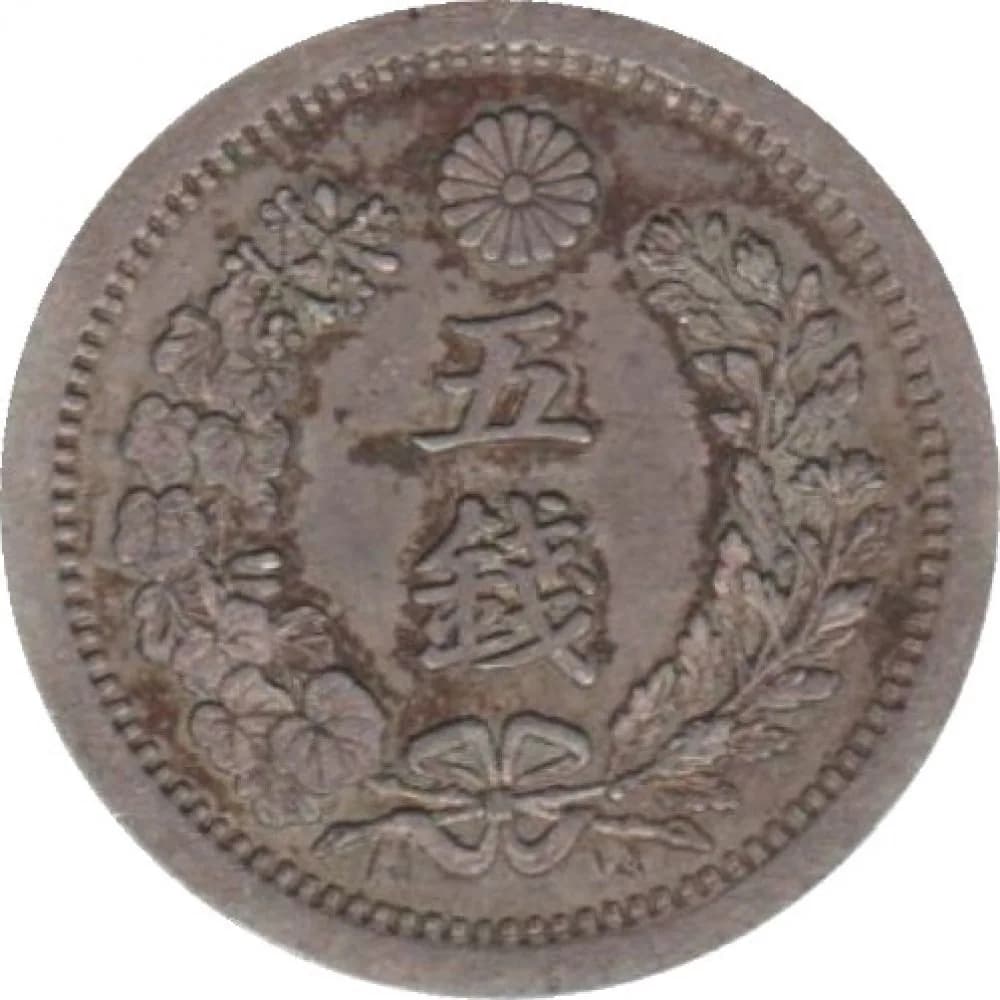
Image: Modern Japanese coinage / Coindesmonnaies / Wikimedia Commons / CC BY-SA 4.0(source)
The background of the emergence of the Meiji 20 yen gold coin (new) is closely tied to the political and economic conditions of its time. Modern currency was minted in response to the financial and distribution challenges faced by rulers and was born from the social needs of the time. First, we start from the point of departure of understanding under what circumstances and why this currency was needed. The fact that minting started under the new currency law of Meiji 30 (1897) is crucial for understanding its historical positioning. The halt of minting in Showa 7 (1932) and the prohibition of gold export are also critical for understanding this coin's historical significance. Current market valuation is determined by an intertwining of three factors: rarity, state of preservation, and collection popularity, none of which alone can explain its price.
How the Meiji 20 Yen Gold Coin (New) Was Made — Material and Technology
Image: Modern Japanese coinage / Coindesmonnaies / Wikimedia Commons / CC BY-SA 4.0(source)
In discussing the value of the Meiji 20 yen gold coin (new), the materials and methods of minting cannot be overlooked. Modern currency retains the craftsmanship of the time quite vividly in the mix of metals and finishing techniques, which directly influence its current evaluation. By carefully tracing the selection of materials and the crafting process, one can see the accumulation of techniques embedded in a single piece. The facts of its weight being 16.67g and gold purity 90% are crucial for understanding its historical significance. Understanding the market is deepened by establishing fundamental evaluation points like the writing style, color of the metal, and dimensions.
The Meiji 20 Yen Gold Coin (New) and People's Lives — Circulation and Economy
Image: Modern Japanese coinage / Coindesmonnaies / Wikimedia Commons / CC BY-SA 4.0(source)
Once issued, the Meiji 20 yen gold coin (new) was actually used hand-to-hand in daily life. Understanding how modern currency circulated in the market and its impact on prices and transactions is central to understanding currency history. By exploring economic movements and the reactions of ordinary people at the time, the role played by this currency is deciphered. The fact of its revival 34 years after the old 20 yen gold coin (Meiji 3 onwards) is crucial for grasping its historical positioning.
The Legacy of the Meiji 20 Yen Gold Coin (New) — Its Impact on Later Generations
Image: Modern Japanese coinage / Coindesmonnaies / Wikimedia Commons / CC BY-SA 4.0(source)
Even after the Meiji 20 yen gold coin (new) concluded its time, it left an impact on subsequent currencies and the history of collecting. By reflecting on how modern currency was positioned within the cycles of reminting, abolition, and succession, and how it's evaluated today, one enhances value judgment precision. The design aspect, such as the front featuring the Rising Sun Order, and the reverse showing the paulownia, chrysanthemum, and 二拾圓, is crucial for historical understanding.
Value & Rarity
The market value of the Meiji 20 yen gold coin (new) is determined by three factors: rarity, preservation state (grade), and popularity among collectors. Even among similar modern currencies, prices can vary greatly depending on minting period, differences in script style, and whether it is in near-unused condition. The fewer existing pieces a brand has, the fewer opportunities it has to appear in the market, and well-preserved specimens increase in rarity as time goes on. Examining realized auction prices through multiple examples, rather than just listed prices, is prudent when reading the market.
Conclusion
The Meiji 20 yen gold coin (new) was born out of necessity for the era of 1897-1932, played a role in the daily lives of people, and left its mark on later generations. Knowing the history behind a single coin cultivates a discernment not obtainable by market figures alone. Those interested in modern currency are advised to carefully compare multiple transaction data and gradually nurture their own criteria for judgment.
Related Stories
60th Anniversary of Local Autonomy Law 500 Yen Bicolor – 10-Year Journey Across 47 Prefectures
Commemorative Coin Series Born from the Law of 1947
Coin StoryHōō 100-Yen Silver Coin — Wings of Recovery, and the End of the Silver Coin Era
The Brilliance of the High-Growth Period and the Short Life of a Silver 100-Yen Coin Buffeted by Soaring Silver Prices
Coin StoryCommemorative Coins for the Crown Prince's Wedding — Tracing the History of Commemorative Currency
In 1993, commemorative coins of a 50,000 yen gold coin and a 10,000 yen silver coin were issued for the Crown Prince's (current Emperor) marriage, attracting 1,000,000 applications for the 'Congratulations Currency'
Dealers
Dealers Handling This Category
A reference when considering a sale or appraisal. All are dealers and auction houses with a proven track record.
Ginza Coins
Ginza, Chuo-ku, Tokyo
One of Japan's most established numismatic dealers. The scale and variety of their regular auctions is among the largest in the country. Their catalogs are considered a benchmark for market pricing.
Taisei Coins
Tokyo
A dealer with an international network. Offers advanced services such as consignment to overseas auctions and NGC/PCGS grading submission. Recommended for high-value or internationally recognized coins.
Tokyo Coin Club
Tokyo
A membership-based coin dealer known for carefully selected, quality inventory.