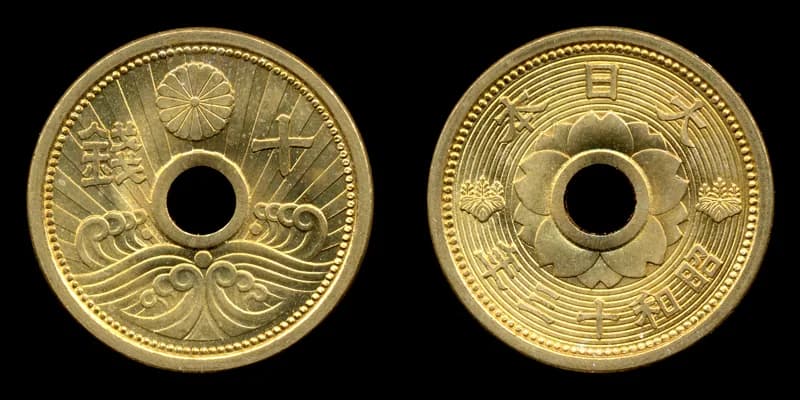
Image: Modern Japanese coinage / As6673 / Wikimedia Commons / CC BY-SA 3.0(source)
Keichō Ichibuban Gold Coin (慶長一分判金) — The Significance of the Shogunate's Economic Policy on Small Gold Coins
A gold coin equivalent to 1/4 of a ryō issued by the Edo Shogunate in Keichō 6
Subject coin: 慶長一分判金
Overview
The Keichō Ichibuban Gold Coin was a small gold coin issued along with the Ōban in 1601 by the Edo Shogunate. This coin, equivalent to 1/4 of a ryō, is characterized by its rectangular shape. At the time, a single Ōban had high value, making it inconvenient for medium-sized daily transactions. Thus, the ichibuban was introduced to facilitate smaller transactions. The issuance of the Keichō Ichibuban was part of Tokugawa Ieyasu's policy to stabilize the economy. Alongside the details of the Keichō Ōban, this gold coin shaped the early Edo period's monetary system. The minting of the ichibuban was carried out at the Kinza, and as one of the types and identification methods of Edo gold coins, it continued to influence later times. This coin not only played an important role in the economy of the time but also remains popular among collectors today as a high-value old coin.
Specifications
- Denomination
- 一分
- Minting period
- 慶長6年〜元禄8年(1601-1695年)
- Metal composition
- 金86%前後
- Weight
- 約4.5g
- Dimensions
- 不詳(長方形の小型金貨)
- Mintage
- 不詳(諸説あり)
- Mint supervisor
- 後藤家(金座)
- Market price
- 数十万円〜数百万円(状態による)
Chapter 1: The Birth of the Keichō Ichibuban Gold Coin — Shogunate Economic Policy and Background
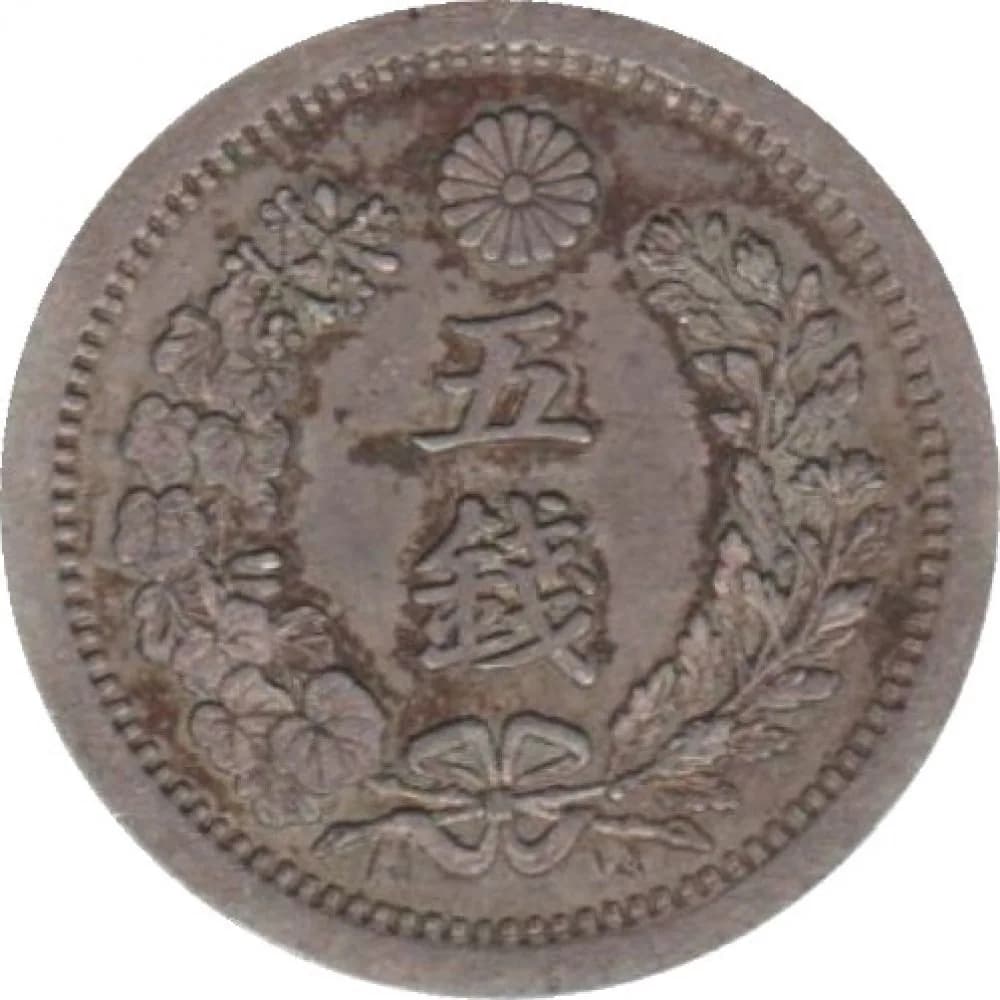
Image: Modern Japanese coinage / Coindesmonnaies / Wikimedia Commons / CC BY-SA 4.0(source)
In 1601, Tokugawa Ieyasu established the Edo Shogunate and began governing Japan. Economic stability and growth were the top priorities for this new regime. Ieyasu decided to organize the monetary system by issuing gold and silver coins. Particularly for gold coins, considering usability and convenience, it was decided to mint both Ōban and ichibuban gold coins. The ichibuban, responding to the economic situation of the time, was introduced as a gold coin equivalent to 1/4 the value of one Ōban, which was equivalent to a ryō.
This decision was driven by the need to organize the chaotic circulation of currency that had continued since the Sengoku period. With different currencies circulating in various regions, transactions for merchants and the public were complicated and inconvenient. Therefore, Ieyasu aimed to create a unified monetary system to enhance economic efficiency. As a result, commercial activities within the country became smoother, promoting economic development nationwide.
The minting of the ichibuban was carried out at the Kinza in Kyoto. This mint was managed by the Gotō family, whose craftsmanship and quality received high praise. The Gotō family, with their legacy in goldsmithing dating back to the Heian period, earned the Shogunate's trust with their technical prowess. Thus, the ichibuban came to be widely accepted among merchants, significantly impacting Japan's monetary system. Alongside types and market of the Ōban, it became a key element of the early Edo period's economy.
Chapter 2: Technology and Process of Minting — The Role of the Kinza
Image: Modern Japanese coinage / Coindesmonnaies / Wikimedia Commons / CC BY-SA 4.0(source)
The minting of the ichibuban was conducted at the Kinza in Kyoto. This mint was operated by the Gotō family, including Gotō Shirobei, whose minting skills were highly esteemed. The Kinza was an officially authorized organization by the Shogunate, handling the minting and management of gold coins exclusively.
The gold used for minting was said to have a purity of about 86%, with the remainder mixed with silver and copper. This blend was determined by the Tokugawa Shogunate, aiming for economically efficient resource utilization while maintaining stable quality. At the Kinza, the process involved melting gold bullion, pouring it into molds, and minting the ichibuban gold coins. This process was performed by skilled craftsmen, with unique patterns engraved on the coin's surface.
These patterns served as the Kinza's hallmark, ensuring quality. Especially for maintaining uniformity in the coins' weight and shape, precision in minting technology was required. The ichibuban had a weight of approximately 4.5 grams and was rectangular in shape. This shape was chosen for portability and ease of transaction, differing from the Ōban.
Furthermore, the technicians at the Kinza held techniques to remove impurities arising during the minting process, ensuring product quality. Such technological efforts and meticulous quality control supported the ichibuban's reliability, encouraging its use among merchants and the public. In this era, the ichibuban was highly valued for medium-sized transactions that the Ōban alone could not fulfill, contributing to economic activity.
Chapter 3: Role in the Economy — Circulation and Voices of the People
Image: Modern Japanese coinage / Coindesmonnaies / Wikimedia Commons / CC BY-SA 4.0(source)
The impact of the ichibuban gold coin on the Edo period economy is immeasurable. This small gold coin, along with the details of the Edo silver coins, formed the core of circulation. While an Ōban was an expensive gold coin equivalent to a ryō, the ichibuban, worth 1/4 of that, was suited for medium daily transactions. Merchants could set prices of goods and services in ichibu units, enhancing transaction flexibility.
Looking at specific prices of the time, for example, a koku of rice was traded for about 2 ryō (2 Ōban). In contrast, the ichibuban was convenient for purchases of daily food and small items. Among the public, the ichibuban played a key role in daily life. Particularly, it was often received as daily wages or income from small trades, directly affecting household budgets.
An episode reflecting the voices of the people was the ichibuban being reputed as 'easy to use.' While large purchases required an Ōban, daily shopping and payments mainly used ichibuban. This facilitated the penetration of a cash economy, activating commercial activities. Merchants could accept ichibuban during transactions and reuse them to purchase other goods or services, ensuring smooth circulation.
Due to this background, the ichibuban became widely popular throughout the Edo period, holding significant importance among merchants and the general populace. Consequently, it is believed to have contributed to economic activation and social stability.
Chapter 4: Influence on Later Generations — Recasting and Subsequent Evaluation
Image: Modern Japanese coinage / Coindesmonnaies / Wikimedia Commons / CC BY-SA 4.0(source)
The ichibuban gold coin circulated for about a century from the Keichō period to the Genroku period, undergoing several recastings during this time. In particular, in Genroku 8 (1695), due to the Shogunate's financial difficulties, gold coin recasting took place, including for the ichibuban. The reason for recasting was to improve the Shogunate's finances by reducing the gold content, which provided short-term benefits to the Shogunate but resulted in diminishing the coins' credibility.
After recasting, the ichibuban's gold purity decreased, making it cumbersome to use among merchants and the public. During this period, types and identification of hole coins were also in circulation, and it was a time when trust in the value of currency wavered. Eventually, the Shogunate was compelled to reform the monetary system, leading to the introduction of new gold and silver coins.
In later generations, the Keichō Ichibuban is highly valued for its rarity. Especially, those issued in the early Keichō period are scarce in number and are traded at high prices among collectors. Their value lies in the historical background and high manufacturing technique. Today, trading in antique coin auctions is active, and the value of the ichibuban is increasing.
Moreover, the ichibuban plays a crucial role in understanding the evolution of the Edo period's monetary system. While comparing with other gold and silver coins issued later, its significance as part of the Shogunate's economic policy can be appreciated, making methods for distinguishing fakes and altered coins important knowledge as well. Thus, the ichibuban continues to hold significance in Japan's monetary history.
Value & Rarity
The Keichō Ichibuban Gold Coin holds high value today due to its rarity. Particularly, the original ichibuban issued during the Keichō period is scarce and well-preserved examples can sometimes be traded for several million yen. Its value is highly attractive to collectors knowledgeable about antique coin auction basics.
Furthermore, the value of the ichibuban is also supported by its historical background and minting technology. As a gold coin issued in 1601 as part of Tokugawa Ieyasu's Edo Shogunate economic policy, it symbolizes the evolution of the monetary system of that time. Therefore, for modern collectors, it is evaluated as possessing cultural value beyond mere metallic worth.
Additionally, the ichibuban after being recast becomes an interesting collectible reflecting the era's background. Consequently, the market value of recast gold coins also receives a certain evaluation. Contemporary collectors are discovering the true value of the ichibuban by understanding such historical background and detailed techniques. These combined elements allow the Keichō Ichibuban to hold an important position in Japan's antique coin market even today.
Conclusion
The Keichō Ichibuban Gold Coin remains valuable as a symbol of the early Edo period Shogunate's economic policy. Issued in 1601, this gold coin played a vital role in the daily lives of merchants and the public, invigorating economic activity. The advanced minting technology and quality control by the Gotō family supported the ichibuban's reliability, facilitating smooth circulation.
Through subsequent recasting, the ichibuban is passed down to modern times as a collectible with historical significance. This coin is indispensable for understanding the evolution of the Edo period's monetary system and is a highly attractive subject for collectors. It will likely continue to occupy an important position in Japan's monetary history.
Related Stories
Genroku Ichibuban Kin — The Small Gold Coins of Edo That Changed Overnight
The Drastic Drop in Gold Purity of Genroku Ichibuban and Its Impact
Coin StoryThe Genroku Koban — Shigehide Ogiwara's Financial Revolution and the Consequences of the Genroku Bubble
The man who halved the gold content to save the shogunate, and the merits and demerits of his actions
Coin StoryIchibu-gin — The 'Gold-Silver Ratio Trap' Exposed by Unequal Treaties and the Monetary Crisis of the Late Edo Period
The Systematic Outflow of Gold Coins Triggered by the Opening of Ports in 1858, and the Shogunate's Last Resort: The Manen Recoinage
Dealers
Dealers Handling This Category
A reference when considering a sale or appraisal. All are dealers and auction houses with a proven track record.
Ginza Coins
Ginza, Chuo-ku, Tokyo
One of Japan's most established numismatic dealers. The scale and variety of their regular auctions is among the largest in the country. Their catalogs are considered a benchmark for market pricing.
Japan Coin Auction (JCA)
Tokyo
Holds regular auctions with reliable hammer price data, making it a useful resource for tracking market values. Caters to a wide range of collectors from beginners to advanced buyers.
Taisei Coins
Tokyo
A dealer with an international network. Offers advanced services such as consignment to overseas auctions and NGC/PCGS grading submission. Recommended for high-value or internationally recognized coins.