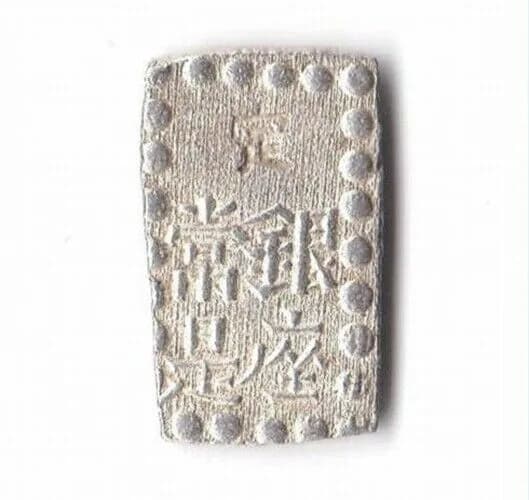
The Tenpō Chōgin is an important silver coin representing a transformational period in the currency system of the late Edo period.
Monetary System Transition Indicated by Tenpō Chōgin
The Tenpō Chōgin, a weight-based silver coin, began being minted in the 8th year of Tenpō (1837), holding a significant place in Japan's monetary history. It was issued in the late Edo period, just before the turmoil of the Bakumatsu, marking the end of the traditional weight-based currency system while symbolizing the shift towards a counting-based currency. The shogunate, suffering from chronic financial difficulties, repeatedly re-coined currency as a solution. The issuance of this low-fineness currency caused significant economic turmoil, undermining the shogunate's authority.
During the same era, copper coins featured in How to Identify and Value Tenpō Tsūhō and high-fineness silver coins like the Tenpō Ichibu Gin were also issued, indicating the shogunate's transitional phase of maintaining the old weight-based currency system while exploring a shift to a counting-based currency system. The Tenpō Chōgin is a valuable historical document that lets one vividly sense the transitional period of the currency system.
Notably, during the Kyōhō reforms, the fineness temporarily recovered but subsequently continued to decline. This reveals the shogunate's failure to achieve fundamental fiscal reform, resorting instead to the expedient measure of lowering the currency's fineness to generate minting profit. The extreme low fineness of the Tenpō Chōgin coincides with a period of frequent social unrest, such as the Tenpō famine and Ōshio Heihachirō's revolt. The Tenpō Chōgin is not merely a currency but also a historical testimony reflecting the social conditions of the late Edo period and the shogunate's struggles. For more details about Tenpō Chōgin, please refer to related materials.
Historical Background of Tenpō Chōgin and Current Evaluation
This unique composition reflects the currency system and economic conditions of the Edo period, serving as an essential resource for understanding the historical background.
The physical characteristics of the Tenpō Chōgin stem from its composition. Predominantly alloyed with copper, its surface often has a reddish-black hue, lacking the sheen of pure silver. However, due to the hardness of the alloy, many pieces exhibit well-preserved stamps, often leaving the image of Daikokuten sharply visible, making the characters generally easy to read.
The historical background and physical characteristics of the Tenpō Chōgin significantly influence its modern evaluation. Records confirm it as an indispensable element in understanding the metallurgy and economic conditions of the time. This sets it apart from other chōgin, such as the higher-fineness Hōei Chōgin, or the World of Chōgin.
The Tenpō Chōgin eloquently conveys the economic policies and metallurgical techniques of its time through its appearance and material, holding high historical value as reflected in market records. This indicates an evaluation based not on pure silver value, but historical background.
Auction Trends in the Edo Silver Coins Category (not specific to Tenpō Chōgin prices)
The figures in this section reflect the "Edo Silver Coins" category transactions compiled by ITTENDO in the general circulation market (flea market, online auction), encompassing silver coins other than Tenpō Chōgin such as ichibu gin. These are not the transaction prices or evaluation amounts of Tenpō Chōgin itself, and separate from professional auction price ranges.
The recent 90-day median auction price for the Edo Silver Coins category was ¥3,500, with 27 transactions. In this 90-day period, there was a 23.9% price decrease compared to the previous 90 days, where the median was ¥4,600, with 33 transactions. The confidence level for this rate of change is "low" (each period has 10 to 30 transactions), providing only directional guidance. The benchmark date is October 7, 2026.
Specific transaction examples include the Ansei Ichibu Gin sold for ¥3,500, Ichibu Gin (Shonai) for ¥5,000, Man-sama Ichibu Gin for ¥3,000, with others like the Silver Ichibu Gin Old Currency fetching ¥3,300, Flower Pattern Old Currency Ichibu Gin for ¥3,100, Express Shipping Ichibu Gin for ¥2,800, Silver Ichibu Gin Ginza Jōzai Engraving for ¥2,500, and Ichimaisilver Kosen for ¥8,500.
Market records show that while the number of transactions in the Edo Silver Coins category remains stable, the average price fluctuates. More detailed price trends and market calculation methods can be explored at Check Price Trends with Market Charts and Calculation Methods and Bases for Market Prices.
Factors Determining the Value of Tenpō Chōgin
Factors affecting the value of Tenpō Chōgin include condition, rarity, and authenticity risk. Particularly, distinguishing Tenpō Chōgin from the subsequent Ansei Chōgin is crucial for collectors. The most reliable identification method is confirming the "character stamps" on the chōgin. Tenpō Chōgin bears the "保" stamp, while Ansei Chōgin has the "安" stamp. This stamp can be found in multiple places on the surface of the chōgin, with the accurate reading of the "保" stamp being essential. This ensures the precise distinction between Tenpō Chōgin and Ansei Chōgin. This identification method is also discussed in Detailed Explanation of Chōgin.
Color differences also offer clues but often become less distinct due to aging or storage environment; thus, relying solely on this criterion is risky. Ansei Chōgin tends to have more copper content than Tenpō Chōgin, giving it a darker reddish-black color, but the most reliable identification method remains checking the stamps. Weight is not a standard for identifying the era of chōgin.
Additionally, the authenticity determination of Tenpō Chōgin poses challenges unique to weight-based currency. Key points include the handwriting of the "保" stamp and the depth of its engraving. Authentic chōgin has specific handwriting and engraving characteristics per era, necessitating comparison with reliable reference images. Detailed checks of the Daikokuten figure are also necessary. Carefully expressed garment lines and facial expressions show the high level of craftsmanship of the time, with those appearing unnaturally flattened or blurry warranting caution.
In recent years, precise contemporary forgeries have also circulated, and in case of doubt about authenticity, it is advisable to consult a reliable appraisal agency or seek expert advice through resources like How to Distinguish Authenticity. Such meticulous verification plays an important role in assessing the value of Tenpō Chōgin.
Practical Checks for Acquiring and Holding Tenpō Chōgin
When acquiring Tenpō Chōgin, several practical checks are crucial. Market prices are estimated around ¥200,000 to ¥500,000 depending on condition. This price range is supported by its historical value as the final form of weight-based silver coinage. Especially those with clear stamps or in stable condition receive high evaluations and exhibit increased market value.
Due to its copper alloy nature, Tenpō Chōgin is prone to discoloration and corrosion (verdigris), making attention to storage methods vital. Referencing Proper Storage Methods for Old Coins is important to ensure careful storage in an appropriate environment.
Additionally, Tenpō Chōgin sees about dozens of auction listings annually, providing relatively abundant acquisition opportunities. However, examples with good condition or rare stamps tend to fetch high prices. To grasp market trends, examining Price Trends with Market Charts and past auction sale records is effective.
Tenpō Chōgin is known as a "twin currency" with Tenpō Ichibu Gin, issued together in 1837. Collecting these two coins as a set can aid in understanding the transition of the currency system at the end of the Edo period. This information not only serves as a guideline for collection but also reaffirms the value of ownership.
Considering these points, when collecting and holding Tenpō Chōgin, it is necessary to fully account for its historical value, market trends, and storage methods. This allows for a proper understanding of the true value of Tenpō Chōgin and its preservation for future generations.
Historical Value and Storage Importance of Tenpō Chōgin
Tenpō Chōgin is a significant coin symbolizing the end of the weight-based currency system of the Edo period, known as the highly valuable final chōgin reflecting the financial struggles of the shogunate.
When contemplating cashing in, listing Tenpō Chōgin in numismatic specialty auctions is recommended. Taking it to general coin dealers often results in an appraisal price of ¥150,000 to ¥200,000, significantly lower compared to auction prices. In auctions, thoroughly explaining its historical background as "the final chōgin marking the end of the weight-based currency system" can attract interest from researchers and history enthusiasts.
For storage, due to the high copper content of Tenpō Chōgin and the risk of verdigris, airtight storage in a moisture and oxygen-proof environment is essential. Placing it in a tightly sealed container with a desiccant like silica gel minimizes environmental effects. Regularly checking the surface for changes and early application of appropriate measures are crucial for maintaining the coin's value.
To maximize the historical value of Tenpō Chōgin, organizing the storage environment and transacting in the proper market are keys. Observing market trends and utilizing specialized auctions, alongside following the guidelines in Proper Storage Methods for Old Coins, is recommended. This allows for maintaining the value of precious chōgin while aiming for transactions at fitting times.