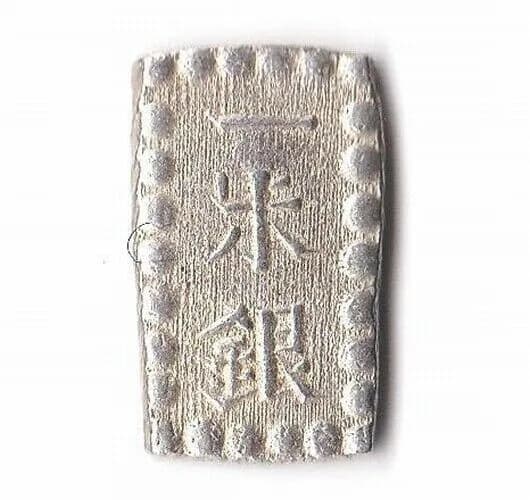
The silver coin system of the Edo period is characterized by two distinct systems: weighed silver coins and counted silver coins. Each has different methods of value determination and circulation areas, and understanding these coins is key to gaining deeper insight into the economy and society of the Edo period.
The Silver Coin System of the Edo Period and Its Characteristics
The silver coin system of the Edo period is distinguished by a unique dual currency system. Silver coins from this period are categorized into two systems, "weighed silver coins" and "counted silver coins," each with different methods of value determination and circulation areas.
Weighed silver coins derive their value from their weight. Prominent examples include Chōgin and Mameitagin. These were widely used in trade primarily in western Japan, particularly in the Osaka area. Merchants would weigh the silver coins and scrutinize their purity for transactions. Notably, Chōgin are silver ingots approximately 10 to 15 cm in length, with stamps of Daikokuten and the year, guaranteed by the Ginza mint for quality. Mameitagin, cut from Chōgin, were used as coins suitable for small transactions. Although the fineness of these weighed silver coins fluctuated due to Shogunate policy, their value was determined by shape and weight.
On the other hand, counted silver coins have a fixed denomination and include Ichibugin and Nishu Gin. These coins circulated widely as auxiliary currency to gold coins, especially in eastern Japan around Edo. Their issuance increased towards the end of the Edo period, becoming indispensable for the everyday payments of the common people. Understanding these two systems of silver coins is crucial for unlocking the complexities of the Edo period currency system.
The silver coin system of the Edo period, encompassing both weighed and counted silver coins, provides deeper insight into the economic and social movements of the era, as well as the cultural significance of currency. For more detailed information on these silver coins, refer to The System of Edo Silver Coins.
Changes and Evaluation of Edo Period Silver Coins
During the Edo period, counted silver coins played an important role in commerce. The Ichibugin and Nishu Gin, in particular, were crucial for clarifying the role division between gold and silver coins. First minted in Tenpō 8 (1837), Ichibugin held a quarter of the value of a Koban, establishing a system where gold coins were used for large transactions and silver coins for medium and small ones.
Conversely, the Nishu Gin, valued at half of the Ichibugin, began issuance from the Bunsei era. The Nanryo Nishu Gin, especially, is known for its high-grade silver and beautiful design. These coins, with fixed denominations, were convenient for the common people as weighing was not necessary. Additionally, after the country opened in the late Edo period, these silver coins were used in foreign trade settlements, increasing their importance.
The fineness changes of silver coins were closely related to the Shogunate's fiscal situation, significantly affecting the economy. The Keicho Chōgin started at about 80% silver fineness but dropped to about 64% in the Genroku recalibration and about 50% in the Hoei recalibration, leading to price inflation. The Kyoho reforms temporarily restored it to about 80%, but it fell again after the Genbun recalibration, dropping to about 26.1% in the Tenpō Chōgin. Meanwhile, the Ansei Ichibugin had a high fineness of about 87.3%, highlighting a distinction in fineness based on coin type and purpose.
Understanding these changes in fineness is essential for evaluating the historical context and market value of Edo silver coins. Knowing how the socio-economic conditions and currency policies of each era influenced the fineness of silver coins provides an important perspective for collectors and researchers. Market records show significant value differences based on the time of issue and fineness, requiring an understanding of age-specific characteristics. Understanding the diversity and influence of Edo silver coins is key to deciphering the economic conditions of the time.
For those interested in learning more about Edo period silver coins, The World of Chōgin and Mameitagin resources can be helpful in gaining further understanding of the diversity and background of these coins.
Recent Changes in Auction Levels for Edo Silver Coins
Analyzing the latest auction levels in the Edo silver coin category reveals some intriguing trends. In the past 90 days, there have been 19 auction sales with a median auction price of ¥3,600. In contrast, the previous 90 days saw 33 transactions with a median price of ¥4,600. This comparison indicates a 21.7% decrease in the median auction price.
However, the reliability of this fluctuation rate is considered low due to the small number of transactions in each period, which isn't sufficient for accurately grasping market trends. Typically, at least 10 data points per period are required to calculate a reliable rate of change, although this analysis meets that condition, it should be taken as a guideline.
Looking at specific auction prices, notable transactions on October 2, 2026, include the Ansei Ichibugin for ¥3,500, the Ichibugin Kosen Japanese Currency Shonai for ¥5,000, the Ichibugin with Flower Pattern for ¥3,100, and the Ichibugin Ichibeigin Kosen for ¥8,500, reflecting a wide range of values depending on the individual coin's condition and features.
To better understand such market trends in detail, reviewing auction histories in a list format is effective. By tracking specific price fluctuations and changes in transaction numbers, one can gain a deeper understanding of market dynamics.
Factors Differentiating the Value of Edo Silver Coins
The value of Edo period silver coins is determined by numerous factors, notably condition, rarity, and the risk of authenticity. Understanding the historical background and physical characteristics of these coins enhances the assessment process.
Firstly, understanding the background of coin recalibrations is crucial to understanding the value of Edo silver coins. The Shogunate faced chronic financial difficulties and supplemented its budget by lowering the silver coin fineness. This policy, known as "deme," generated surplus profits and was used temporarily to secure fiscal revenues. However, the decrease in fineness meant a reduction in coin value, ultimately leading to inflation. This historical backdrop is vital when assessing the rarity and condition of silver coins.
Additionally, the physical specifications of Edo silver coins are essential for authenticity judgments. Weighed silver coins such as Chōgin and Mameitagin exhibit significant individual differences in weight and size. In contrast, counted silver coins like the Tenpō Ichibugin and the Nanryo Nishu Gin are standardized, with deviations from these standard values suggesting the possibility of counterfeits or altered items. For authenticity judgments, utilizing precision scales and calipers is crucial. For detailed methods, refer to How to Differentiate Authenticity.
Furthermore, the rarity of Edo silver coins greatly influences their value. As recalibrations were repeated, high-fineness early silver coins gradually disappeared, limiting their existing numbers. This rarity increases demand from collectors and enthusiasts.
Condition also significantly impacts coin value. Silver coins in good preservation are generally rated highly. Particularly, the absence of surface wear and scratches is a crucial evaluation criterion. For detailed evaluation standards on preservation state, refer to The Standards and Interpretation of Coin Grading.
Thus, multiple factors determine the value of Edo silver coins. By deepening understanding of historical backgrounds, physical characteristics, and preservation states, it is possible to evaluate coins, including their narrative value. Analyzing market records from these perspectives is important.
Beginner's Checkpoints for Evaluating Edo Silver Coins
When acquiring and holding Edo silver coins, several practical verification points are required. First, when appraising counted silver coins, beginners should focus on "weight" verification. Use a precision scale to measure to the nearest 0.01g and compare it to the standard values for the coin type. Large deviations may indicate the possibility of counterfeits or altered items.
Next, "dimensions" verification is equally important. Use calipers to accurately measure the length and width, compared to known specifications. For standard coins, the dimensions should fall within a certain range, but large discrepancies might warrant attention.
Attention should also be paid to the "carving of stamps." Authentic stamps on Edo silver coins exhibit clear edges and depth, struck with chisels, while modern counterfeits tend to have soft outlines and shallow carving. For these checks, a precision scale, calipers, and high-magnification loupe or magnifying glass are essential.
For Chōgin and Mameitagin, individual differences are significant, so there aren't as strict standards as counted silver coins. However, assessment based on the clarity of stamps and silver coloration is somewhat possible. It is crucial to grasp these basic checkpoints during appraisals and make decisions based on precise information.
After acquisition, attention must be paid to the storage methods of Edo silver coins. Proper storage can keep the coins in good condition. Refer to Correct Storage Methods for Old Coins to learn how to maintain the value of silver coins. For more detailed appraisal standards, refer to The Standards of Coin Grading to further understand the value of silver coins.
Elements Separating the Value of Edo Silver Coins
ITTENDO highlights three main points separating the value of Edo silver coins. First, the dual system of weighed and counted coins, each with different applications and characteristics, is a value-dividing factor. Weighed currency is valued by weight, while counted currency by number, existing under different criteria.
Next, the fineness changes of Edo silver coins are also a crucial factor. The fineness of silver coins changed over time, with multiple recalibrations between 1601 and 1837. Understanding these changes is key to comprehending the historical background and economic factors of the coins.
Lastly, appraisal points and market prices are also vital aspects. Edo silver coins include unofficially minted "Hanzo" Ichibugin and Nishu Gin by domains during the Edo period and modern "fake reproductions" made afterward. Differentiating these fakes and altered items requires certification by a reliable institution. Market prices are formed based on such appraisal points, fineness, and historical background, serving as evaluation criteria for collectors and investors.
Comprehensively understanding these elements is essential for discerning the true value of Edo silver coins. Market records indicate many transactions less affected by business cycle fluctuations. Understanding the complex characteristics of Edo silver coins and possessing appropriate knowledge are keys to maximizing their value.