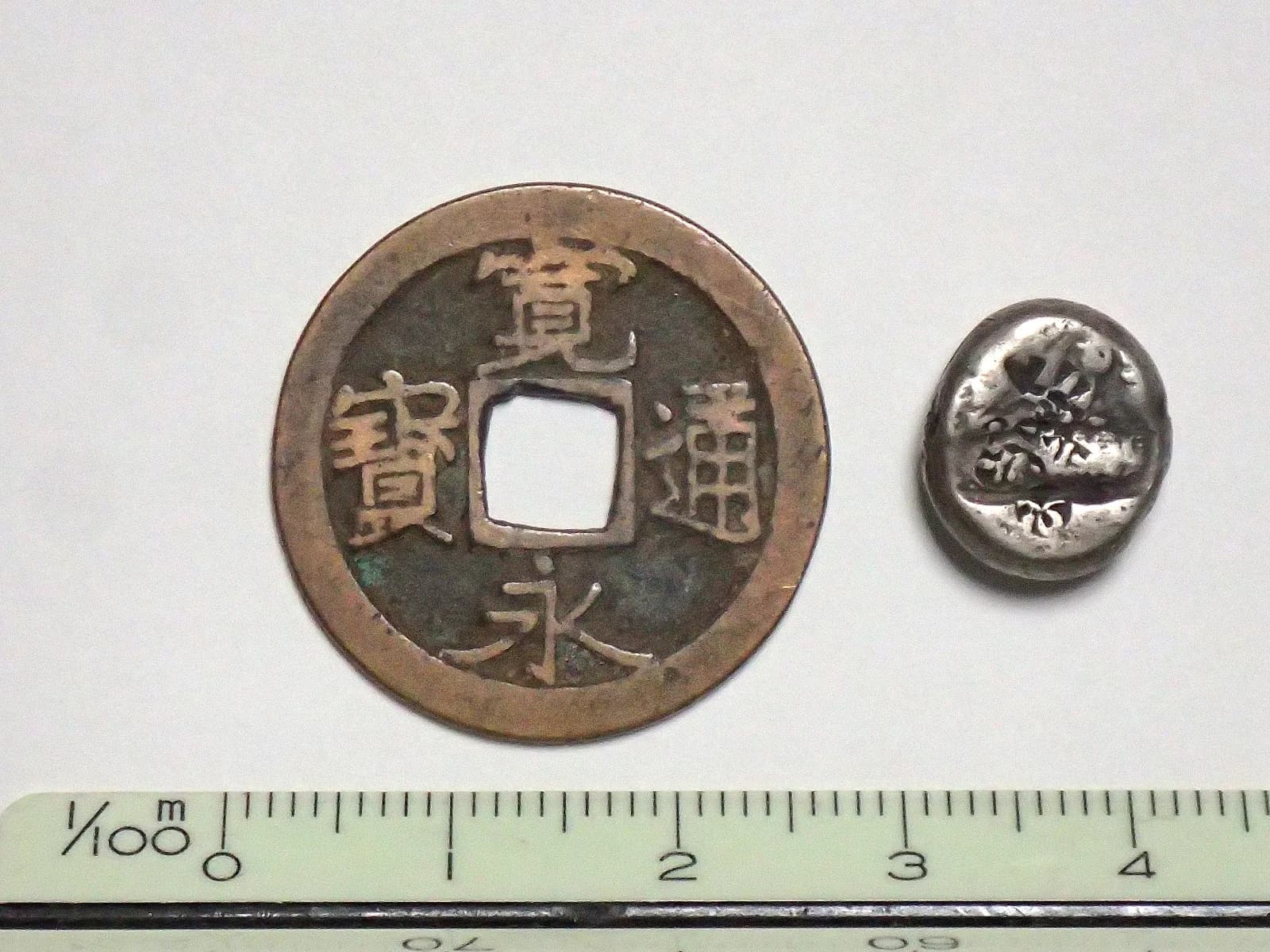
The Basics and Historical Background of Mameitagin
Mameitagin (豆板銀) is a small type of weighed silver coin that circulated during the Edo period. True to its name, it features an irregular bean-like shape and was minted with the same silver purity as chōgin (丁銀). It was used as an auxiliary currency to make up for the fractional amounts in large transactions involving chōgin, and it was also extensively utilized in smaller transactions. Its origin is believed to trace back to the 'Jurakudaigin' (聚楽第銀), minted under the unified regime of Toyotomi Hideyoshi at the end of the 16th century. In the Edo period, Tokugawa Ieyasu established the Ginza mint during the Keichō era, marking the start of formal minting. This laid the foundation for a national monetary economy. The handmade feel, with no two pieces alike, is a significant attraction for collectors. This unique shape and historical background elevate mameitagin beyond mere currency. For a detailed explanation of the entire monetary system of the Edo period, refer to Introduction to Edo Silver Coins (Chōgin & Mameitagin).
Changes in Silver Purity and Economic Impact
The silver purity of mameitagin significantly changed over time in conjunction with chōgin. Early Keichō mameitagin contained around 80% silver, characterized by a beautiful silvery white color. However, during the Genroku period, the purity decreased to 64%, and by the Hōei period, it dropped to 50%, primarily due to re-minting caused by the financial difficulties of the Bakufu. In the Kyōhō period, the purity temporarily returned to 80%, but in the Genbun period, it was reduced to 46%, in the Bunsei period to 36%, and finally to 26.1% in the Tenpō period. These fluctuations in purity significantly impacted the economic conditions and prices at the time. High-purity mameitagin retained the inherent luster of silver, while low-purity pieces, which contained more copper, had a reddish-black hue. This difference in color is an important clue for estimating their approximate era. The patina of low-purity mameitagin is also a point of interest for appreciation.
The Appeal of Diverse Weights and Shapes
Like chōgin, mameitagin was valued by weight, making it a type of weighed currency. Therefore, there were no strict standards like modern coins. The weight typically ranges from about 2 to 10 grams, but in the market, it can range from ultra-small pieces under 1 gram to large ones over 15 grams. The shape also varies greatly between pieces, with oval being the most common, but circle, triangle, and irregular pentagon shapes also appearing. Some pieces retain traces of artisans manually tearing and hammering the silver mass, highlighting its unevenness and enhancing its value as a unique item with no duplicates. When purchasing, it's critical to accurately weigh the coin with a precision scale to confirm it falls within the expected weight range. Since the weight directly influences its value, even slight differences can significantly affect the price. In the case of particularly rare marked pieces, weight can also be a premium factor.
The Stories and Premium Value Told by Stamps
Various stamps are impressed on the surface of mameitagin. The most common is the 'Daikokuten' (大黒天) image, but there are also textual stamps indicating eras like '寳', '文', '保', as well as auspicious symbols like treasures, fans, cranes and turtles, and pine-bamboo-plum. These stamps were impressed individually by hand by craftsmen at the Ginza mint. Pieces with multiple auspicious stamps are known as 'mameitagin with group stamps' and enjoy high popularity. These were considered specially made for celebratory or gift purposes, recognized with higher value than standard mameitagin. The clarity, arrangement, and combination of stamps significantly influence their rarity and market price. Collectors have high demand for auspicious motifs, and they are crucial points in valuation. Exploring the variations of stamps is one of the joys of collecting mameitagin.
Characteristics and Collecting Value of Mameitagin by Era
Mameitagin has distinctive features depending on its era of minting. Keichō mameitagin (minting started in 1601) is characterized by high silver purity of about 80% and beautiful silver color, making it the most popular. They are relatively scarce, increasing their rare value. Genroku and Hōei period mameitagin (1695 onward) tend to tarnish easily due to lower purity. However, mint changes during this period strongly reflect the Bakufu's financial status, adding value as historical material. Kyōhō mameitagin (1714 onward) see a restoration of 80% purity, presenting a beautiful silvery appearance next to Keichō mameitagin. They offer a good balance of price and quality, recommended for beginners. Although post-Genbun mameitagin (1736 onward) have low purity, they feature an abundance of stamp types and allow appreciation of diverse designs. Each era's mameitagin provides distinct allure and themes for collection.
Authentication Points to Distinguish Authenticity
The authentication of mameitagin requires specialized knowledge due to their small scale and diversity. Forgeries include 'privately minted mameitagin' illegally made by civilians during the Edo period and reproductions made in modern times. Key points for differentiating authenticity are as follows: 1. Specific Gravity Calculation: True silver has a specific gravity of about 10.49. Illegal products often have lower specific gravity, necessitating precise measurement. 2. Stamp Depth: Genuine stamps are deep and clear, showing the strength of hand striking. Forgeries often have shallow and unnatural engraving. 3. Surface Texture: Observe the uneven texture characteristic of handmade cast items, along with fine bubbles and casting marks. These textures differ importantly from modern precise cast products. 4. Acid Test: Apply a small amount of dilute sulfuric acid to check for discoloration reaction. This is a last resort as it may damage the coin, and is not recommended for non-experts. It is crucial to comprehensively judge these points. For more details, refer to Complete Guide to Distinguishing Fakes and Altered Coins.
Structure of Market Prices and Reality of Premiums
The market price of mameitagin varies greatly depending on the era, purity, weight, clarity of stamps, and condition. Standard Kyōhō mameitagin typically trade for 5,000 to 15,000 yen, and Tenpō mameitagin for 3,000 to 8,000 yen respectively. Particularly high prices are achieved by 'mameitagin with group stamps' with clearly defined multiple auspicious stamps. These can command prices 3 to 10 times higher than regular items of the same era. Rare stamps or large pieces have strong demand from collectors and tend to trade at high prices. Market prices are subject to constant change, so regular information gathering, such as checking price trends on a price chart, is important. Only records with verified details (event, lot, source URL, and confirmation date) are included in the market record as individual price examples.
How to Obtain and What to Watch for When Purchasing Mameitagin
The central price range for mameitagin is a few thousand to several tens of thousands of yen per piece, making it an excellent entry item for coin collectors. The main acquisition methods include purchasing from coin specialists, auctions, and coin fairs. Purchasing from a specialist has the highest credibility for authenticity and is the safest choice for beginners. Auctions may offer unexpected finds, though verifying the clarity of stamps or slight conditions from photos alone can be challenging. Whenever possible, it is advisable to check the actual item. When purchasing, always weigh the item with a precision scale (0.01g units) to ensure it matches the provided information. Cultivating the habit of verifying reference information supporting the purity and era is crucial to avoid mistakes. For more detailed purchasing methods, see Guide to Acquiring and Purchasing Ancient Coins.
Effective Exit Strategy and Liquidity
Due to their lower unit price compared to chōgin, selling multiple mameitagin at once attracts more attention than selling them individually. This is especially true in specialist auctions where listing them as a 'mameitagin collection set' can result in higher evaluations. The customer base ranges from intermediate to advanced collectors, and mameitagin are somewhat more liquid than chōgin. However, rare group-stamped pieces or early Keichō mameitagin should always be sold individually, maximizing their value and aiming for the highest price. Moreover, selling as an 'Edo Weighted Silver Coin Set' combining chōgin and mameitagin can also increase added value. Establishing an appropriate exit strategy maximizes the value of the collection. For auction utilization, see Introduction and Usage of Ancient Coin Auctions.
Recommended Starter Coin for Beginners and How to Start Collecting
As an introduction to collecting mameitagin, it is recommended to begin with a 'Kyōhō or Tenpō period standard, mid-sized piece (3–5g).' The price is around 5,000 to 15,000 yen, offering the texture of silver coins and the intrigue of stamps at an affordable price. Particularly advisable is choosing a specimen where the 'Daikokuten' stamp is clearly distinguishable. This naturally imparts the standard of a 'good stamp' for appraisal. Although the entry price for Keichō period mameitagin might be high, the Kyōhō period stands out for its high purity and beautiful hue, thus offering an appropriate balance of quality and price for beginners. Before expanding your collection with multiple coins, it is crucial first to become accustomed to genuine coins with a single piece. Purchasing from a reputable specialist and learning the basics forms the first step in an enjoyable lifelong collection. The joy of collecting lies in the process of exploring the history and stories held by each individual coin.
Mistakes to Avoid and Countermeasures in Collecting
The common novice mistakes in collecting mameitagin are 'misjudging silver purity' and 'buying falsely weighted items.' There are cases where lower-grade Tenpō or Bunsei period mameitagin are mistaken for high-grade Keichō period products, with price differences amounting to several times. It is crucial to learn the characteristics of each era rather than relying solely on color tones or the look of stamps. False weights are difficult to discern in small mameitagin, where even a 1–2g discrepancy can significantly affect the value. Always use a precision scale with 0.01g accuracy and verify the weight before purchasing. Additionally, some group-stamped items have illegally added stamps post-minting, known as 'altered products.' Altered items can be identified by carefully observing the depth of the stamp's engraving and the texture of the contact surface with the surrounding copper. Pay attention to unnatural parts and imbalances with other stamps. Initially buying from a trusted specialist and gaining knowledge and experience is the safest measure.
Optimal Storage Methods for Mameitagin
Since mameitagin are made of silver, their primary storage issue is blackening (silver sulfide) caused by sulfur compounds. Contact with materials containing sulfur such as newsprint, rubber products, and woolen materials is strictly prohibited, as they rapidly tarnish silver and cause blackening. For storage, using plastic 'coin capsules (airtight)' to individually seal each coin is ideal. Including sulfur-free anti-tarnish paper further enhances protection. The ideal humidity is 40–50%, as excessive dryness can lead to the progression of fine surface cracks. Even when storing multiple coins, ensure that they do not directly contact each other by enclosing them individually in capsules or using a divided case. If blackening occurs, do not use abrasives as they may damage the surface and diminish the coin's value. Always consult a professional in such cases. For detailed storage methods, see the Correct Storage Methods for Ancient Coins.