Issuance Background and Overview of the Series
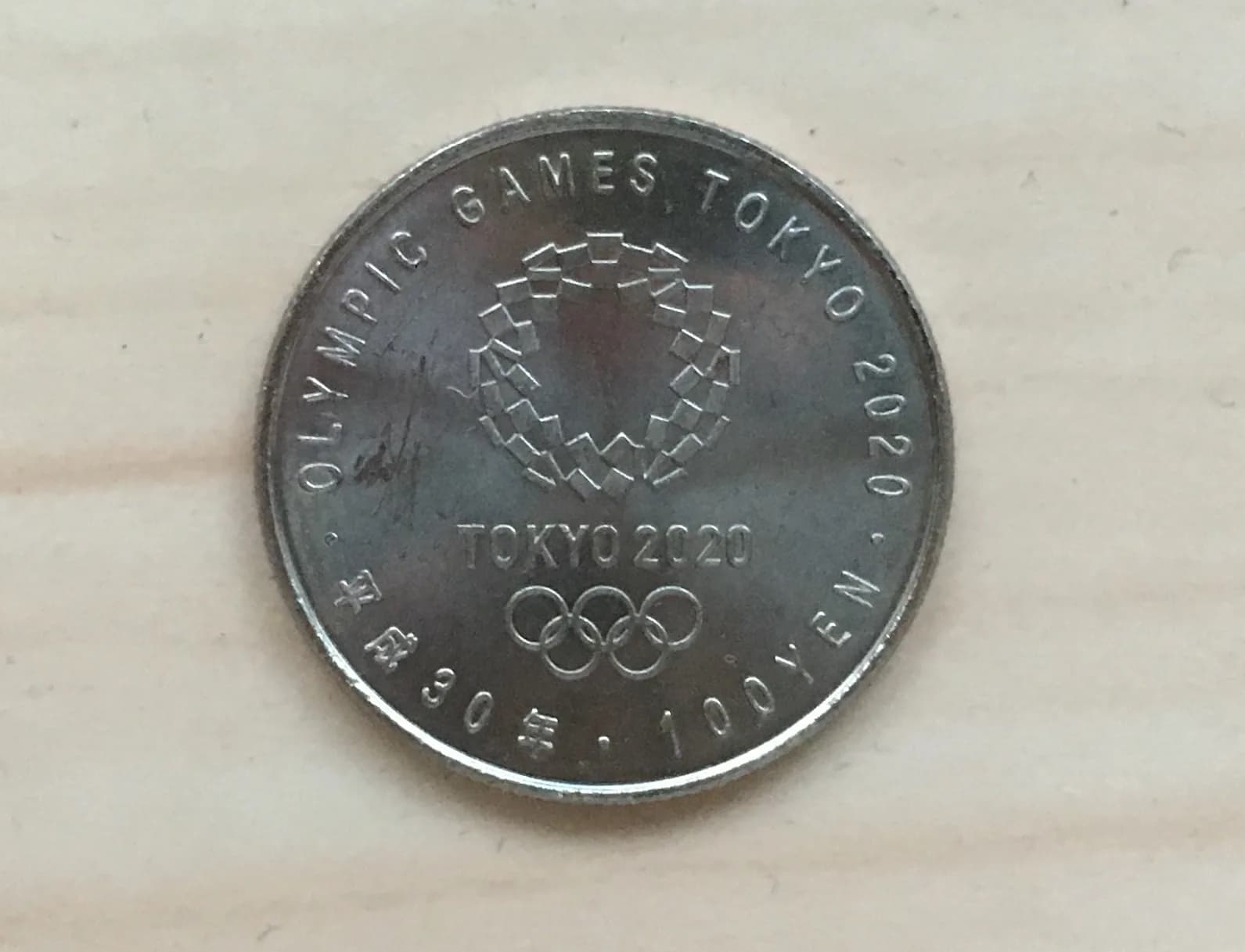
The Tokyo 2020 Olympic and Paralympic Games, decided to be held in 2013, attracted worldwide attention. To commemorate this historic event, commemorative coins were issued from Heisei 30 (2018) to Reiwa 2 (2020). Specifically, a total of 37 types were issued in four phases, including 3 types of 10,000 yen gold coins, 12 types of 1,000 yen silver coins, 2 types of 500 yen bi-color clad coins (Wind God & Thunder God), and 20 types of 100 yen clad coins, according to the Ministry of Finance's "Commemorative Coin List". A 1,000 yen silver coin commemorating the handover from the Rio de Janeiro Games (Heisei 28) was issued separately from these 37 types. The Games were postponed to 2021 due to the impact of the novel coronavirus. This series is not just a souvenir, but also evaluated as a work of art that gathers the essence of Japan's minting technology. The designs featuring various sports attract a wide range of collectors, not just sports fans. Its place in the history of Japanese commemorative coins is explained in detail in Introduction to Commemorative Coins (Tokyo Olympics, etc.).
Historical Context of the Pandemic and One-Year Postponement
The Tokyo 2020 Games, due to the unprecedented global pandemic, were postponed for one year for the first time in history and held without spectators. This unique situation added a deep historical context not only to the Games themselves but also to the commemorative coins issued in connection with them. The coins began to be issued from Heisei 30 (2018) in advance of the Games. As a "testament" issued during the difficult times of the pandemic, they are likely to become an extremely interesting research subject for future historians and collectors. These commemorative coins, in addition to being a memory of the Olympics, may be re-evaluated as symbols of the crisis humanity faced and the efforts to overcome it. Coins tied to specific historical events often become valuable artifacts that evoke memories of those times. The historical value of coins is also explained in detail in Factors Determining the Value of Old Coins.
Design and Specifications of the Three 10,000 Yen Gold Coins
The Tokyo 2020 Olympic and Paralympic commemorative 10,000 yen gold coins have garnered particular attention within the series due to their artistry and rarity. All three types were issued, each with a weight of 15.6g of pure gold and a diameter of 26mm. The motifs are "Yabusame and Shin-gi-tai" for the first issue, "Victory and Glory and Shin-gi-tai" for the third issue, and "Torchbearer and National Stadium and Shin-gi-tai" for the fourth issue, with the Tokyo 2020 Olympic Games emblem on the reverse of the first and third issues and the Tokyo 2020 Paralympic Games emblem on the fourth issue. The mintage is 40,000 each as per the Ministry of Finance's "Commemorative Coin List". Currently, they are traded in the market at about 150,000 to 200,000 yen each. This is a result of adding a premium as a collector's item to the material value of pure gold (about 140,000 yen, as of 2024). Understanding such market trends can be further analyzed through How to Read Coin Market Cycles.
Collecting Approach for the 12 Types of 1,000 Yen Silver Coins
The 1,000 yen silver coins are made from high-quality pure silver weighing 31.1g (purity 999/1000) and are attractive for their designs capturing dynamic moments of each sport. The 12 types of designs include Olympic sports such as swimming, athletics, badminton, baseball, softball, gymnastics, judo, table tennis, boxing, wrestling, and Paralympic sports such as judo, swimming, and wheelchair tennis, according to the Ministry of Finance's "Commemorative Coin List". New sports like karate, surfing, skateboarding, and sport climbing are represented on the 100 yen clad coins. However, there are different ways to enjoy collecting them. For example, "Theme Collection," focusing on favorite sports or sports where Japanese athletes won medals, is very popular. Additionally, focusing on specific genres such as ball games, martial arts, or water sports makes collecting even more enjoyable. Since the coins are made of pure silver, fluctuations in silver bullion prices also affect their value. A wise collecting strategy starts with understanding The Difference Between Investment and Collecting.
Featured Silver Coin Designs and Popular Sports
Among the 1,000 yen silver coins, highly popular ones include judo, gymnastics, swimming, and athletics, which are traditional strengths of Japan, as well as globally popular sports. These silver coins typically trade for 4,000 to 7,000 yen for uncirculated items, higher than the average price. The designs express the dynamism of the sports and tend to be highly rated by collectors. Additionally, new sports adopted in the Tokyo 2020 Games, such as surfing, skateboarding, and sport climbing, are represented on the 100 yen clad coins, according to the Ministry of Finance's "Commemorative Coin List." The designs are contemporary, fully showcasing the cool appeal of each sport. Silver coins for Paralympic sports have a strong collector demand among welfare and sports professionals due to their social significance. Particularly in specific sports, there tends to be high prices. Moreover, silver coins of sports where Japanese athletes won gold medals or medals see concentrated demand even after issuance, with market prices tending to rise. The current market price trends can be viewed in detail at Confirm Price Trends with Market Charts.
Introductory Value of the 20 Types of 100 Yen Clad Coins
The 100 yen clad coins, made from an alloy of copper and nickel, are ideal as an introduction to commemorative coins with a value beyond their face value. This series uses "pictograms" symbolizing each sport from the Tokyo 2020 Games in its design, which is simple yet sophisticated, and widely appreciated. Given their face value of 100 yen, they can be obtained for around 500 yen, making them very affordable. This allows even first-time old coin collectors to start their collection casually. Collecting all 20 types poses little financial burden, providing a sense of achievement and making it an enjoyable series. Additionally, these clad coins are well-received as "special souvenirs of 2020" to gift to children and grandchildren. They cultivate interest in sports and serve as educational tools that foster historical learning. This series, which allows you to start easily and enjoy the joy of collecting, is ideal for utilizing various acquisition methods introduced in Guide to Sources and Purchase Methods for Old Coins.
Current Market Prices and Supply-Demand Trends
The market price of the Tokyo 2020 commemorative coin series varies widely depending on the type, condition, and popularity of the design. The 10,000 yen gold coins trade for approximately 100,000 to 200,000 yen each. This is due to evaluating not only their material value as pure gold but also rarity and design. 1,000 yen silver coins have a central price range of 2,000 to 7,000 yen each. Silver coins for popular or new sports, and those where Japanese athletes won medals, are stable at high prices. The trend in silver prices directly affects the material value of silver coins containing 31.1g of pure silver. In periods of silver price surges since the mid-2020s, there have been instances where the material value alone exceeds 5,000 to 7,000 yen, which, along with supply and demand trends, is a point to note. 100 yen clad coins can be easily acquired for 500 yen. Proof sets generally fetch 2 to 3 times the price compared to normal items. Transactions in the market are actively conducted at specialized coin shops, online auctions, and flea market sites. Usage of these transaction channels is explained in detail in Introduction to Coin Auctions and How to Utilize Them.
Special Value of Proof Sets
Proof sets manufactured by the Mint Bureau hold special value among collectors due to their outstanding quality and beauty. Unlike regular coins, proof coins, made using special techniques, have a mirror-like polished field (flat part) and a matte-finished relief (raised part), creating a vivid contrast and outstanding visual beauty. Particularly, the proof set of the 10,000 yen gold coins captivates with the athlete's figure emerging in brilliance. This proof set of three gold coins is often traded in the market for 500,000 to 800,000 yen, with its rarity and artistry being highly evaluated. Additionally, proof of the 1,000 yen silver coins are individually traded for 5,000 to 12,000 yen. Proof sets are usually housed in luxurious cases original to the Mint Bureau. Whether this limited case and certificate are included greatly affects market prices. To maximize the collection value, it is important to maintain the condition and completeness of accessories. For criteria on evaluating the quality of coins, see Practical Guide to Coin Grading.
Comparative Collection with the 1964 Tokyo Olympics
The Olympics held again in Tokyo after 57 years. Collecting a "New and Old Tokyo Olympics Pair" featuring the 1964 Tokyo Olympic commemorative 1,000 yen silver coin and the 2020 Tokyo Olympic commemorative 1,000 yen silver coin is a popular theme among many collectors. These two coins symbolize important milestones in the history of Japanese commemorative coins and create contextual value beyond individual ownership. Comparing the two enables a vivid experience of the evolution of Japanese minting technology. For instance, the 1964 1,000 yen silver coin was made from silver with a purity of 925/1000, but the 2020 1,000 yen silver coin evolved to pure silver with a purity of 999/1000. The design expression has also transitioned from the classic aesthetic of the 1960s to a more dynamic and modern expression of the 2020s. This comparative collection offers not only a mere collection of coins but also an opportunity to learn about Japan's journey from post-war reconstruction to the present and the evolution of global sports events as a "living history textbook." The background of both coins is further explored in Introduction to Commemorative Coins (Tokyo Olympics, etc.).