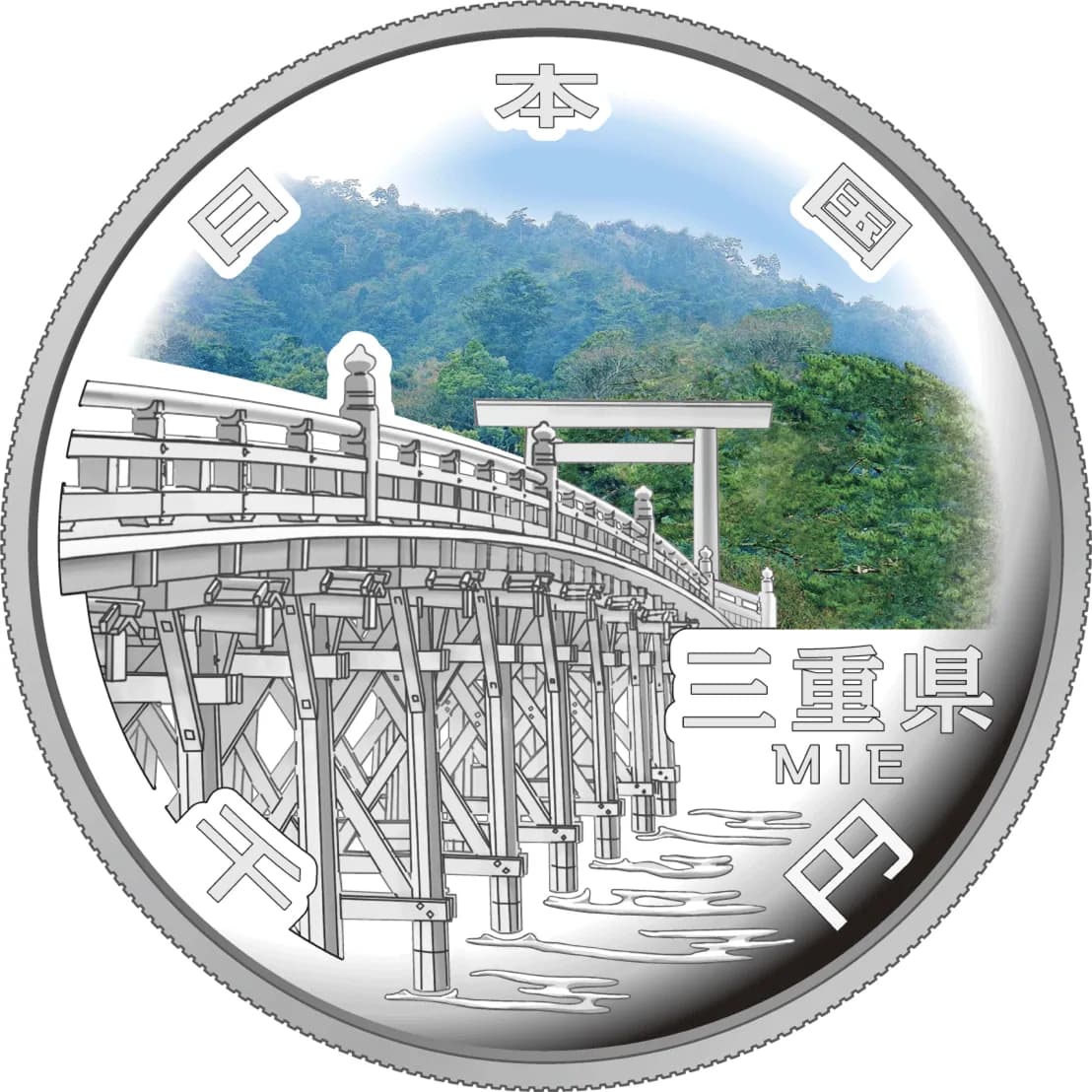
Overview of the 47 Prefecture Series
Commemorating the 60th anniversary of the Local Autonomy Law, this series, issued from Heisei 20 (2008) to Heisei 28 (2016), is the largest national project in Japanese numismatic history. Definitive mintage records have not been confirmed (they will be added to the record once a source is obtained). A total of 94 types were issued: one thousand yen silver coin and five hundred yen bicolor clad coin themed on each of the 47 prefectures. No definitive records of mintage and issuance numbers have been confirmed (records will be added as sources become available). This extensive series, spanning many years, attempts not just to serve as commemorative coins but to document regional cultures across Japan through coinage. While Japan's commemorative coins typically celebrate international events, this series stands out by focusing on domestic regional cultures. Detailed information on other commemorative coin series can be found in the Commemorative Coins Introduction. The diverse designs and lengthy issuance period have captivated many collectors. The series is considered a condensed representation of "the beauty of Japan," reflecting the depth of collection.
Historical Significance of the 60th Anniversary of the Local Autonomy Law
The Local Autonomy Law was enacted in 1947 (Shōwa 22). This law laid the foundation for decentralization and democracy in post-war Japan and is a critically important statute. Commemorating its 60th anniversary, this series is more than just a celebration. By elevating each prefecture's unique culture, nature, and history into coin designs, it serves as a national project visualizing "local pride." This unparalleled series, easily showcasing regional characteristics from across the nation, was closely connected with regional revitalization and promotion. The series offered an opportunity to re-acknowledge and foster attachment to local charms. Its cultural significance in contributing to community revitalization is immeasurable. It provided a rare opportunity to rediscover Japan's diverse regional characteristics through coinage.
Innovation in Colored Coin Technology
The thousand yen silver coins in this series are noted as Japan's first full-color printed colored coins, leaving a mark in commemorative coin history. Using independently developed inkjet technology, the Mint Bureau successfully applied vivid color printing directly on the coin's surface, an unprecedented attempt at the time. This technological innovation demonstrated Japan's high-level craftsmanship in coin manufacturing to the world. Distinct features of each prefecture, such as the red of Hokkaido's Tancho Crane and the delicate colors of Kyoto's Murasaki Shikibu's Junihitoe, are remarkably faithfully reproduced. This groundbreaking color printing technology was carried over to subsequent commemorative coin series, laying the foundation for Japan's colored coin production. From a technical standpoint, the value of this series is exceptionally high, contributing to its appeal among many collectors due to its exquisite finish.
Diversity of Design and Regional Flavor
Each of the 47 prefecture designs features iconic tourist spots, local specialties, and prominent figures of the region. For instance, Hokkaido depicts the expansive Lake Toya and the graceful Tancho Crane, Kyoto features Murasaki Shikibu, author of the 'Tale of Genji', and Okinawa showcases the World Heritage Site of Shuri Castle and Shureimon Gate. Tokyo's coin highlights the Kokugikan and Sumo, Nara features Horyu-ji Temple and deers, while Hiroshima depicts the Atomic Bomb Dome and Itsukushima Shrine, with each coin adopting designs that are emblematic of their respective prefectures. These designs serve as valuable resources narrating the history and culture of these regions. The five hundred yen bicolor clad coins have a dual-layer structure of silver and gold, offering visual elegance. The cupronickel ring in the center is intricately engraved with motifs distinct to each prefecture. This diversity and local engagement in design are the major attractions of this series, drawing collectors with the stories embedded in each piece.
Specifications and Features of the Thousand Yen Silver Coins
The thousand yen silver coins commemorating the 60th anniversary of the Local Autonomy Law are made of pure silver (fineness 1000), weighing 31.1g, and are 40mm in diameter, boasting an impressive size. This was the highest standard specification for commemorative coins at the time. Proof processing with beautiful luster is applied, creating exquisite contrast between the mirror-finish background and the frosted patterns. This proof processing enhances the artistic value of the coins, further raising collector appraisal. The combination of color printing and proof processing represents a pinnacle of Japanese minting technology. Being made of pure silver is one of the factors determining the value of old coins, ensuring stable value as a material. Accompanied by a dedicated case and certificate, the coins also gained popularity as gifts. Its weight and beauty provide deep satisfaction to those who possess them. The details of each prefecture's design can be fully appreciated through its specifications.
Specifications and Features of the 500 Yen Bicolor Clad Coins
The 500 yen bicolor clad coins commemorating the 60th anniversary of the Local Autonomy Law are structured from a combination of nickel brass, cupronickel, and copper. With a weight of 7.1g and a diameter of 26.5mm, they are almost the same size as the current 500 yen coins. This multilayer structure also functions as an anti-counterfeiting technology. The edges of the coins feature angled serrations and latent images (hidden letters or patterns) demonstrating meticulous craftsmanship. This ensures reliability as common circulating currency while adding special commemorative value. The combination of materials and unique colors enhances visual appeal. Compared to the thousand yen silver coins, a far greater number of these coins were issued, and some were exchangeable over the counter at financial institutions, making them relatively easy to obtain. Many people found them familiar as commemorative currency often seen in daily life, further highlighting a significant aspect of this series.
Background of Price Differences Between Early and Late Issuance Prefectures
Due to the series' long issuance period, there are notable differences in market prices depending on the issuance date. The thousand yen silver coins from prefectures first issued in 2008, such as Hokkaido, Tokyo, Kyoto, and Shimane, maintain high popularity due to initial attention and lower issuance numbers. These early issuance prefectures went into short supply immediately after issue, driving up subsequent market prices. This is a typical example of how initial market interest impacts long-term value. In contrast, late issuance prefectures such as Oita, Miyazaki, Kagoshima, and Okinawa (2015–2016), were more steadily supplied and are available for a more affordable 5,000 to 8,000 yen. This phenomenon can be understood through the understanding of the old coin market cycle. Early issuance prefectures known for tourism and cultural significance tend to be more expensive, and using late issuance prefectures for "filling gaps" in completing a collection is a viable strategy. Individual price and auction examples are listed only when verified records (with event, lot, source URL, and confirmation date) are available, according to our market record policy.
Market Price and Rarity by Prefecture
The market prices of the thousand yen silver coins commemorating the 60th anniversary of the Local Autonomy Law range widely from 5,000 to 20,000 yen depending on the prefecture. Early issues like Hokkaido, Kyoto, and Shimane sold out quickly after issuance, resulting in lower market circulation and higher prices. These prefectures are particularly popular among collectors and may be difficult to obtain. Later issuance prefectures are generally more accessible, often priced around 3,000 to 7,000 yen, influenced by the supply and demand balance at the time of issuance. The 500 yen bicolor clad coins similarly trade between 1,000 and 3,000 yen per piece, with early issuance commanding slightly higher market prices. The economic situation and tourist popularity of specific prefectures can also influence coin demand. For instance, coins from regions with high tourist traffic may trade at higher prices due to souvenir demand. Keeping up with the latest market trends is crucial for smart collecting.
Rarity and Value of Complete Sets
Complete sets of all 1,000 yen coins from the 47 prefectures are extremely rare in the market. Such a set commands higher value due to the effort and time required to gather this quantity. These complete sets are evaluated not merely as a collection of coins but as rare "collector grade items" receiving special appraisal. Assembling all coins at once is a formidable task, and the labor, time, and capital needed enhance the value of a complete set. Individual price and auction examples are listed only when verified records (with event, lot, source URL, and confirmation date) are available, according to our market record policy.
Acquisition Methods and State Verification Tips
Currently, the commemorative coins for the 60th anniversary of the Local Autonomy Law are no longer sold freshly by the Mint Bureau. Trusted coin dealers, online auctions, flea market apps, and similar platforms are main acquisition routes. Carefully checking product condition is crucial when purchasing. Coins accompanied by the Mint Bureau's original dedicated case and certificate are valued highest. Coins without a case or certificate are generally devalued by about 20–30%, requiring caution. Particularly the color printing parts are delicate, and fading or peeling significantly lowers value. Alongside visual inspection, it's recommended to verify details using high-resolution photos. Moreover, reference to standards of coin grading and selecting coins certified by professional organizations is a wise choice for secure collection advancement. The coin condition directly impacts market pricing for this series.
Long-term Holding Scenarios and Future Prospects
Nearly 10 years have passed since the final issuance of the 60th anniversary series of the Local Autonomy Law. Opportunities for completing sets are expected to diminish year by year. Such increased scarcity significantly contributes to potential value appreciation with long-term holding. Particularly, a value increase is anticipated once 50 years have passed since issuance due to "semi-centenary commemoration." Coupled with renewed evaluation of the culture, tourism, and history each prefecture's design symbolizes, the value might further appreciate. Current market prices are likely at an undervalued level from a long-term holding perspective. Proof-specification A set completes are particularly highly evaluated for their rarity and artistic value, suggesting high future potential. Gradually assembling them now could be a wise investment decision. This series, embodying both historical significance and artistic beauty, will likely continue to be beloved by many collectors.