The New Currency Regulations and Japan's First Modern Gold Coin
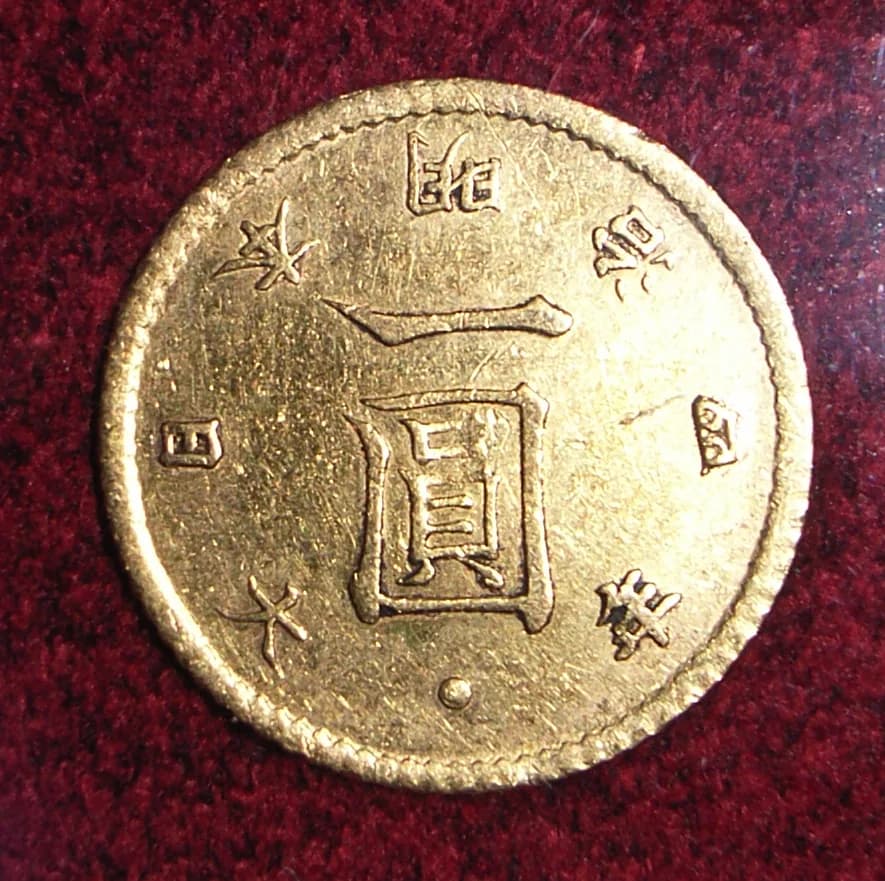
The New Currency Regulations (Shinka Jōrei), promulgated in Meiji 4 (1871), were a landmark event that fundamentally transformed Japan's monetary system. Under these regulations, the Kyū Ichi-en Kin'ka (旧1円金貨)—Old One-Yen Gold Coin—was issued as Japan's first modern gold coin. Its weight was set at 1.67g, with a gold fineness of 900/1000 (the remaining 100/1000 being copper). These specifications were meticulously designed to conform to the international gold standard of the time. Production began at the Osaka Mint (then known as the造幣寮, Zōheiryō) under the guidance of engineers invited from Britain. This gold coin was more than mere currency; it carried the symbolic meaning of Japan's entry into international society as a modern nation-state. The period of issue ran from Meiji 4 (1871) to Meiji 13 (1880). It can truly be said that this single coin laid the cornerstone of Japan's modern monetary history. Introduction to Modern Gold and Silver Coins (Meiji–Shōwa) provides an overview of modern coinage as a whole.
The Gold Standard and the International Role of the Old One-Yen Gold Coin
The Old One-Yen Gold Coin symbolizes the first step toward the establishment of Japan's gold standard. After the Meiji Restoration, Japan sought to expand international trade, and a transition to the gold standard—then the mainstream of the global economy—was urgently needed. The gold fineness and weight of the Old One-Yen Gold Coin were determined taking into account international exchange rates with the major gold coins of the era, such as the United States twenty-dollar gold coin and the French twenty-franc gold coin. As a result, Japan gained a highly credible currency for international settlements, contributing to the smooth conduct of trade. This gold coin played an important role that went beyond mere domestic circulation, helping to elevate Japan's standing in the international community. Its issuance demonstrated Japan's commitment to participating in international society as a modern nation-state. Types and Value of Meiji Gold Coins provides detailed coverage of Meiji-era gold coins in general, including the Old One-Yen Gold Coin.
Design and Physical Characteristics
The obverse of the Old One-Yen Gold Coin features a large, intricately engraved dragon in the center. Surrounding it are the national name 「大日本」 and the year inscription 「明治○○年」. The reverse bears the Japanese symbol of the 日章 (sixteen-petal chrysanthemum crest) and the denomination characters 「一圓」, arranged in a beautiful composition. The diameter is a mere 13.51mm—extremely small—and is notably more than one size smaller than the modern five-yen coin (diameter 22mm). Despite this diminutive size, the engraving of the dragon is executed with remarkable precision; examining it closely with a loupe inspires admiration for the high level of craftsmanship of the era. The dragon's expression and every individual scale reveal an attention to detail throughout. The coin's edge is struck with fine reeding, which served the practical function of preventing coin clipping (shaving of the metal). The design, combining beauty with functionality, can be said to represent the pinnacle of early modern Japanese minting technology.
Engraving and Minting under the Guidance of British Engineers
The most advanced technology of the day was introduced in the manufacture of the Old One-Yen Gold Coin. In particular, the dragon design on the obverse is said to have been produced based on a model designed by Thomas James Watters, a British engraver posted to the Osaka Mint. At the time, Japan had not yet established the techniques needed to engrave such precise steel dies (mother dies). Consequently, the engraving of the master dies was handled by British engineers, and their techniques were subsequently passed on to Japanese craftsmen. In the minting process as well, state-of-the-art machinery was introduced, including steam-powered rolling mills and high-precision presses. The technology for striking extremely small coins of under 1.5mm in thickness uniformly and at high speed was nothing short of revolutionary in early Meiji Japan. This experience and the technical knowledge acquired formed the foundation of Japan's subsequent gold and silver coin manufacturing capabilities, contributing greatly to Japan's modern industrialization. The introduction of technology from Britain was indispensable in raising the quality of Japanese coin production to international standards.
Market Trends and Price Ranges
The market price of the Old One-Yen Gold Coin fluctuates considerably depending on its rarity and condition. In particular, coins struck in the earlier period (around Meiji 4 to 6), when mintage figures were lower, are in high demand and frequently trade at prices exceeding 1,000,000 yen. The value of a coin is heavily influenced by its state of preservation. Factors That Determine the Value of Old Coins will enable more informed collecting. Coins certified by internationally recognized third-party grading services such as PCGS and NGC command a premium over uncertified examples, as their authenticity and condition are guaranteed. For high-grade pieces rated MS63 or above in particular, it is not uncommon to see transactions approaching or exceeding 2,000,000 yen. In recent years, the entry of wealthy collectors from Asia has become conspicuous, and prices for top-quality pieces have been trending upward. Since mintage figures vary greatly by year, identifying scarce date varieties is an important point for investment purposes. How to Read Old Coin Market Cycles should be consulted to gauge market trends. Individual prices and auction results are listed only once verifiably matched records — with sale, lot, source URL and review date — exist.
Detailed Mintage Figures and Price Ranges by Date
The Old One-Yen Gold Coin shows significant variation in mintage figures by date, and this directly affects market prices. The highest mintage belongs to the Meiji 4 date, at approximately 680,000 pieces. Particularly scarce are the Meiji 12 and Meiji 13 dates, each of which had a mintage of only a few tens of thousands of pieces. Furthermore, pieces graded MS64 or above by PCGS or NGC are increasingly fetching prices exceeding 2,000,000 yen, regardless of date. The effect of grade on price is very substantial, and the presence of a grading certificate and the grade assigned are An important points to check at the time of purchase. Mintage data by date serves as essential background information for investment decisions. Individual prices and auction results are listed only once verifiably matched records — with sale, lot, source URL and review date — exist.
The Appeal of Pattern Coins and Special Varieties
Collecting the Old One-Yen Gold Coin offers a special avenue of enjoyment beyond the regular circulation issues: coins known as "試鋳貨" (pattern or proof coins). Pattern coins were specially manufactured not for general circulation but for display or presentation purposes, and they are characterized by their beautiful mirror-like finish. They are far rarer than regular issues and appear on the market extremely infrequently, commanding high prices. Their distinctive brilliance captivates collectors. Furthermore, among Old One-Yen Gold Coins produced in the early Meiji period, multiple varieties exist in which fine details of the obverse dragon design differ. These are distinguished among specialists as the "first type," "second type," and so on, with subtle differences visible in the number of the dragon's scales, the shape of its whiskers, and the style of the lettering. The study of these varieties represents an advanced dimension of enjoyment in collecting the Old One-Yen Gold Coin; the pleasure lies in consulting specialized books and research papers to discern the fine differences. Minor variations can sometimes have a significant impact on rarity and value.
International Grading by PCGS and NGC and the Global Market
The Old One-Yen Gold Coin is officially listed in the world coin catalogues of both PCGS (Professional Coin Grading Service) and NGC (Numismatic Guaranty Corporation), and it is held in high regard in the international collector market. It is particularly popular among wealthy collectors in Asian markets such as Hong Kong, Taiwan, and Singapore, and this demand has been one of the factors driving price increases. For example, at Heritage Auctions, a major international auction house, there is a case in which a Meiji 7 date Old One-Yen Gold Coin graded PCGS MS64 sold at auction in the 2020s for the equivalent of approximately 1,800,000 yen. Together with the growing global demand for gold coin collections, awareness of the Old One-Yen Gold Coin has been steadily rising. Obtaining a grading certificate with an appropriate grade greatly expands access to overseas buyers and increases options at the time of sale. Standards for Old Coin Grading are essential to understand for transactions in the international market.
Storage and Authentication of This Miniature Coin
The Old One-Yen Gold Coin, with its extremely small diameter of 13.51mm, requires special care in handling and storage. Touching it with bare hands can leave fingerprints and skin oils on the coin's surface, which may adversely affect long-term preservation. Therefore, the basic rule is always to use cotton gloves when handling the coin. For storage, it is strongly recommended to seal the coin in a dedicated coin capsule sized for 14mm diameter and then keep it in a fire-resistant, moisture-proof safety box. For authentication, verifying the weight with a precision electronic scale is the first and most important step. The exact weight of the Old One-Yen Gold Coin is 1.67g, with a tolerance of approximately ±0.02g. Many counterfeits fall outside this weight—being either too light or too heavy—so a significant number can be eliminated through this basic check alone. Beyond this, testing for magnetic reaction, measuring specific gravity, and obtaining expert authentication are indispensable. Proper Storage Methods for Old Coins and the Guide to Identifying Fakes and Altered Coins should also be consulted for appropriate precautions.
The Transition to the New One-Yen Gold Coin and the Historical Significance of the Old One-Yen Gold Coin
The Old One-Yen Gold Coin was issued for approximately ten years, from Meiji 4 (1871) to Meiji 13 (1880). Subsequently, in Meiji 30 (1897), the Currency Act (貨幣法) was promulgated, and the coinage transitioned to the Shin Ichi-en Kin'ka (新1円金貨)—New One-Yen Gold Coin—based on a new gold standard framework. The New One-Yen Gold Coin had half the weight of the Old One-Yen Gold Coin, at 0.83g. This was a measure taken in response to fluctuations in international gold prices and changes in Japan's fiscal circumstances. The Old One-Yen Gold Coin holds very great historical significance in that, during the dawn of Japan's modernization, it built international credibility as a currency and established the foundations of a modern monetary system. Although its role was brief, it became an important stepping stone supporting Japan's subsequent economic development. It can truly be said that this coin represents a crucial turning point that cannot be omitted from any account of Japan's monetary history. Reading the entry on the New One-Yen Gold Coin alongside this one will deepen your understanding of the evolution of Japan's modern gold coinage.