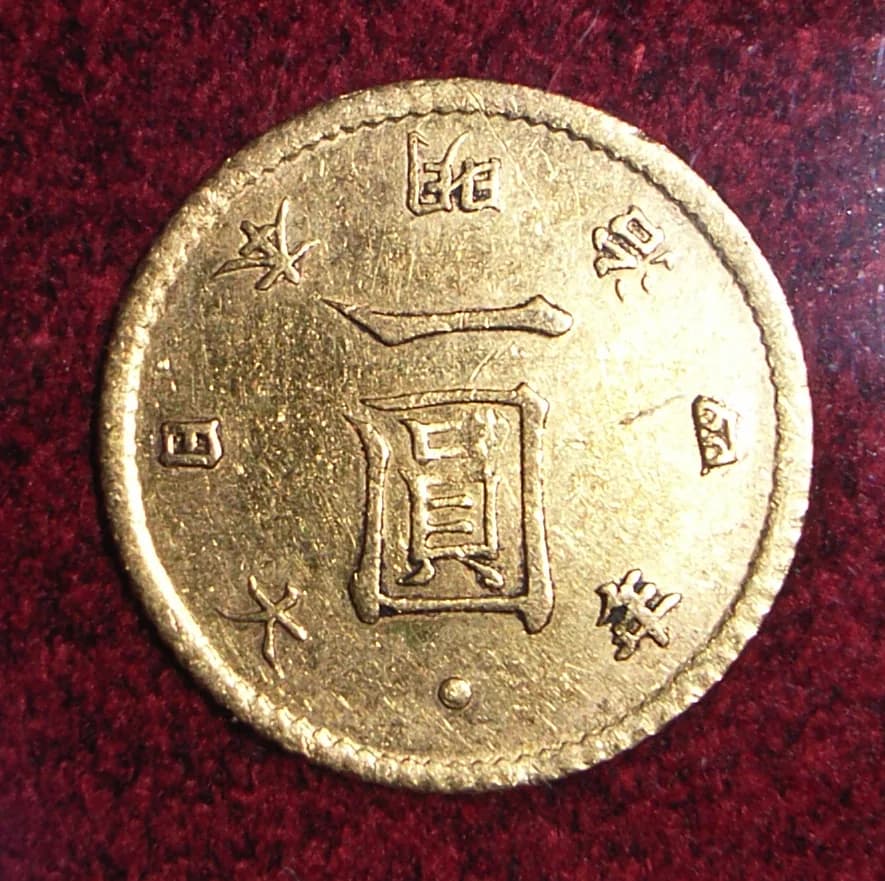
The System and Historical Background of Meiji Gold Coins
Meiji gold coins symbolize Japan's modernization and adaptation to the international community. This system is broadly divided into two generations: "old gold coins" and "new gold coins." The old gold coins were established under the new currency regulations of Meiji 3 (1870) and issued from that year until Meiji 13 (1880). During this period, the coins came in five denominations: 20 yen, 10 yen, 5 yen, 2 yen, and 1 yen, with a gold purity of 900/1000 (90% pure gold), adhering to international standards. Meanwhile, new gold coins began to be issued in earnest in Meiji 30 (1897) following the establishment of the gold standard after the Sino-Japanese War. These coins only had two denominations: 20 yen and 10 yen, maintaining the same gold purity of 900/1000 as the old gold coins. The old gold coins feature dynamic dragon designs on the obverse, while the new gold coins are characterized by designs focused on the chrysanthemum and paulownia crests, symbols of Japan. The advent of these Meiji gold coins marks the transition from the diverse currency system of the Edo period to a modern unified currency system. For a more detailed history of modern coins, please refer to the Introduction to Modern Gold and Silver Coins (Meiji to Showa).
The Unmatched Appeal and Rarity of Old Gold Coins
Among the old gold coins, the most coveted by collectors is the old 20 yen gold coin, boasting a diameter of 35.1mm and weighing 33.3g. The dragon engraved on its surface is considered a masterpiece of Japanese modern coinage, renowned for its artistic perfection. The intricate scales, strong whiskers, and sharp claws are expressions crafted with the latest technology of the time. The mintage of the old 20 yen gold coin was approximately 470,000 pieces in Meiji 3, relatively high, but drastically decreased each year thereafter. By Meiji 13, it is estimated that only a few thousand pieces were minted. This extreme difference in mintage directly reflects the rarity and market prices of each year. This is a classic case of the "rarity premium" that surpasses simple bullion value, marking it as the pinnacle of Japanese modern coin investment. Similar allure is found in old 10 yen and old 5 yen gold coins, and those of high quality fetch high prices. For a deeper understanding of the factors determining the value of antique coins, please see Factors Determining the Value of Antique Coins. Individual prices are listed only once verifiably matched, sourced records exist.
Sophisticated Counterfeits and How to Identify Them
Given the high trading values of Meiji gold coins, unfortunately, sophisticated counterfeits have circulated in the market. Purchasing non-authenticated pieces, especially through internet auctions, carries tremendous risk. Counterfeits include replicated castings of genuine gold coins, re-engraved existing coins, or brand-new sculptures. Basic self-protection methods when purchasing include precise "weight measurement." The old 20 yen gold coin is strictly specified at 33.33g, and the new 10 yen gold coin at 8.33g. It is also important to check the shape and spacing of the "edge (side)" graining on the coins, as well as the presence or absence of inscriptions. However, even these simple checks can be difficult against adept counterfeits. The safest approach is to choose items authenticated by reputable third-party grading agencies like PCGS or NGC, or purchase from dealers with expertise and history such as those affiliated with JNDA (Japan Numismatic Dealers Association). For detailed information on distinguishing counterfeits and altered items, refer to the Complete Guide to Distinguishing Counterfeits and Altered Items.
Technological Innovation in Dragon Carvings and the Contribution of British Engineers
The intricate dragon designs, central to old gold coins, were the result of revolutionary change in Japanese minting technology during early Meiji. This core design effort was led by British engraver Thomas William Kinder, who was invited to the Osaka Mint, along with his colleagues. The precision of their engraving technology, boasting an accuracy down to 0.1mm, was advanced beyond what Japan possessed at that time. The depiction of the dragon's scales, dynamic whiskers, and individual sharp claws are expressions that set it apart from previous Japanese coins. Several British engineers were assigned to the mint's engraving department, systematically transferring technology to Japanese craftsmen. From the 10s of the Meiji era onwards, Japanese engravers took the lead in designing gold coins, inheriting British technology while integrating their own design interpretations and Japanese aesthetic sense. This technological introduction marks a pivotal turning point in establishing modern Japanese coin production technology.
The Correlation Between Mintage by Year and Market Prices of Old Gold Coins
Understanding the market price of old gold coins, the mintage by year is one of the most crucial indicators. In particular, the old 20 yen gold coins minted in Meiji 3 totals about 470,000 pieces, becoming the most common, while the Meiji 4 minting is about 320,000 pieces, and Meiji 6 minting sharply drops to about 120,000 pieces. Furthermore, Meiji 9 minting is approximately 50,000 pieces, and the rarest, the Meiji 13 minting is estimated to be a few thousand pieces, with very few now in existence. These mintage differences are directly reflected in market trading prices. For example, the Meiji 3 issue is relatively accessible in terms of price, while the Meiji 13 issue commands a significantly high premium and is coveted by collectors. The old 10 yen gold coins show similar trends, with Meiji 4 and 5 issues hovering around 200,000 pieces, while later Meiji years see quantities drop below 10,000 pieces, heightening their rarity value. However, even years with high mintages might have low existing numbers, making it essential to accurately grasp market trends. For those wishing to confirm price trends on the current market chart, please use Check Price Trends on Market Chart.
Gold Coins Under the Gold Standard and the Pure Gold Value in Modern Times
The physical specifications of the old 20 yen gold coin are a weight of 33.33g, a diameter of 35.06mm, and a gold purity of 900/1000. This calculates to a pure gold content of 30.00g. This indicates that under the gold standard at that time, gold coins played the role of "standard coins" with bullion value nearly equivalent to their face value. This high bullion value serves as a strong factor supporting a certain bottom value, even when the coin's condition is poor and little can be expected in terms of premium value. On the other hand, the new 20 yen gold coin issued from Meiji 30 to Taisho 1 reduced the weight to 16.67g, about half that of the old coins, while maintaining the same gold purity of 900/1000 with a pure gold content of 15.00g. Thus, Meiji gold coins possess not just the value as antique coins but also the value as tangible assets in pure gold, making them attractive as a hedge against inflation. Individual prices are listed only once verifiably matched, sourced records exist.
International Appraisal and Market Liquidity by PCGS and NGC
Meiji gold coins are actively handled by PCGS (Professional Coin Grading Service) and NGC (Numismatic Guaranty Corporation), world-renowned third-party grading agencies. Their appraisals and slabbing enhance the coins' authenticity and condition, dramatically increasing liquidity in international markets. Particularly, high-grade items equivalent to MS63 or higher are highly valued both domestically and internationally. Recently, when Japanese old gold coins are listed at international major auctions such as Heritage Auctions (USA) or Stack's Bowers, wealthy collectors from Hong Kong, Taiwan, and mainland China increasingly compete for high-value bids. High-grade Meiji gold coins are not infrequently auctioned at 1.5 to 2 times the domestic market price, with this robust overseas demand further limiting the supply of high-grade pieces in the domestic market. Meiji gold coins with international recognition gain more appeal as assets since their value is acknowledged based on world-standard criteria, further increasing their asset appeal. For more detailed standards on antique coin grading, please refer to Antique Coin Grading Standards.
Prohibition of Cleaning and Principles of Proper Storage
In collecting and investing in Meiji gold coins, the strict prohibition of "cleaning" is the fundamental taboo. Actions aimed at restoring the shine by polishing the coin's surface destroy the coin's fine surface structure and spoil the beautiful "tone" formed over the years. Once cleaned, a coin is judged as "CLEANED" during grading, resulting in a significant decrease or near disappearance of its premium value. In order to maintain the value of gold coins over the long term, correct storage methods are essential. If housed in PCGS/NGC slab cases, retain their storage; if bare, placing them in dedicated coin capsules is strongly recommended. Storage environments should avoid high humidity and direct sunlight. It's especially important to avoid PVC (polyvinyl chloride) materials for flips or cases, as they can chemically react and discolor the coin surface. Maintaining the appropriate humidity by periodically replacing silica gel represents the best management practice for preserving coins in beautiful conditions. For detailed methods on proper storage of antique coins, please see Proper Storage Methods for Antique Coins.