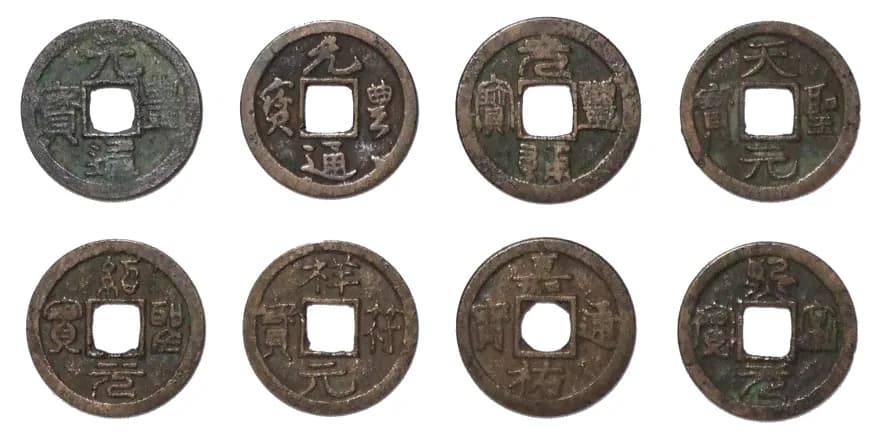
Historical Background of Nagasaki Trade Coins: Copper Coins Supporting the Economy under Isolation
Nagasaki trade coins are a collective term for copper coins exported overseas from Nagasaki, the only foreign trade port during the Edo period's isolation policy. After the Kan'ei era (1624-1644), they were specifically minted for trade settlements, especially with China and Southeast Asia. While gold and silver coins were the main currencies within Japan, copper coins played a crucial role in trade. This unique position is closely related to Japan's economic policy at that time. It is estimated that from the 17th to 18th century, hundreds of millions of these coins flowed overseas annually, totaling in the hundreds of millions. These copper coins circulated widely across Asia, backed by Japan's economic power. This was due to the shogunate's policy to curb the outflow of gold and silver, aiming to adjust the trade balance by exporting copper coins. Understanding this historical context is essential when considering the roles of other currencies, such as those in the Introduction to Edo Gold Coins (Koban, Oban).
Trade Structure and Currency under Isolation: Strategic Significance of Copper Coin Exports
The Edo shogunate established a policy of national isolation in the mid-17th century but did not completely halt foreign trade. Trade with China (Qing) and the Dutch East India Company continued through Nagasaki. Initially, Japan exported abundant gold and silver, but as the outflow increased, the shogunate strictly limited their overseas export. Attention then turned to copper, which was relatively abundant. Copper was refined and minted into copper coins, used as means of trade settlement. Nagasaki trade coins are a concrete manifestation of this copper export strategy. Particularly in China, there was a high demand for copper coins, and Japanese copper coins were welcomed. Thus, the shogunate maintained an economic system that protected domestic gold and silver reserves while acquiring necessary goods from overseas. This role was different from domestic currencies such as Edo silver coins (Chōgin, Mameitagin) Introduction to Edo Silver Coins, which served an international function.
Minting and Supply System of Nagasaki Trade Coins: Shogunate-Led Currency Production
The minting of Nagasaki trade coins was conducted under strict shogunate control. It is believed to have been overseen mainly by the Nagasaki magistrate's office and produced at specific mints. The objective was to clearly distinguish them from the domestic circulation of Kan'ei Tsūhō (寛永通宝) and to stably supply currency exclusively for foreign trade. The minting period spanned from the Kan'ei era to the late 18th century, with various technical improvements and material changes presumed to have occurred during this time. Initially, high-quality copper was used, but as demand increased, the copper quality showed a tendency to become somewhat coarse. This change is believed to have arisen from the need for mass production. Specific production volumes varied by year, but during peak periods, several million coins per year were produced and sent out to the world from Nagasaki. This supply system proves that the shogunate regarded trade as a national strategy, making comparisons with trade coins essential when studying the Types and Values of Kan'ei Tsūhō.
Circulation and Economic Zone in Southeast Asia: Asia's Key Currency
Nagasaki trade coins were more than just export items; they were widely circulated as actual currency in various parts of Southeast Asia. In Vietnam (then known as Annam and Tonkin), large quantities of Japanese coins flowed in and were used daily alongside local 'Annam coins'. They were used in small market transactions and even for tax payments, indicating deep penetration into the local economy. Artifacts have been confirmed in a wide range of areas, including Java and Sumatra in Indonesia, Ayutthaya in Thailand, and around Manila in the Philippines. In these regions, they functioned as substitutes for, or alongside, locally produced 'Pitt coins' (duit coins). The widespread circulation of Nagasaki trade coins demonstrates the tight interdependence of the Asian economic zone from the 17th to the 18th century. Understanding this fact re-emphasizes the importance of the historical and geographical background as one of the Factors Determining the Value of Old Coins.
Relation with Kan'ei Tsūhō and Fine Identification Points: Depths of Distinction
Nagasaki trade coins are very similar in appearance to domestic circulating Types and Values of Kan'ei Tsūhō, requiring specialized knowledge for identification. However, several fine identification points exist. First is the copper quality. Trade coins tend to have coarser, redder copper compared to domestic coins. This is due to differences in quality standards anticipated for mass export. Second is minting precision. While domestic coins have more meticulous finishes, trade coins often have slightly unclear characters and simplified rim finishes. Third is the character style, with subtle differences in the shape of '寛永通寶', particularly characteristic brushstrokes in '永' and '寶'. However, clear distinction can be difficult for many specimens, with disagreements even among experts. With fakes and altered items in existence, deepening knowledge through Complete Guide to Identifying Fakes and Altered Items is crucial.
Excavation Sites and the Scholarly Value of 'Re-imported' Items: Witnesses to History Crossing the Sea and Returning
Nagasaki trade coins have been excavated in large quantities from sites and ruins across Southeast Asia, including Vietnam, Indonesia, Thailand, and the Philippines. These finds are precious archaeological materials that specifically illustrate the trade routes and economic activity scale of the time. Especially in Vietnam's Hoi An site, a prevalent international trading port in the 17th century, countless Japanese coins have been discovered, significantly contributing to research advancement. More fascinating is the presence of 're-imported' items. It is not uncommon for Nagasaki trade coins unearthed in Southeast Asia to return to the Japanese old coin market via European and American antique markets. These specimens sometimes have clear provenience records, enhancing their scholarly value. Items with clear provenance are not only evaluated by Old Coin Grading Standards but also for their historical context.
Detailed Classification by Types and Scripts: The Diversity that Captivates Collectors
Nagasaki trade coins are classified by researchers into multiple types based on script, copper quality, weight, and other features. Broadly, they are divided into three periods. Early trade coins were minted from the Genroku to Hōei periods (late 17th to early 18th centuries) and are generally good copper quality and heavy weight, valued highly in collections, especially rare scripts traded at high prices. Mid-period trade coins were minted in the Kyōhō to Genbun periods (early 18th century), while late period trade coins were minted in the Horeki to Tenmei periods (late 18th century). Over time, as the quality of copper slightly declined, minting became more simplified. Classification by script is highly specialized, with informal names such as 'Shimoya Coins' and 'Shiba Coins', making systematic collecting one of the joys of old coin collecting. Understanding the detailed Varieties and Classification System of Old Coins allows for a deeper enjoyment of the world of trade coins.
Market Price Range and Factors of Fluctuation: Perspectives on Determining Value
The market price of Nagasaki trade coins generally ranges from 5,000 yen to 50,000 yen per piece. However, their value varies greatly depending on various factors. The rarity of the script, copper quality, minting precision, and well-preserved specimens can reach prices from 50,000 yen to 100,000 yen or more. Rare early trade coins, in particular, can fetch high prices. Moreover, specimens with clear provenience records are highly valued for their academic worth. These coins can be offered in Southeast Asian auction houses and global coin auctions in Europe and America, with diverse acquisition routes. As the market trend constantly fluctuates, it is important to gather information, such as Checking Price Trends with Market Charts.
Enjoying Systematic Collecting and Expertise: Collectors Weaving History
Collecting Nagasaki trade coins offers depth beyond merely gathering rare coins. Systematic classification collecting is a major attraction of this field. For instance, 'Regional Collection' classifies coins by excavation regions such as 'Vietnamese', 'Javanese', and 'Philippine', allowing collectors to tangibly experience the economic history and cultural exchanges of each area. Additionally, 'Type Collection' based on scripts, copper quality, and minting techniques traces the evolution of Edo-era minting technology through a research-oriented approach. Further, collecting by early, mid, and late periods, 'Comprehensive History Collection' aids in understanding the historical flow of trade coins as a whole. 'Variation Collection', where multiple identical items are compared for research, attracts attention from scholars of Southeast Asian and Edo-period economic history, with instances where collectors' collections have been cited in academic papers. Understanding the Differences and Approaches of Investment and Collection and advancing collection with a research perspective is the essence of this field.
The Forefront of Nagasaki Trade Coin Research and the Role of Collectors: Contribution to Citizen Science
Research on Nagasaki trade coins is progressing as an international collaborative study between Japanese and Southeast Asian scholars. The mass excavation from Vietnam's Hoi An site, a 17th-century international trading port, greatly contributes to elucidating trade routes and economic zones at the time. However, many challenges remain in the research. One challenge is the ambiguity of the 'Nagasaki trade coins' definition itself. Establishing clear distinction criteria from Kan'ei Tsūhō, used domestically, is a major current issue. Comprehensive classification systems that combine script, copper quality, and excavation site information are sought, and a 'citizen science' approach is beginning, sharing provenance information and detailed data of specimens held by collectors. This rare field allows collectors to directly contribute to academic research through their collections. Those interested might consider participating in the research community while deepening their collections through resources such as Introduction to Coin Auctions and Utilization Methods.