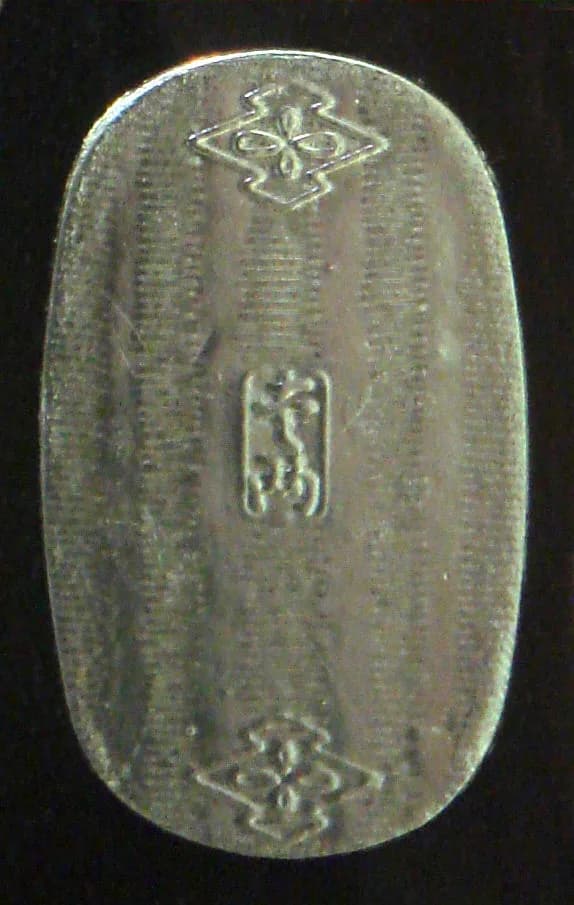
This silver coin, like gold coins, had a clearly stated face value and played a role in unifying the standards of currency circulation.
Introduction and Background of Nanryō Nishugin
Nanryō Nishugin is a counted silver coin unit whose minting was initiated by the Edo Shogunate in 1772 (as a counted silver coin, the Meiwa Gomōmegin [1765] preceded it). Until then, weight-based silver coins were the mainstream, necessitating weighing for each transaction. To resolve this inconvenience, Nanryō Nishugin was introduced as silver coins with a clearly stated face value, like gold coins. This initiative was promoted as part of the economic policies of Senior Councilor Tanuma Okitsugu, aimed at revitalizing commerce and reconstructing the shogunate's finances.
As the name suggests, Nanryō Nishugin used exceptionally high-quality silver with a silver fineness of about 98% (catalog record). The face value was "two shu," equivalent to one-eighth of a gold ryō, setting up a system where eight Nanryō Nishugin could be exchanged for one koban ryō.
Tanuma Okitsugu's economic policy prioritized commerce and trade, placing particular emphasis on laying the foundation for currency system reform. At that time, Japan had a dual-currency system of gold and silver that differed by region, known as the "gold and silver dual currency zone." By attaching a gold-like face value to silver coins, Tanuma Okitsugu aimed to fix the exchange rate between gold and silver and build a unified currency system applicable nationwide.
The inscription on the Nanryō Nishugin, "以南鐐八片換小判一両," signifies more than just the face value; it indicates the shogunate's intention to fix the gold and silver exchange rate. For more details on Nanryō Nishugin, please refer to Nanryō Nishugin.
Historical Background and Evaluation of Nanryō Nishugin
Its unique rectangular shape and the fixed exchange rate inscription "以南鐐八片換小判一両" were highly practical in economic activities of the time. This showed the exchange rate with one gold ryō and was an ingenuity to make the coin's value intuitively understood.
The reverse side's engraving, "定 銀座 常是," indicates that the Ginza was an Edo Shogunate-authorized silver coin mint and that its quality was strictly controlled. This engraving is a crucial clue in authenticating Nanryō Nishugin and enhances its value for modern collectors. Moreover, the signature "常是" shows that Jōzei Daikoku, the Ginza administrator of the time, guaranteed the reliability of the coin.
Nanryō Nishugin used high-purity silver, with a purity reaching about 98% (catalog record). Because of this high quality, many coins have remained in excellent condition for an extended period, which adds to their allure for collectors.
The historical background and high evaluation of Nanryō Nishugin provide essential insights into understanding the currency system of the Edo period. By comparing it with other silver coins such as Nishugin and Ichibugin, one can gain a deeper understanding of the entire monetary system of the Edo period.
Factors Affecting the Value of Nanryō Nishugin
The main factors that influence the value of Nanryō Nishugin include identification based on minting period differences, rarity, and authenticity risk. Primarily, Nanryō Nishugin is categorized into two minting periods: "first minted" and "later minted." First minted coins began in 1772, while later minted coins were reminted from 1828. Identifying coins from these different periods is crucial in market transactions.
The primary means of identification include subtle differences in typeface and the quality of silver luster. First minted coins have sharp edges in their lettering, particularly in intricate characters like "以" or "換," showing fine engraving. Differences in silver refining techniques or finishing processes may manifest as variances in luster.
In authenticity assessment, methods unique to counted silver coins allow for high precision in determining authenticity. Basic methods include measuring weight and dimensions. However, due to the manufacturing limitations of that era, these measurements serve only as guidelines, given the large individual differences.
Moreover, the sharpness of the lettering edges on the "以南鐐八片換小判一両" inscription is a major indicator of authenticity. In counterfeits, letters are often blurred or unnaturally thick, and the uniformity of the material around the edges should also be confirmed. These elements, alongside resources like How to Identify Counterfeits and Standards for Old Coin Grading and How to Read Them, enable more reliable authenticity assessments. Consulting experts for evaluation is also a way to mitigate the risk of authenticity errors.
Thus, the value of Nanryō Nishugin heavily depends on the identification of its condition, rarity, and the precision of authenticity evaluation. Understanding these factors and assessing them accurately is key to determining the market value of Nanryō Nishugin.
Points to Check Before Acquiring Nanryō Nishugin
Nanryō Nishugin is a highly popular item in the old coin market due to its historical background and rarity. However, several practical confirmation items are crucial when acquiring or owning it.
Firstly, since Nanryō Nishugin's circulation was limited to major metropolitan areas such as Edo and Osaka, many existing coins are believed to originate from these regions. Therefore, paying attention to the provenance or origin during acquisition is essential. Having sufficient knowledge to understand and distinguish these differences is required.
Next, understanding market trends is vital. The frequency of auctions is about a few pieces per month, so they are not often seen, but with patience, it's possible to find well-preserved specimens at fair prices. To understand the overall market trend, tools such as checking price trends via market charts are useful, allowing you to analyze past auction prices and current demand.
Also, attention to storage is crucial. For old coins with historical value like Nanryō Nishugin, proper storage methods are indispensable to preserve their value. Referring to Correct Storage Methods for Old Coins, it is recommended to manage humidity and temperature and practice ways to protect against physical damage.
By understanding these confirmation points, you can reduce risks when acquiring and owning Nanryō Nishugin and maintain its value over the long term. Making cautious decisions based on market records and provenance information is required.
The Numismatic Significance and Market Value of Nanryō Nishugin
This coin symbolizes the significant transition from weight-based currency to counted currency and holds great significance in the history of the monetary system.
In authenticity assessments, the confirmation of dimensions, weight, and typeface can to some extent be addressed, making it an appreciated brand for secure engagement.