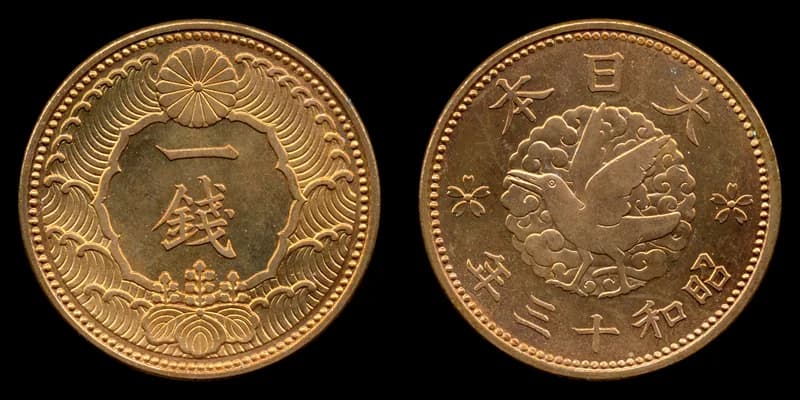
Trade coins were specially minted as a means of settlement for international trade and hold an important position in Japan's history of currency.
The Basic Role and Historical Background of Trade Coins
Trade coins refer to groups of coins specially minted as a means of settlement for international trade. Japan, having long established a unique position within the East Asian economic sphere, produced coins that conformed to international standards in fineness and weight for foreign trade purposes. This history spans about 300 years from the early Edo period to the Meiji period.
Trade coins have a different design philosophy from coins meant for domestic circulation, making them highly attractive for collectors. For instance, the Nagasaki trade coins used under the Edo shogunate's isolationist policy were created with a strong emphasis on circulation in Southeast Asia. Additionally, the trade silver issued by the Meiji government was designed as an international settlement currency to counter the Western trade dollars. These coins are valuable historical materials that reflect the international conditions and economic policies of the time, not merely functional as currency.
Under the Edo shogunate's isolationist regime, foreign trade was limited to Dejima in Nagasaki. Here, trade with the Netherlands and China (Qing) was permitted, and copper, silver, and dried marine products were mainly exported from Japan. Copper, in particular, was widely circulated as a primary means of payment in Southeast Asian countries at the time, with large quantities of Japanese-made Kan'ei Tsuho being exported. The coins minted for export are called "Nagasaki Trade Coins," with estimated figures reaching billions. These coins continue to be excavated from the ruins across Southeast Asia.
Some of the Nagasaki trade coins exhibit poor quality and special calligraphy for export, differing from the usual types and prices of Kan'ei Tsuho. These coins are considered to hold high value as historical materials vividly depicting the realities of international trade at the time.
A detailed explanation of trade coins can be found in Overview of Trade Coins.
Historical Background and Evaluation of Trade Coins
The historical background of trade coins holds an important position in Japan's currency history. Firstly, the "Nagasaki Trade Coins" during the Edo period were representative coins used in copper cash trade with China and Southeast Asia.
Next, the "foreign silver substitutes" from the late Edo to early Meiji period were domestic circulation silver coins repurposed for trade settlements with foreign countries after Japan opened its ports.
Then, the "trade silver" issued in Meiji 8 (1875) was minted to compete with the Western trade dollars.
Additionally, Nagasaki trade coins are frequently traded in international auctions, and their value is being reevaluated.
Conditions Differentiating the Value of Trade Coins
The authenticity risk of trade coins is one significant factor greatly influencing their value. Meiji period trade silver, in particular, holds high value, so many sophisticated counterfeits are circulating. Hence, choosing slabbed examples verified by reliable third-party grading services is recommended to avoid authenticity risks. It is crucial to understand the standards and interpretation of coin grading, especially when visual differentiation is challenging.
In the case of Nagasaki trade coins, the problem is more with their mixing with regular domestically circulated Kan'ei Tsuho than counterfeits. Nagasaki trade coins have distinct features in calligraphy, copper quality, and minting location, requiring specialized knowledge to accurately distinguish them. Thus, when identifying trade coins, referencing Ways to Detect Counterfeits is effective.
Furthermore, though the risk of counterfeiting for Ichibu-gin circulated in late Edo is relatively low, value may decrease due to wear or artificial cleaning. It's essential to verify both source and condition in detail when trading these specimens.
Moreover, as trade silver and Ichibu-gin are primarily made of silver, their material value forms the lower limit of their price.
Therefore, conditions differentiating the value of trade coins include avoiding authenticity risks, confirming condition, and understanding their material value. With these factors in mind, collecting or trading trade coins is essential.
Points to Check When Acquiring Trade Coins
When starting to collect trade coins, beginners should focus on ensuring a reliable purchasing route and understanding the historical background. Especially, Nagasaki trade coins, relatively easy to obtain and trading at around ¥5,000 to ¥30,000 per piece, are suitable as an introduction to collecting. Numerous styles and states of these coins allow collectors to feel the depth of collecting.
The next step in collecting trade coins can be collecting Ichibu-gin. This silver coin used for trade settlement in late Edo with foreign countries serves as a tangible material narrating the tumultuous era of Japan opening its ports and can be acquired in the range of ¥5,000 to ¥15,000. As you progress in collecting, you might also be interested in trade silver. Trade silver requires a budget of over ¥50,000, but ordinary items from Meiji 8 can be purchased for around ¥70,000 to ¥120,000. These silver coins are valued for their beautiful design and international convertibility.
As a key point when acquiring, it's crucial to choose a reliable purchase source. Purchasing from antique coin stores affiliated with the Japan Numismatic Dealers Association or NGC/PCGS certified dealers is recommended. For detailed information, see the Guide to Purchasing and Securing Sources of Old Coins to find a trustworthy route.
Additionally, trade coins are not merely means of settlement but embody the economic turmoil from late Edo to Meiji along with its lessons. In late Edo, the discrepancy in gold-silver exchange rates led to "gold and silver exchange arbitrage," causing Japan's gold outflow. Understanding this context helps deepen appreciation for the historical value of trade coins. Those interested should refer to Introduction to Edo Gold Coins (Koban & Oban).
Finally, proper storage after acquiring trade coins is also important. To maintain the old coins in good condition, appropriate storage is necessary. Refer to Proper Storage Methods for Old Coins to keep your valuable collection in optimal condition.
Why Trade Coins Play a Role in Economic History
At ITTENDO, trade coins are positioned as witnesses to international economic history. These coins serve as testaments of economic activities across different times and regions, establishing their value.
In the market, the demand for trade coins fluctuates due to their historical background and rarity. These elements combine to assign trade coins value beyond mere metal lumps.
Furthermore, trade coins reflect the international economic situation, trade routes, and even political influences of their time. It becomes clear that they hold value beyond just being collectible items, serving as historical documents as well.
Market records show that trade coins are traded frequently. This observation indicates high interest among collectors and investors, whose activities help invigorate the market. This allows real-time tracking of fluctuating market prices and gaining a deeper understanding.
In conclusion, it is confirmed that trade coins' value is formed by their historical background and market demand. How these coins are evaluated in the future will largely depend on both domestic and international market trends. The market records surrounding trade coins continue to be crucial clues for understanding economic history.