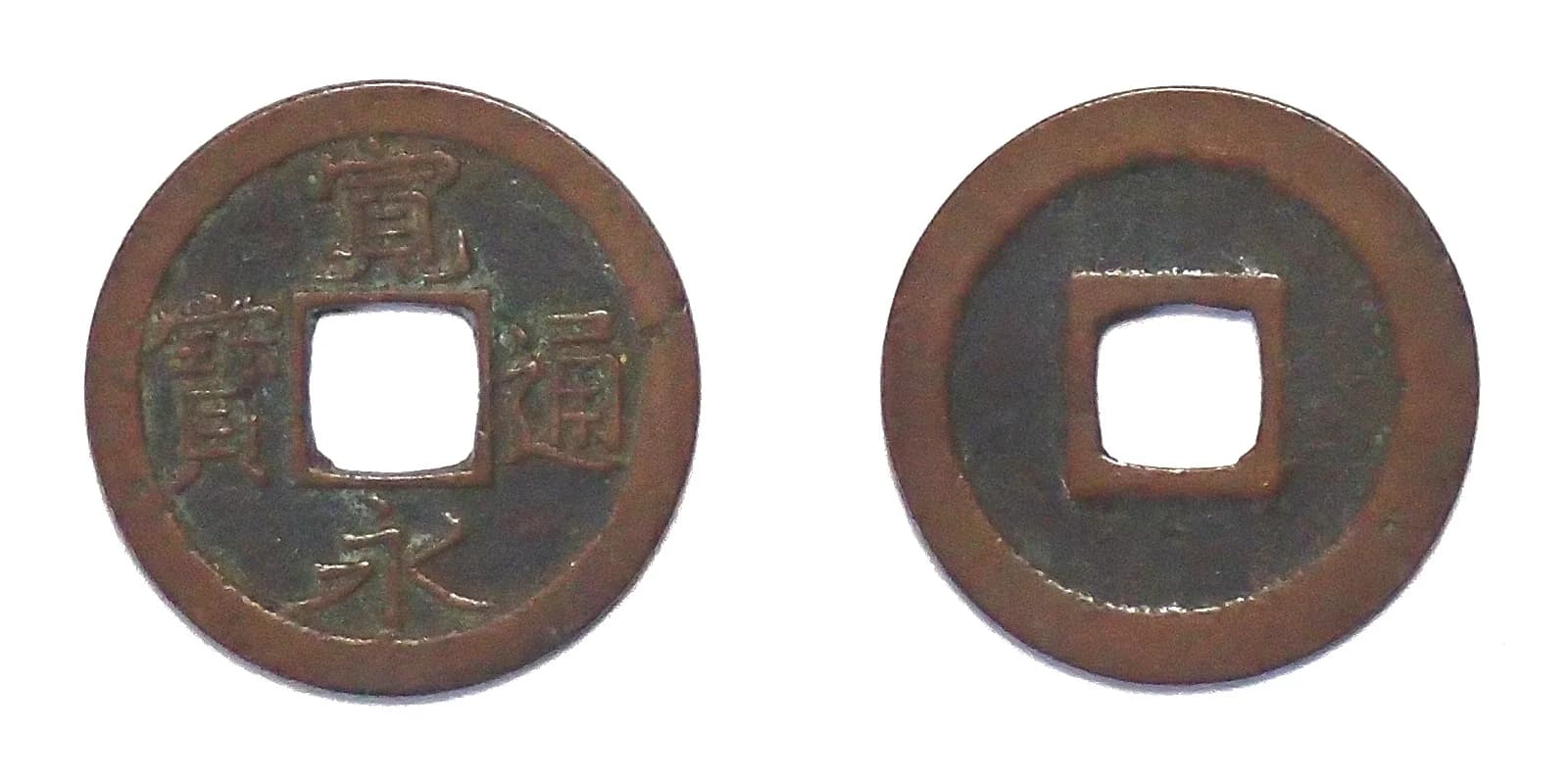
A beautiful gold coin that looked genuine on a smartphone screen. When it arrived, it was nothing but plating. A loss of tens of thousands of yen might have been prevented by checking just one single point.
Prologue: The Pitfalls of Online Purchasing Hidden Behind Convenience
In recent years, with the spread of internet auctions and flea-market apps, anyone can easily buy and sell old coins. There is no shortage of collectors who spend their days and nights staring at their smartphones in search of that rare piece. Yet behind that convenience lurks a serious risk: the reality that the age-old challenge of "being unable to detect authenticity from images alone" is being amplified in the digital age.
Captivated by the beautiful gleam of a coin seen through a screen, a collector places a high bid — only to find, when the item arrives, that it is a sophisticated fake. This kind of tragedy is, unfortunately, anything but someone else's problem. Listing images can be manipulated in any number of ways, concealing the minute characteristics and essential value a coin possesses. A single change in lighting can make scratches disappear, and adjusting the color balance can make a worn coin look like an uncirculated specimen.
This article does not simply sound the alarm that "online purchasing is dangerous." It digs into the structural reasons why judging by images is so hazardous. We provide information useful to all collectors — from beginners to veterans — covering knowledge for spotting sophisticated fakes and concrete criteria for conducting safe transactions. To protect your precious assets and your passion for collecting, let us begin by correctly understanding the reality of online trading.
Recent Reported Cases Involving Online Transactions
As a concrete example, let us look at an incident that occurred on a major domestic internet auction platform in 2023. The item listed was the "Old ¥20 Gold Coin (旧二十円金貨)," struck in Meiji 4 (1871). Known as the pinnacle of modern Japanese gold coinage, a genuine specimen can fetch tens of millions of yen depending on condition — a piece that collectors yearn for.
The seller attached the story that it had "come out of the storehouse of an old family home" and posted multiple high-resolution images. Design details such as the dragon's scales and the chrysanthemum crest were rendered clearly, and at a glance the quality was such that it could be mistaken for the real thing. As a result, bidding heated up fiercely, and in the end an enthusiastic collector won the lot for the high price of several million yen.
However, when the successful bidder received the item and brought it to a specialist authentication body, the merciless verdict came back: "counterfeit." Upon detailed investigation, it emerged that the specific gravity differed slightly from that of gold, and the piece was found to be an extremely sophisticated reproduction cast using the latest technology. The listing images had been photographed from angles that cleverly concealed the texture of the coin's edge and the areas most prone to wear. It was also pointed out that the saturation of the image had been raised to unnaturally emphasize the gold's brilliance. This incident once again threw into sharp relief the danger of conducting high-value transactions based solely on images. Cases such as this are, in the current situation, merely the tip of the iceberg.
Why Can the True Nature Not Be Discerned from Images Alone?
Why does judging by images carry such great danger in online old-coin purchases? The answer looks different depending on the experience level of the collector. Here we explain the structure in multiple layers from three perspectives: "beginner," "intermediate," and "advanced."
[For Beginners: The Limits of the Physical Properties That Determine Value]
The first thing beginners must understand is the fact that the value of an old coin is not determined solely by "how beautiful it looks." The three major elements that constitute value are "authenticity (being genuine)," "rarity (scarceness of surviving examples)," and "condition (grade)." What can be estimated to any degree from images is only a portion of "condition."
The most important element, "authenticity," can never be determined conclusively from images. Suppose, for example, there is an image showing a genuine gold coin and a sophisticated fake (a plated piece) side by side. In digital form, both appear to gleam with the same golden color. Yet the essential difference lies in the "material." Because the genuine coin is made of gold, it has a prescribed weight and specific gravity. Because the fake is made of an inexpensive metal, its weight and specific gravity differ. These physical properties are absolutely impossible to know without taking the coin in hand and measuring it.
Even the "calligraphy style" and "minute characteristics of the die-work" — which are important points in How to Distinguish Fakes and Altered Coins — can easily be misread depending on the resolution and angle of the image and the way light falls on it. A stroke that should be bold may look feeble, or conversely it may be made to look sharp through manipulation. Relying on visual impressions is like fighting on the opponent's home ground.
[For Intermediate Collectors: The Trap of Supply-and-Demand and Grade Assessment]
What intermediate collectors who possess a certain level of knowledge tend to fall into is the psychological trap created by market trends and the balance of supply and demand. Suppose, for example, that the popularity of a particular era's Edo Gold Coins (Koban and Oban) — Detailed Overview surges. A sense of scarcity pervades the market, and prices rise each time a specimen is listed at auction. In such a situation, collectors are driven by the anxiety of "If I don't buy now, there may never be another chance" (FOMO: Fear of Missing Out).
In this psychological state, when an attractive image of a single coin appears, they tend to neglect the careful scrutiny they would ordinarily carry out. Particularly dangerous are fakes made to look like graded coins, or forgeries of the slab case itself. In images, it can be difficult to tell whether a mark is a scratch on the coin itself or a scuff on the slab case. It is not unusual for the price difference between "MS65 (near-perfect uncirculated)" and "MS63 (uncirculated)" to be more than double, yet that slight difference cannot be accurately judged without holding the actual coin and viewing it from multiple angles under light.
One must always keep in mind the possibility that listing images are intentionally "making the item look good." For instance, even if a coin's surface appears to display a beautiful "tone" (an oxide film produced by the passage of time), that may be an "artificial tone" applied deliberately with chemicals. A natural tone increases value, but an artificial tone severely diminishes it. This distinction too is extremely difficult to determine from images without the eye of an expert well-versed in actual specimens.
[For Advanced Collectors: The Flow of Funds and Sophisticated Market Manipulation]
What advanced collectors and investors must be on guard against is the flow of funds behind the market and the distribution channels of more organized and sophisticated fakes. It is important to hold the perspective of "Who is making fakes, and for what purpose?" In recent years, cases have been increasing in which fakes at the level called "super copies," produced using the latest technology in overseas factories, flow into the Japanese market via the internet.
These fakes go far beyond merely imitating the shape: they are extremely elaborate, using molds taken from genuine coins or approximating the ratio of alloys. Such fakes are introduced into the market with stories like "ungraded item" or "piece brought out from the storehouse of an old family home." The reason is that they cannot compete in a market where grading applies. By avoiding scientific authenticity verification through grading, they attempt to profit by stoking collectors' speculative instincts with the idea that "it might just be genuine."
The logic by which prices are generated is also cunning. First they release several relatively inexpensive fakes onto the market, creating an atmosphere that "this type of coin has been appearing frequently lately." They then introduce a high-priced fake — the main target — making it appear as though "a rare coin has come onto the market." This is a technique that exploits market psychology in a way that cannot be seen through by knowledge of Fundamentals of Old Coin Auctions alone.
A Perspective for Correctly Reading Market Charts
When considering an online purchase, many people refer to past hammer prices and market charts. However, misreading this data can itself become a cause of misjudgment. Particularly in individual-to-individual online transactions, prices fluctuate widely, so caution is required.
The basis for viewing price trends is not the lowest or highest price but the "median." At auctions, frenzied bidding can sometimes produce a high price far removed from the going market rate. It is premature to look only at this single "outlier" and conclude that "this coin is worth about that much." The first step toward calmly Checking Price Trends on Market Charts is to gather data from multiple transactions and confirm where the median is stabilizing.
Charts for issues with an extremely low number of transactions require particular caution. In the case of a coin that is traded only once a month, the chart merely shows prices scattered as isolated points. This cannot be said to represent a stable market rate; it should be interpreted simply as a "point that happened to appear" at that price. Such "thin-volume" issues create the illusion that the overall market has been driven up by just one high-value hammer price. To determine whether the market's assessment has genuinely risen (i.e., whether real demand has emerged), it is wise to wait for multiple transactions to be concluded on a continuing basis.
Three Typical Mistakes That Beginners Tend to Make
The less knowledge and experience one has, the more likely one is to suffer a painful failure in online purchasing. Here we introduce three typical failure patterns experienced by many beginners. These are by no means someone else's problem — they are paths anyone may travel. Please do not take this as a lecture, but rather use it as an opportunity to reflect on your own behavior.
- Deciding to purchase based solely on the visual "beauty" in images
The most common failure is deciding to buy based on the first impression given by an image. Sellers are professionals at making their goods look attractive. They apply optimal lighting and photograph the coin from the angle at which it looks most beautiful. Minor scratches or wear can easily be made invisible simply by adjusting image contrast. Beginners are dazzled by that "manufactured beauty" and overlook the more essential value of the coin — its historical background and the naturalness of its wear. If you have ever received an actual item and felt that "it has more scratches than I expected" or "the gleam is unnatural," that is evidence that you have fallen into this trap.
- Underestimating the importance of authentication and authenticity guarantees
Attractive stories such as "items from a famous collector's collection" or "a gem brought out from the storehouse of an old family home" stimulate the desire to purchase. However, there is no objective basis for such stories. Only scientific authentication by a trustworthy authentication body can prove genuineness. It is necessary to learn Standards and How to Read Old Coin Grading and understand how important third-party grading is. Acquiring a "raw coin" — one not in a certification holder or slab case — especially at a high price, is like rowing out into a stormy sea without a map. Individual-to-individual transactions with no authenticity guarantee should, as a rule, always be considered to carry the risk of a fake.
- Reaching for high-value rare pieces before acquiring sufficient knowledge
When people start a collection, everyone dreams of "one day owning that rare piece." However, it is extremely dangerous to challenge the high-price tier without having acquired sufficient knowledge and a sense of the market. The rarer the piece, the more specialized knowledge it takes — knowledge that can capture minute characteristics — to determine its authenticity. Those who produce fakes prepare increasingly sophisticated forgeries for rare items that command high prices. The orthodox approach is to begin with coins such as Tenpō Tsūhō (天保通宝) and Kan'ei Tsūhō (寛永通宝), which are relatively inexpensive, circulated in large volumes, and easy to use as comparative references for learning authenticity. Haste makes waste. Cultivating a basic discerning eye is, in the end, the best measure for preventing significant losses.
An Image Checklist for Detecting Fakes and Altered Coins
So when examining a coin online, where should we focus our attention in the images? While one can never obtain 100% certainty, it is possible to substantially reduce risk. Below is a list of specific checkpoints that should be verified at a minimum.
- Is the condition of the edge (rim/side) rendered clearly?
The side of a coin — the so-called "edge" — is one of the parts that is difficult to counterfeit. Check whether the reeding (serrations) is uniform and whether the wear is natural. Many listing images focus on the obverse and reverse, but trustworthy sellers always include images of the edge as well. If this part is unclear or images of it are absent, caution is warranted.
- Are there any irregularities in the details of the die-work?
Pay attention to the fine details of characters and designs — the terminations, upward strokes, and sweeping strokes of each element. Because genuine coins are produced by die-striking or casting, they possess sharp, bold lines. Fakes, on the other hand, often have weak, faint lines, or unnaturally thick ones, because the mold lacks definition or the detail was engraved afterward. It is important to compare thoroughly against known images of genuine examples. The Complete Guide to Fake Detection is useful for this work.
- Is the reflection of light natural?
Check how light reflects off the coin's surface. If the entire surface gleams in a uniformly flat manner, there is a possibility that excessive cleaning or polishing has been applied. Ordinarily, a coin naturally develops gradations of light and shadow through wear and the passage of time, with areas that catch light and areas that fall into shadow. An unnatural gleam is a sign to suspect processing or plating.
- Are shadows in the image unnatural?
Pay attention to the shadowed areas of the image. There are cases where unnaturally heavy shadows are cast to deliberately conceal something. In particular, cases have been observed where only the area containing a scratch or weak die-work is photographed in darkness to hide it. It is preferable to have multiple images that are well-lit throughout and in which fine details can be confirmed. If there is even the slightest doubt, the courage to request additional images from the seller is also necessary.
Editor's Comment: ITTENDO's Conclusion
Purchasing old coins online has become an unavoidable means of collection activity. However, its convenience and its risks are two sides of the same coin. After the discussion in this article, the criteria we should hold are clear.
First, thoroughly uphold the principle of "do not buy high-priced ungraded items online." Particularly in individual-to-individual transactions with no authenticity guarantee, reaching for a coin that exceeds several hundred thousand yen is tantamount to gambling. Even if a price seems low, that merely reflects the risk of a fake being priced in. If safety is the top priority, the items you purchase should be limited to coins that have been authenticated and graded by a trustworthy third-party body. This is the most reliable defensive measure.
Second, adopt the perspective of "viewing images with a deduction-based approach." Rather than looking at images and accumulating positive impressions — "it's beautiful," "it appears to be in good condition" — the important attitude is to look with suspicious eyes and search for flaws, asking "Is there anything unnatural somewhere?" and "Are there hidden defects?" If there is even one negative point — an unclear edge, blurred details, unnatural light — it is wise to withdraw from that transaction. The more perfect an image looks, the more one should suspect that something may be lurking behind it.
As a final conclusion, for beginners the shortest route to success is first to gain experience in "zones where transaction volume is high and the price range is stable." Rather than immediately targeting a rare, unique specimen, cultivate your sense of the market and your discerning eye with popular coins that many collectors are buying and selling. In the course of that process, letting your body absorb the feel of genuine coins and the natural way they wear will serve as the best possible vaccine against major future losses.
At ITTENDO, we make it possible to track the "present" of old coins based on past auction records and market charts.