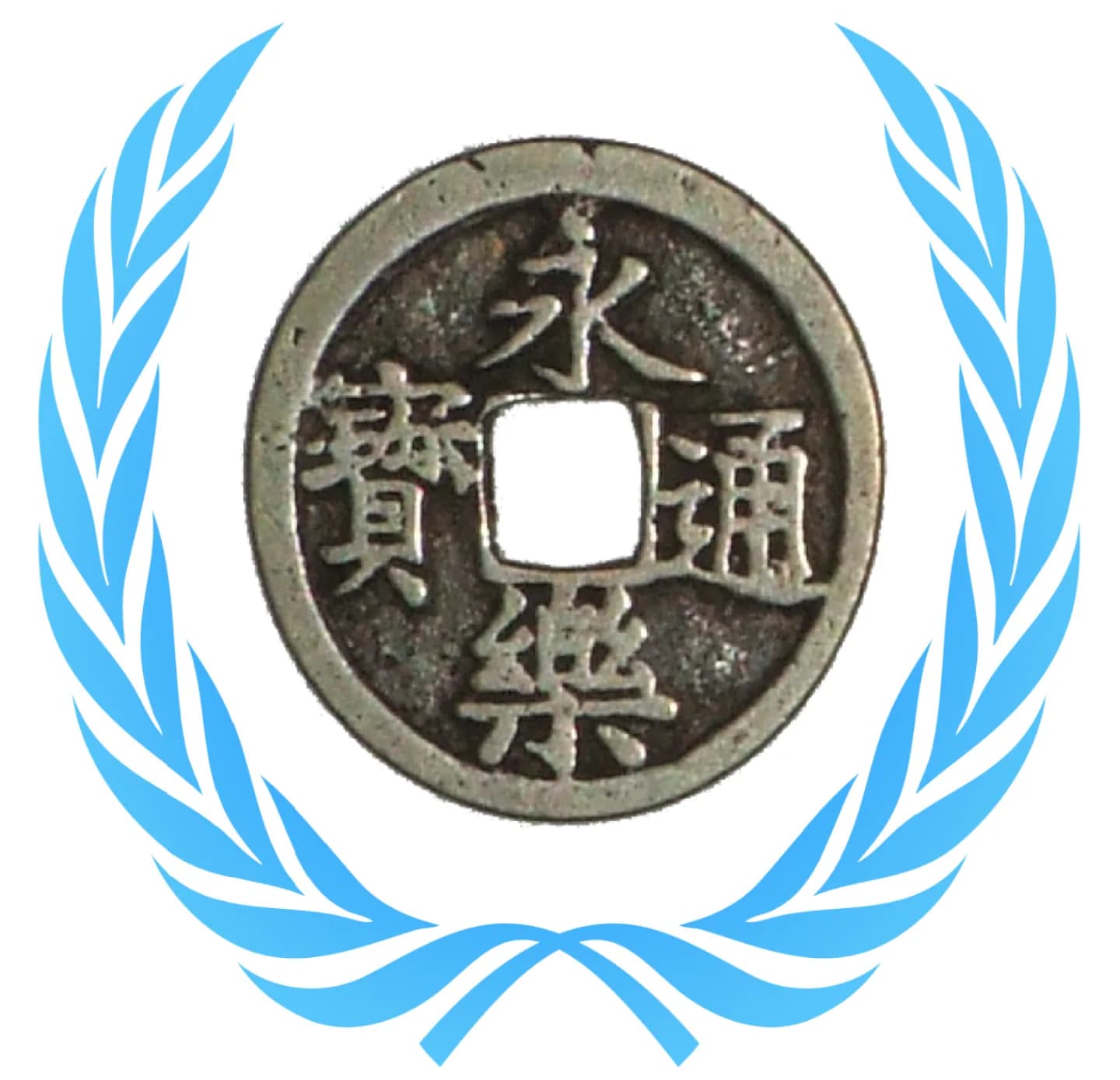
Is that high-value antique coin you are looking at truly genuine? The market is flooded with clever fakes, and even professionals can sometimes find it difficult to tell them apart at a glance. The risk that investors in antique coins most want to avoid is counterfeits.
The Counterfeit Trap Lurking in High-Value Antique Coins — Key Points for Assessing Authenticity
The world of antique coin collecting and investment attracts many people who are captivated by its depth and historical value. However, lurking in the shadows of that glamorous world is always the great risk of "counterfeits." In particular, coins regarded as having high market value tend to be the most frequent targets of forgery. This fact is an important point that collectors and investors must always remain vigilant about.
Skilfully crafted fakes sometimes deceive even experts, not only damaging market credibility but also causing substantial financial harm to buyers. At ITTENDO, rather than simply reporting market trends, we aim to help our readers engage with antique coins safely and wisely. In this column, we take a deep dive into the tendencies of counterfeits, the specific knowledge needed to distinguish genuine coins from fakes, and the key points for assessing value. We hope this will help you develop the eye to discern the true value of antique coins and serve as an aid in protecting your collection from the threat of counterfeits.
The Facts and Trends of Counterfeits Shaking the Market
In recent years, the circulation of counterfeit goods in the antique coin market has become a serious problem. In particular, the spread of online auction sites and flea market apps has made person-to-person transactions easier, and cases in which sellers or buyers without specialist knowledge inadvertently become involved with counterfeit goods are on the rise. For example, there have been reports of cases in which a famous Edo-period gold coin was mass-produced by an overseas counterfeiting group and flooded into the Japanese market.
These counterfeit goods are crafted with great sophistication, imitating the material, weight, dimensions, and engravings, and even replicating the aging process. In particular, "altered coins" — genuine antique coins that have been subjected to slight modifications to enhance their apparent value — are also numerous and must be treated with caution as counterfeits in the broad sense. For example, methods include polishing the surface to make the condition appear better, or adding engravings that should not originally exist. Such counterfeits and altered coins are traded at high prices targeting collectors who lack knowledge, and the current situation is that they threaten the healthy functioning of the market.
Even specialist authentication institutions are kept busy keeping up with ever-evolving counterfeiting techniques. Advances in digital technology have made it possible to manufacture high-resolution replicas, and cases have emerged in which existing authentication methods alone make it difficult to make a determination. Under these circumstances, it has become indispensable for everyone involved with antique coins to recognize the danger of counterfeits and to acquire appropriate knowledge and countermeasures.
Why Has It Come to This? Understanding the Background of Antique Coin Counterfeiting
The problem of counterfeits in the antique coin market arises from a complex intertwining of various factors. Here, we explain the background from the perspectives of beginners, intermediate-level collectors, and advanced collectors respectively, to deepen understanding from multiple angles.
[For Beginners]
What factors determine value? Why do coins that look the same have different values?
The value of an antique coin is determined by its rarity, condition (grade), historical background, and demand. In particular, coins that survive in small numbers or are in exceptionally good condition are traded at very high prices. This "high price" is a major attraction for counterfeiters. In other words, the first tendency for coins that are prone to having counterfeits circulate is that they are "coins with high market value." For example, rare coins such as those described in A Detailed Overview of Edo Gold Coins (Koban and Oban) can have a value of several million yen per coin, sometimes exceeding ¥10,000,000, which means that counterfeiting them promises significant profit.
Even when coins look the same, their values can differ greatly because even minor differences are directly linked to rarity. For example, among Kanei Tsuho (寛永通宝) of the same type, there exist extremely rare "rare pieces" and "scarce pieces" depending on the period and place of casting and the differences in the mother coins used. These differences are often difficult for the untrained eye to distinguish, and that is where counterfeits find their opening. Counterfeiters exploit this gap in knowledge, attempting to profit by imitating high-value rare pieces using inexpensive materials. That is precisely why understanding the types and classification systems of antique coins and scrutinizing minute differences is the first step toward detecting fakes.
[For Intermediate Collectors]
Supply and demand, recent market trends, and rarity within grade tiers
The circulation of counterfeits has a major impact on the supply-demand balance and market trends for antique coins. During periods when a particular antique coin is rising sharply in price, there is a tendency for large numbers of counterfeits to be introduced to the market by riding that demand. This can create a temporarily oversupplied state, and downward pressure may also be exerted on the market price of genuine coins. When the existence of counterfeits is suspected, it is not uncommon for overall market credibility to decline, leading buyers to hold back.
Rarity within specific grade tiers is also a factor that makes coins easy targets for counterfeiting. For example, as explained in Standards and How to Read Antique Coin Grading, coins at a high grade such as MS65 can command prices that are dramatically higher compared to grades of MS64 and below. Targeting this price difference, methods are seen in which a genuine coin of around MS64 is altered to look like an MS65, or entirely counterfeit pieces are sold disguised as high-grade coins. When such counterfeits enter the market, proper price formation is impeded, and collectors bear the risk of misjudging true value.
Recent market trends are also important. If a particular antique coin is rising sharply in price, it is necessary to consider the possibility that the increase has been triggered by an influx of counterfeits. In particular, when checking the price history on market charts, if a sudden sharp rise or an unnatural increase in trading volume is observed, careful analysis is required. A distortion in the supply-demand balance can often be seen as a reflection of the shadow of counterfeits.
[For Advanced Collectors]
Hypotheses about "who is buying," the flow of funds, and the logic behind price formation
The problem of counterfeits in the antique coin market is not limited to the mere circulation of forgeries. Behind it, there are cases involving international counterfeiting organizations or criminal organizations whose purpose is money laundering. They attempt to make illicit funds appear to be legitimate transactions by manufacturing and distributing high-value antique coins. In this case, the perspective of "who is buying" becomes important. If a specific buyer is repeatedly purchasing the same antique coin at unnaturally high prices, it cannot be ruled out that this is a form of "self-dealing" intended to inflate the price of counterfeit goods or to move funds.
Tracing the flow of funds is indispensable for uncovering the true state of the counterfeit goods market. The route from the manufacturing of counterfeit goods, through their distribution, to their eventual sale frequently involves multiple countries and regions. These transactions are often conducted in cash, cryptocurrency, or through cleverly constructed dummy companies, making it extremely difficult to grasp the full picture. The "logic behind price formation" for counterfeit goods also differs from the genuine market. Counterfeiters, while referring to the going rate for genuine coins, sometimes set prices in an unnatural way in order to obtain greater profit. They present attractive "prices" to newly entering participants who lack market knowledge or to those who want to acquire high-value items cheaply.
It is also known that counterfeiting techniques exist that specialize in particular regions or particular types of antique coins. For example, a counterfeiting group in a certain country may be skilled at forging coins such as those described in A Detailed Overview of Perforated Coins (Kanei Tsuho and Tenpo Tsuho). Knowing this information enables a more strategic approach to distinguishing genuine from fake. Understanding the organized movements and the flow of funds behind counterfeiting is an extremely important perspective for protecting the overall health of the market.
Detecting the Shadow of Counterfeits Through Market Charts
The market charts provided by ITTENDO are powerful tools for objectively understanding price trends for antique coins. However, even when reading these charts, it is important to be aware of the existence of counterfeits. In particular, pay attention to the following points when reviewing the data.
The median is the baseline when looking at price trends
Individual hammer prices fluctuate due to a variety of factors, including the state of the market at the time, the seller's reputation, and the buyer's intentions. For this reason, rather than being misled by particular high or low prices, checking the "median" over a fixed period of time is the basis for gaining a more accurate sense of the market. If counterfeits or altered coins enter the market and are traded at abnormally high prices or extremely low prices, the mean and median can be distorted. In particular, for high-value items, care is needed because counterfeits may occasionally be hammered at low prices, making the overall market appear to have temporarily declined.
When the number of transactions is small, it is just "a single data point appearing"
When the number of transactions for a particular antique coin is extremely small, the price data displayed on the chart is nothing more than "a single data point appearing." This means that one particular transaction does not necessarily reflect the overall trend of the market. For example, rare modern gold coins such as those described in An Overview of Modern Gold and Silver Coins (Meiji to Showa) may trade only a few times a year, which is not unusual. In such "thinly traded" issues, if even one counterfeit is hammered at a high price, that data can inscribe an unnaturally high value on the market chart, potentially causing subsequent transactions to harbor mistaken expectations.
Using expressions such as "thinly traded" and "timing when genuine demand appeared"
For thinly traded issues, a single hammer price has a large impact on the market, so particularly careful judgment is required. In this case, it is important to dig deeply into the background information behind that "single data point." It is necessary to confirm the reliability of the seller, the presence or absence of a certificate of authentication, and the buyer's reputation, in order to determine whether the transaction was based on "genuine demand." Genuine demand refers to transactions concluded by buyers who are actually seeking genuine coins for collecting or investment purposes. Transactions involving counterfeits tend to have opaque backgrounds, so it becomes indispensable to gather information from trustworthy auction houses and dealers, with reference to Basic Knowledge of Antique Coin Auctions.
Market charts are ultimately based on past data and do not guarantee the future. For issues where the risk of counterfeits is high in particular, always reading the charts while remaining conscious of the "quality" behind the numbers — not just the numerical values — leads to higher-precision judgments.
Mistakes Beginners Tend to Make and How to Avoid Them
Beginners who have just started collecting or investing in antique coins tend to fall into the trap of counterfeits because they lack knowledge and experience. Here, we explain in specific terms the typical mistakes beginners fall into and strategies for avoiding them. By keeping these points in mind, you will be able to protect valuable assets and enjoy the world of antique coins safely.
Buying based on appearance alone
Many beginners tend to judge the value of antique coins based on their "appearance" alone. In particular, they may be attracted by high-value items that look good in photographs or by an antique feel that evokes history, and end up making a purchase without thinking deeply about it. However, modern counterfeiting techniques are extremely sophisticated, and many counterfeits exist that are indistinguishable from the genuine article at a glance. There are cases where even details such as the material, weight, dimensions, fine details of the engravings, edge treatment, and even aging-induced rust and patina are imitated down to minute details.
Avoidance strategy: It is important first to thoroughly study how to identify counterfeits and altered coins for that particular antique coin through reliable sources. Rather than photos alone, if you have the opportunity to hold the actual item, use a loupe and similar tools to observe the fine details. It is important to develop the habit of seeking the opinions of multiple experts whenever possible, and of gathering information from books and reliable websites.
Undervaluing authentication and genuineness assessment
When purchasing high-value antique coins, another mistake beginners tend to make is to underestimate the process of authentication and genuineness assessment. Cases are seen where, citing reasons such as "authentication fees are expensive" or "it is too much trouble," buyers choose not to select coins that have already been authenticated, or purchase high-value items without authentication certificates through person-to-person transactions. However, this is an extremely dangerous practice. The tragedy of purchasing a counterfeit at a high price, only to later discover it is completely worthless, is a recurring story.
Avoidance strategy: When purchasing high-value antique coins, always choose coins that have been authenticated by a reliable third-party institution, or proceed on the premise that you will submit the coin for authentication after purchase. In particular, understanding the standards and how to read grading for internationally authoritative authentication institutions such as NGC and PCGS and selecting coins encased in their slabs is the safest method. Authentication certificates and grading objectively guarantee the genuineness and condition of antique coins and can be considered essential insurance for investors. Do not make careless choices; the important thing is an attitude that does not begrudge the effort and expense involved.
Jumping straight into high-value items
Driven by the desire to "profit quickly" or "go for a windfall," some beginners with almost no knowledge of or experience with antique coins jump straight into purchasing coins worth hundreds of thousands of yen or even millions of yen. High-value items are certainly appealing, but the risks are correspondingly large, and the risk of counterfeits also increases. The higher the value of an item, the lower the liquidity in the market, and there is also the aspect that when you try to sell it, it can be difficult to find a buyer.
Avoidance strategy: We recommend starting with something like the relatively inexpensive and variety-rich coins described in A Detailed Overview of Perforated Coins (Kanei Tsuho and Tenpo Tsuho), and taking your time to learn the basic knowledge of antique coins and how the market works. Accumulating small successes one step at a time and gradually deepening your knowledge and experience is a wise approach. When making purchases, also consider the correct storage methods for antique coins and do not neglect the preparations needed to protect your precious collection for the long term. Taking it slowly and building knowledge step by step is, though it may seem like a roundabout way, the most reliable path.
ITTENDO's Conclusion: What Can Be Recorded to Identify Counterfeits
The threat of counterfeits in the antique coin market is a challenge that no collector or investor can avoid. However, by having appropriate knowledge, vigilance, and reliable information sources, this risk can be substantially reduced and you can enjoy the world of antique coins safely. As ITTENDO, we organize what can be recorded in order to avoid counterfeits.
Graded antique coins with the guarantee of a reliable authentication institution (such as NGC or PCGS) have had their genuineness and condition confirmed by a third party, and information that can be verified later remains on record. Coins encased in slabs issued by these institutions have had their genuineness and condition evaluated by professionals, and the risk of counterfeits is extremely low, so they can be added to your collection with confidence. In particular, for high-value items, the presence or absence of an authentication certificate greatly affects the value, so choosing authenticated pieces can be considered essential.
For particular high-value items — especially issues showing a sharp price surge in the market — hasty high-value investment should be avoided. Behind a sudden surge, there is the possibility that an influx of counterfeits or speculative movements may be concealed, and purchasing under such circumstances carries the risk of buying at the peak. It is necessary to check multiple data sources and carefully determine whether the price increase is based on "genuine demand" or on suspicious movements. If you feel there are many uncertain elements, it is wise to refrain from purchasing or to wait until more reliable information becomes available.
When reading market charts, it is important to cast a particularly skeptical eye on the hammer price of a single lot for thinly traded issues with low transaction volumes. Such data does not necessarily accurately reflect the overall market trend, and the possibility that counterfeits or altered coins have entered the mix cannot be ruled out. Make sure to gather multiple transaction data points, confirm that the median price is stable, and then make your judgment. A sharp price movement always demands an attitude of probing deeply into its background.
At ITTENDO, we make it possible to track the "current state" of antique coins based on past auction histories and market charts. If you add categories of interest to your Vault for monitoring, you will be less likely to miss changes in the market.
Internal Link Collection for Counterfeit Prevention
- How to Identify Counterfeits and Altered Coins
- The Complete Guide to Counterfeit Detection
- Standards and How to Read Antique Coin Grading
- Basic Knowledge of Antique Coin Auctions
- Types and Classification Systems of Antique Coins
- Checking Price History on Market Charts
- Monitoring Coins of Interest with Vault Price Alerts
At ITTENDO, we make it possible to track the "current state" of antique coins based on past auction histories and market charts. If you add categories of interest to your Vault for monitoring, you will be less likely to miss changes in the market.