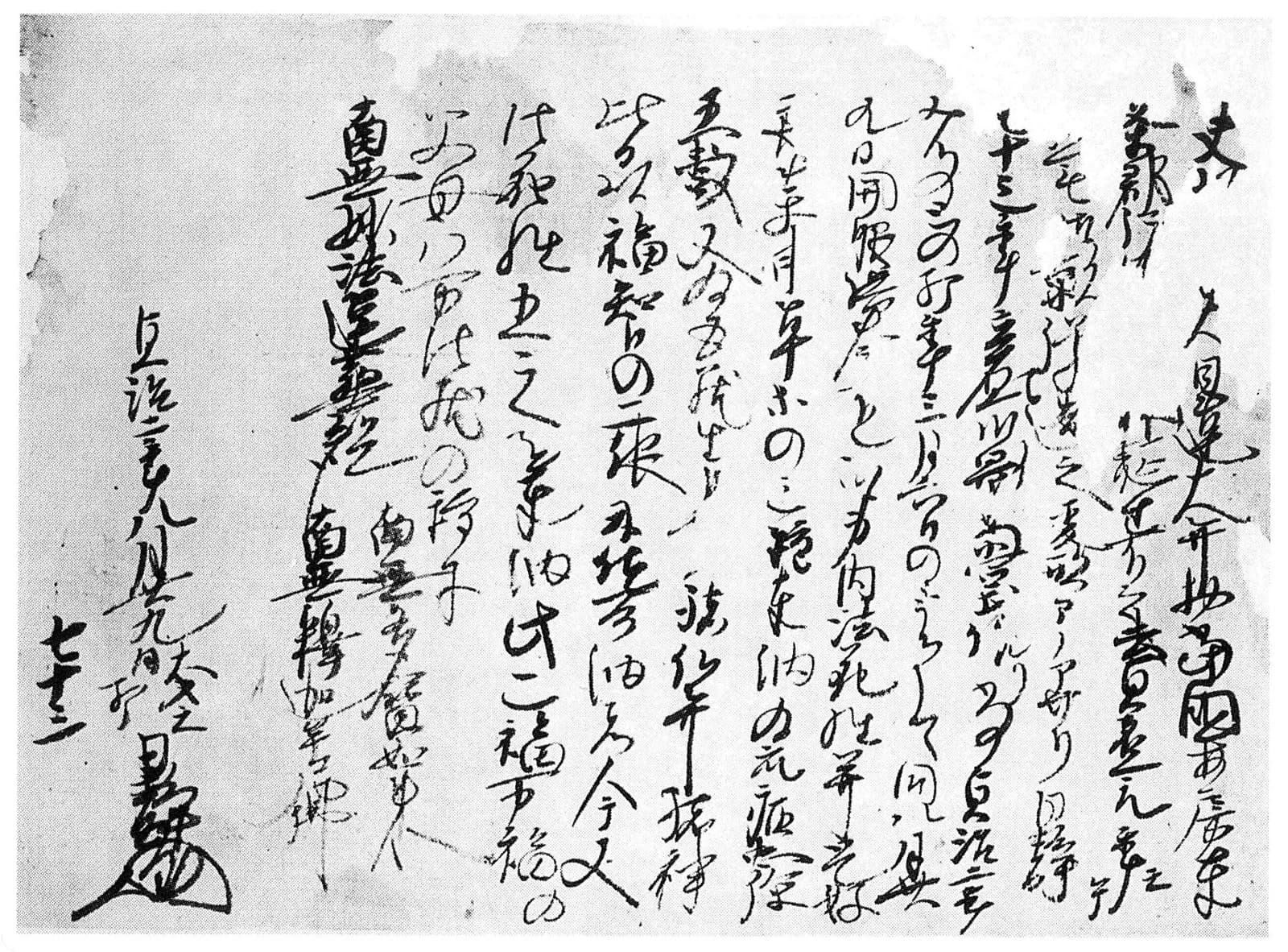
In our "Today's Item Spotlight," we pick one entry from the coin encyclopedia and clearly organize how to assess its market price and value. Today we cover "National Bank Notes" (国立銀行券, Kokuritsu Ginkōken), a representative category of old paper money. National Bank Notes are rare banknotes that symbolize Japan's early Meiji-era financial history, and surviving notes from regional banks in particular command high regard in the market.
What Are National Bank Notes? — Grasping the Basics of Old Paper Money
Old paper money (古札, kosatsu) refers to currency issued on paper, such as domain notes (藩札, hansatsu) and Daijō-kan notes (太政官札, Daijōkan-satsu). Because paper is inherently fragile, preservation condition has a powerful bearing on value. The quickest way to understand National Bank Notes is to first grasp the institutional framework of their era. Foundational knowledge can be reviewed systematically in the detailed overview of holed coins (Kanei Tsūhō and Tenpō Tsūhō).
A crucial perspective when studying old coins is recognizing that currency is a product of the economics and institutions of its time. Understanding who made a coin, in what era, and for what purpose transforms a single old piece from a mere lump of aged metal into a historical document. Old paper money likewise carries the social circumstances of its era, and grasping that context sharpens the accuracy of value judgments.
If you are starting a collection, we recommend first learning the names and characteristics of representative items and viewing as many photographs of actual pieces as possible. Familiarizing yourself with key features—letterforms, shapes, and the tone of the metal—lays the groundwork for later appraisal and market assessment.
The term "old coins" covers a wide range: round cast coins, large-denomination pieces such as koban, modern struck coins, and commemorative coins, among others. Because each has its own material, production method, and circulation history, begin by forming a broad mental map of the major categories and deciding where your interest lies; this makes it easier to chart a course of learning. Delving deeply into one field reveals related items and historical context in a cascading fashion, allowing knowledge to develop in three dimensions.
Three Factors That Determine Value — Rarity, Condition, and Demand
The value of old coins is governed by three axes: "rarity," "preservation condition (grade)," and "market demand." Even within the same type, prices can diverge by several times to several tens of times depending on whether a piece is a seed coin or a circulation coin, differences in letterform, and whether condition approaches uncirculated. The grading framework is explained in Standards and How to Read Old Coin Grading, and the overall structure of value is covered in detail in Factors That Determine the Value of Old Coins.
Rarity spikes for items with low mintage or a limited number of surviving examples. Types produced only briefly, or items that circulated only in specific regions, have inherently limited opportunities to appear on the market and therefore command high valuations.
Preservation condition is judged by the sharpness of lettering and imagery and by the degree of surface wear. Pieces that circulated for a long time show advanced abrasion, and the crisp relief present at the time of minting is gradually lost. The basics of grading are also organized in Fundamentals of Old Coin Grading.
Demand is determined by the depth of the collector base interested in a given item. Popular items have many potential buyers and stable prices, while lesser-known items can see prices move sharply on a single transaction.
These three factors are not independent; they influence one another. A rare item in poor condition will not fetch a strong evaluation, and an item in excellent condition with no demand will struggle to attract a price. Conversely, a piece that combines rarity, condition, and demand is highly regarded by the market and tends to hold its value over the long term. Valuation is, in essence, the work of reading the balance of these three axes in a comprehensive way.
For beginners, the most direct path is to first develop an eye for condition. Rarity and demand become visible with accumulated knowledge and experience, but the ability to judge condition good or poor can be developed relatively quickly by looking at many actual pieces.
It helps to think of condition evaluation as a series of discrete stages. From a piece that retains the crispness of the moment it was struck to one showing advanced wear from circulation, condition changes on a continuum. Because prices shift in steps depending on where along that continuum a piece falls, identifying which stage your piece occupies leads to buying and selling at appropriate levels.
How to Read the Market — Distinguishing the Median from Thin Trading
National Bank Notes are banknotes issued by national banks throughout Japan during the early Meiji period. They were issued from Meiji 6 (1873) through Meiji 12 (1879), and the issuing institutions numbered 153 banks nationwide. The system was modeled on the American National Bank system, allowing each government-authorized bank to issue its own notes. The name "national" (国立, kokuritsu) did not mean the government directly established the banks; rather, it meant they were private banks established under national law.
The system was intended to establish a monetary framework during the turbulent period following the Meiji Restoration and to stimulate regional economies. Initially issued as convertible notes (兌換紙幣, dakan shihei) redeemable for gold coin, they were forced to suspend convertibility as war expenditures from the Satsuma Rebellion grew and the government over-issued inconvertible notes. Relaunching as inconvertible notes (不換紙幣, fukan shihei), they went on to play an important role in Japan's modern financial history.
When examining price trends, the standard is to use the median rather than the average. For items with few transactions, the overall market level can easily be pulled upward by a single high-price sale—a condition known as "thin trading" (薄商い, usu-akinai). Always distinguish between movement driven by genuine demand and a single isolated transaction. The latest price movements can be checked in the market chart for tracking price trends, and the degree of overheating across a category can be assessed with the category heatmap for gauging market temperature.
It is also important not to confuse listed prices with transaction prices. An asking price is simply the seller's preference; the price at which a sale actually concludes is what speaks to the market. Gathering multiple completed-sale examples and examining the dispersion of prices reveals whether a given item trades in a thick or thin market. Past auction records can be reviewed at View Auction Sale Records in a List.
Another factor to keep in mind when reading the market is the difference between trading venues. Prices and the profile of buyers differ among specialist dealers' shops, online auction platforms, and flea-market apps. Because the same item can be priced differently depending on the venue, building a market sense by crossing multiple channels prevents being dragged into overpricing or underpricing formed in a single venue.
Approach numbers with a cool head, but read them with awareness of context. When a hammer price is high, ask whether it reflects the intrinsic value of the item or incidental factors such as the timing of the listing and the presence or absence of competing bidders. The ability to separate these improves the accuracy of market judgment.
The choice of time frame also merits thought. Focusing only on the most recent few transactions makes it easy to be swayed by temporary overheating or cooling; surveying completed-sale trends over six months to several years and separating long-term direction from short-term fluctuation is the prudent approach. Seasonal factors also deserve attention: periods when listings increase offer a wider choice and tend to bring more stable prices, while periods when listings thin out concentrate buying on quality pieces. Knowing the rhythm of supply and demand lets you wait without rushing and choose opportunities on favorable terms.
The Structural Background of the Market — How Supply and Demand Are Determined
The market for old paper money is shaped by the balance of supply and demand. Because no new old coins can be produced, supply is limited to surviving examples. Well-preserved pieces gradually leave the market over time, and rarity tends to increase as the years pass.
On the demand side, conditions fluctuate with shifts in collecting popularity, media coverage, and advances in research. When attention focuses on a particular item, more buyers appear and the market tightens; when interest wanes, transactions thin out and prices settle. Understanding these waves of supply and demand makes it easier to avoid being buffeted by price swings. The concept of market cycle rhythms is also organized in Understanding Old Coin Market Cycles.
The market contains both widely available common pieces and rare items that seldom surface. Common pieces have stable prices and are well suited to beginners, while rare pieces attract competition among multiple collectors each time they appear. Determining which of these two characters applies to the item you are looking at is the starting point for sound buying and selling.
The one-directional nature of supply—steadily declining—creates a market structure unique to old coins. Well-preserved pieces gradually disappear through handling and the passage of time, and no new perfect examples come into being. This one-way rarification underpins value over the long term and is also part of why collecting carries an aspect of historical preservation rather than mere consumption.
External factors that move supply and demand also deserve attention. Events such as exhibitions, press coverage, the publication of research findings, and the release of related books can temporarily boost interest in specific items. A market overheated by surging interest often settles back once that interest subsides, so the composure to avoid chasing peak prices is essential.
The Practice of Appraisal — How to Assess Condition and Authenticity
In the practical work of evaluating old coins, the process begins with examining the letterforms and design style, then measuring diameter and weight (量目, ryōmoku) and comparing them against standard values, and finally assessing surface wear and any evidence of later alteration to determine how well the piece preserves its appearance at the time of striking. Keeping records of measurements provides a benchmark for comparison when examining other pieces and improves the reproducibility of judgment.
Authenticity verification calls for greater care the more valuable the item. Because sophisticated reproductions and pieces with altered condition can appear in the market, judgments must be based on a combination of weight, diameter, and the fine details of letterforms. The key points of identification are summarized in How to Distinguish Fakes and Altered Pieces.
If relying on your own eye alone is uncertain, there is also the option of using a third-party grading service. Certified pieces have their condition guaranteed, which reduces the burden of judgment for both parties in a transaction.
The basic approach to examination is to inspect details under a loupe in a well-lit environment. Check how much of the letter relief remains, and look carefully for any unnatural abrasion or signs of repair on the surface. Examining not only the obverse but also the reverse and the edge provides clues to production method and variety, increasing the confidence of judgment.
Fakes and alterations—particularly sophisticated ones—can be difficult to detect from a single observation. Comparing weight, dimensions, letterforms, and surface against one another, and treating any remaining irregularity in even one area as cause for caution, is the posture that prevents losses. For expensive pieces where judgment is uncertain, it is wise to seek an expert's opinion rather than force a self-judgment.
Having measuring tools at hand raises appraisal accuracy by one level. Use calipers to measure diameter and thickness, a precision scale to confirm weight, and compare those figures against the standards for each item type. Combining qualitative evidence from letterforms with quantitative corroboration from dimensions and weight allows judgments about variety or authenticity to be made with a reasoned basis, even when visual inspection alone cannot narrow down the possibilities.
Storage and the Philosophy of Long-Term Holding
The condition of old coins is strongly affected by storage environment. Moisture and oxidation are the greatest enemies of metal; copper and silver coins in particular suffer discoloration and corrosion in high-humidity conditions. The basic practice for preserving condition is to store each piece individually in a dry location using neutral storage materials.
For those who hold pieces long term, a patient stance—maintaining condition without deterioration and waiting for periods of increased demand—tends to be rewarding rather than reacting to every short-term price movement. In the short run, prices in a thin market move up and down, but over the long run they tend to converge toward the fundamental value of rarity and preservation condition.
Keeping records of acquisitions also supports long-term holding. Noting when, in what condition, and at what price each piece was acquired allows you to track the average acquisition cost across your collection and identify gaps, and it also serves as documentation at the time of sale.
The choice of storage materials also warrants care. Soft PVC cases can damage metal surfaces with their plasticizers, so choose materials that are neutral and free of sulfur compounds. Keeping pieces in a location with minimal temperature and humidity variation, and avoiding unnecessary handling with bare hands, are the fundamentals for preserving condition over time.
Long-term holding is ultimately supported by the accumulation of knowledge and records. Continuing to study the background of each item type and keeping records of how and in what condition each piece was acquired allows the collection as a whole to be developed in a planned way. The more seriously one engages, the more discerning one's eye becomes, and the higher the probability of encountering a piece of genuine value.
Relationship with International Markets
Japanese old coins attract interest not only domestically but also from collectors overseas. In recent years, cross-border e-commerce and online auctions have seen increasing cases of overseas buyers participating in the Japanese old coin market. Well-preserved pieces and items with beautiful designs tend to receive favorable international evaluations.
However, international market valuations often rely heavily on grades assigned by third-party certification services, and the emphasis differs from the detail-classification-oriented approach that prevails in Japan. Depending on the item, the domestic market—which shares the same classificatory culture—may more accurately reflect value, and whether to target domestic or overseas buyers changes the type of documentation required.
Growing international interest also stimulates domestic research and collecting. Overseas attention prompts a reappraisal of the cultural depth of certain items, and two-way exchange makes the overall market's evaluation more multidimensional.
For those considering international transactions, an extra level of care is needed for condition documentation and packaging. Because buyers have difficulty directly examining the actual piece, a grading-service certification and photographs documenting its condition form the foundation of trust. Packaging that protects against changes in temperature and humidity and physical shocks during shipping is also indispensable for ensuring the piece arrives in good condition.
Japanese old coins occupy a place within the broader context of East Asian monetary history. Being aware of connections to the coins of China and Korea reveals the flow of history across national boundaries. This wider perspective not only deepens the enjoyment of collecting but also helps in assessing the value of individual items from multiple angles.
Mistakes Beginners Tend to Make
Three common mistakes are: judging by appearance alone, treating authenticity verification lightly, and diving straight into high-value pieces. High-value items in particular attract sophisticated fakes and altered pieces, making measurement of weight and diameter and careful inspection of letterform details essential.
Another pitfall is mistaking listed prices for the market price. Forming an inflated sense of the market by looking only at asking prices leads to overpaying. The habit of verifying price levels against multiple completed-sale data points supports sound judgment.
Polishing a piece to improve its appearance is also an action to avoid. Because old coins are valued precisely for their original surface and settled coloring, aggressive polishing removes information from the surface and actually diminishes value. Leaving a piece untouched in its current state is, in the end, the choice that protects its value.
Rushing into transactions can itself be a source of mistakes. Good pieces will come around if you wait, and simply avoiding periods of market overheating can dramatically change the acquisition price per piece. Rather than trying to assemble a large collection quickly, building it one satisfying piece at a time leads to a collection that brings lasting satisfaction over the long run.
Avoiding over-reliance on a single source of information is also something to keep in mind. Words such as "rare" or "precious" in listing titles reflect the seller's subjective opinion; actual value is communicated by the condition of the physical piece and multiple completed-sale data points. Cultivating the habit of judging by facts rather than words allows you to stay grounded without being misled by inflated claims and to continue making steady progress.
Carelessness in storage and handling is another trap into which beginners can fall. Storing pieces carelessly in inexpensive materials and causing discoloration or corrosion, or touching surfaces with bare hands and causing damage, means undermining the value of a carefully chosen piece yourself. Directing as much attention to protecting a collection as to building it is the foundation of a collection that will last.
ITTENDO's Conclusion
For beginners, the prudent approach is to start in zones where transactions are numerous and price data is robust. Once you have understood how differences in grade and letterform affect price, adopting a stance of waiting until multiple data points are available prevents mistakes in thinly traded items. With National Bank Notes as well, what matters most is to compare multiple transaction data points without rushing and to cultivate your own framework for judgment.
Collecting old coins is a hobby whose interest deepens the more knowledge you acquire. The process of collecting while contemplating the eras, institutions, and people's lives behind each coin offers a richness that market figures alone cannot provide. By using old paper money as an entry point and gradually broadening both your understanding of value and your knowledge of history, collecting will eventually bear fruit as a reliable connoisseurship.
At ITTENDO, we make it possible to track the "now" of old coins based on past auction records and market charts.
To Know Old Paper Money More Deeply
Collecting old coins is a hobby that traces the history of currency from the Edo period through Meiji, Taishō, and Shōwa, held in the palm of your hand. In the short run, prices in a thin market move up and down; over the long run, they converge toward the fundamental value of rarity and preservation condition. What matters most above all else is to compare multiple transaction data points without rushing and to cultivate your own framework for judgment.