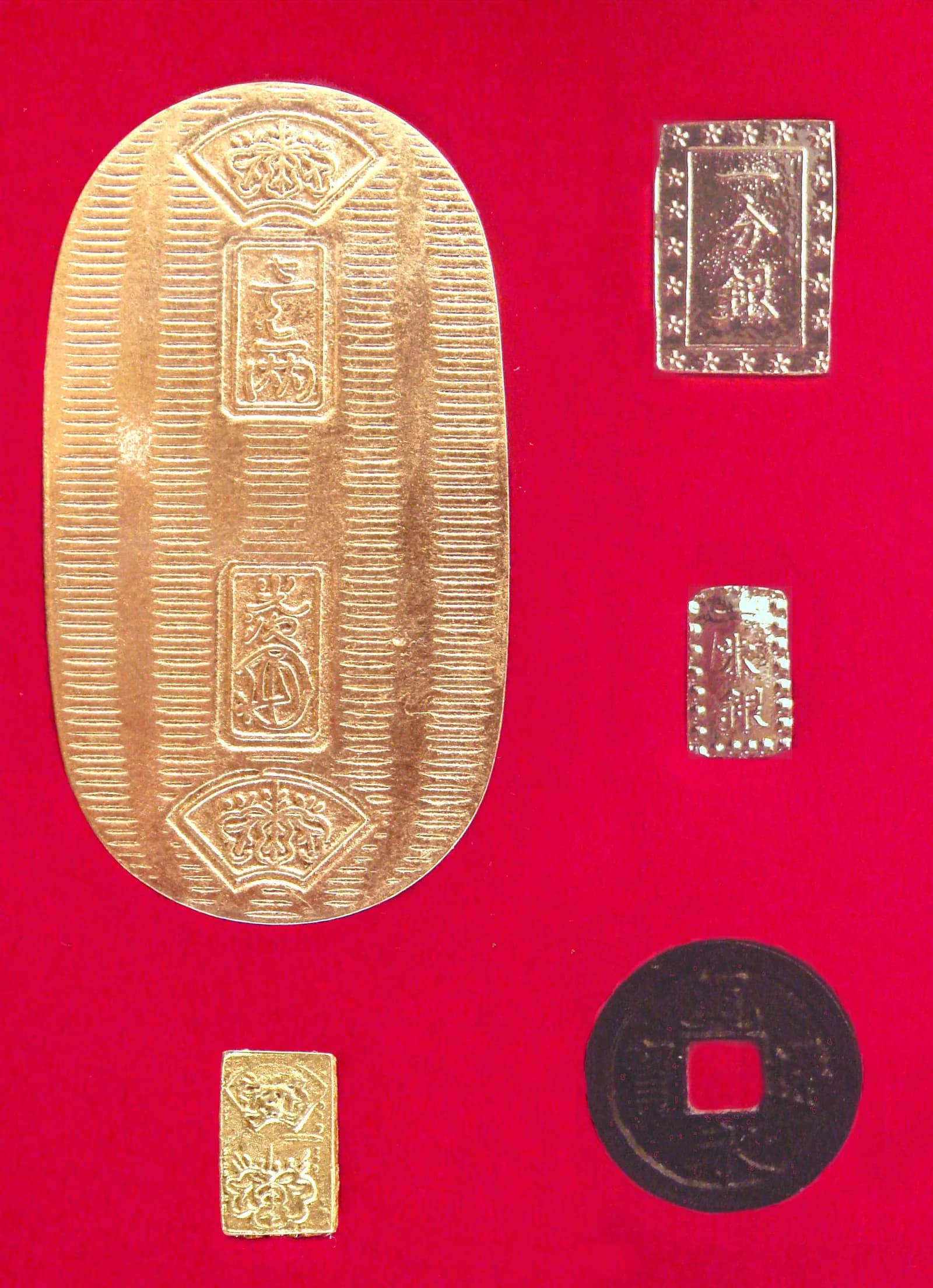
The Complex Face of the Koban Market
The world of ancient coins, particularly the Edo period gold coins known as Koban, is an attractive realm for many collectors and investors. However, its market prices can sometimes be difficult to predict, often showing complex fluctuations. While high-value transactions are reported in the media, Koban also circulate at more affordable prices, leading many to wonder, "What is this Koban truly worth?"
One-Ten-Do aims to demystify the Koban market and provide readers with information that allows for confident decision-making. In this column, we delve into the core of Koban market prices, focusing on two crucial indicators: the "median price" and "transaction volume." By understanding these perspectives, you can move beyond a mere list of auction prices and gain insights into market health and future potential.
News in Focus: Latest Trends in the Koban Market
In recent years, interest in the Japanese ancient coin market, especially Edo period gold coins, has been on the rise. From late 2023 to early 2024, major auction houses both domestically and internationally saw certain Koban being sold at high prices. For instance, well-preserved "Keicho Koban" with high grades from appraisal institutions have fetched prices ranging from several million to over ten million yen. As detailed in An Overview of Edo Gold Coins (Koban and Oban), this is a typical example of how rarity and preservation status significantly impact prices.
Even for common types like "Genroku Koban" and "Tenpo Koban," specific hallmarks or variations from particular minting periods have garnered market attention. These Koban often have fewer transactions compared to standard issues, meaning a single successful bid can have a significant impact on the overall market. The increasing investment interest in Japanese ancient coins from overseas is also a crucial factor shaping current market prices.
Conversely, Koban of the same type but with lower preservation status or appraisal grades generally circulate within a relatively stable price range, serving as accessible entry points for new collectors. This polarization is a major characteristic of the current Koban market, explaining why a single piece of price information can make it difficult to grasp the overall market picture. One-Ten-Do aims to provide more detailed analysis, considering these multifaceted aspects of the market.
Why Does Koban Value Fluctuate?
The value of a Koban is not simply determined by the fact that it is made of gold. Behind it lies a complex interplay of historical background, issuance systems, and modern market mechanisms. Here, we will explain the factors influencing its value fluctuations, from beginner to advanced perspectives.
For Beginners: Factors Determining Value and Why Identical-Looking Coins Can Differ in Value
The most fundamental elements determining a Koban's value are its "type," "preservation status," and "rarity." Firstly, regarding "type," numerous Koban were issued during the Edo period. For example, the "Keicho Koban," ordered by Tokugawa Ieyasu, was an early Koban, followed by "Genroku Koban," "Kyoho Koban," and "Man'en Koban" during the late Edo period, each differing in fineness (gold content), design, and size. As explained in detail in Ancient Coin Types and Classification System, types with fewer issues or fewer surviving early Koban tend to command higher values.
Secondly, "preservation status" is a decisive factor influencing the value of ancient coins. Even for a rare Koban, there can be a vast price difference between one with severe rust or wear and one that retains its original luster from the time of minting. Grading by appraisal institutions provides an objective standard for evaluating this preservation status, with ranks such as MS (Mint State) and AU (About Uncirculated). For instance, it is not uncommon for the same type of Koban to have vastly different prices between MS64 and MS65. This is because even slight differences in condition hold immense value in the collector's market.
Finally, "rarity" is determined not only by the number of pieces issued but also by the number of pieces still in existence. For example, local currencies like "Sado Koban," minted only during specific periods, or Koban that circulated for a very short time, are inherently rare due to their low initial issuance numbers. Moreover, even within the same type of Koban, they can be further classified by the combination of "hallmarks" (kokuin) stamped on their surface, and some specific hallmark combinations can be extremely rare. While they may look similar, these subtle differences tell a story of the Koban's historical background and scarcity, ultimately leading to significant differences in value.
For Intermediate Collectors: Supply and Demand, Recent Market Trends, and Rarity by Grade
To understand the Koban market more deeply, three perspectives are essential: the balance of supply and demand, recent market trends, and rarity by grade. First, the "supply and demand balance" is the market principle itself. The supply of Koban is finite, and no new issues are made. On the other hand, if demand from wealthy individuals and overseas collectors increases, prices will naturally rise. In particular, in recent years, the value of Japanese cultural heritage has been re-recognized, and there is a tendency for overseas investment money to flow in. This increase in international demand is a major factor pushing up overall Koban prices.
Next, "recent market trends" are important for deciphering short-term price fluctuations. If a particular Koban is featured in the media or a prominent collection is put up for auction, interest in that type of Koban may temporarily increase, causing prices to rise. However, such trends do not always last, and prices may stabilize once the market enthusiasm subsides. One-Ten-Do's Check Price Trends with Market Charts feature helps visualize these short-term trends. Analyzing past price movements provides clues to determine whether current prices are at an appropriate level or are merely temporary spikes.
Finally, "rarity by grade" is a crucial concept that further subdivides the value of Koban. For example, Koban graded MS60 to MS63, often referred to as "average condition," are relatively common and their prices are stable. However, high-grade Koban, such as MS64 or higher, known as "uncirculated" or "mint state," are extremely rare and rarely appear on the market. For this reason, a slight difference in grade can lead to a price difference of several to tens of times. In particular, Koban of MS65 or higher are treated as "phantom masterpieces" in the collector's market, and their rarity drives their high prices. Understanding this supply-demand balance by grade is crucial for more accurate market analysis.
For Advanced Collectors: Hypotheses on Buyers, Capital Flows, and Price Logic
To understand the deepest layers of the Koban market, it's essential to gain insight into the buyer's perspective—"who is buying"—the underlying "capital flows," and the "logic" of price formation. Key buyers of high-value ancient coins like Koban include not only general collectors but also ultra-high-net-worth individuals, investors seeking asset preservation, and even overseas institutional investors or museums. Their motivations extend beyond mere collecting; they may purchase Koban as part of a diversified investment portfolio or for their cultural heritage value. Particularly in times of heightened geopolitical risk, investment in physical assets like gold coins tends to accelerate, which can indirectly influence Koban prices.
Tracking "capital flows" is crucial for anticipating market movements. For example, by analyzing the correlation between stock, real estate, and Koban markets, one can infer where capital is flowing from or to. Increased activity in overseas auction houses or a rise in bids from buyers in specific countries could signal new capital inflows. Such information suggests deeper market forces that are not apparent from surface price fluctuations alone.
"Price logic" is deeply rooted not only in supply and demand but also in psychological factors and market structure. Bidding wars at auctions involve not just rational judgment but also collectors' passion, sense of superiority, or the psychological urgency of "if I don't get it now, I might never have another chance." The influence of specific auction houses or recommended items from prominent dealers on market prices cannot be ignored. Furthermore, the establishment of infrastructure such as authenticity appraisal and grading has increased transaction transparency, creating an environment where high-value transactions can be conducted with confidence. Understanding Basic Knowledge of Ancient Coin Auctions and How to Identify Fakes and Processed Items, and grasping the market's infrastructure, are indispensable for advanced collectors.
The Core of Market Charts: Interpreting Median Price and Transaction Volume
When viewing ancient coin market charts, many people first look at the highest or average prices. However, One-Ten-Do advocates for an interpretation that emphasizes the "median price" and "transaction volume." These indicators truly reflect the actual state of the Koban market.
The "median price" is the value that sits exactly in the middle when multiple transaction prices are arranged in ascending order. Unlike the average, it is less susceptible to the influence of extremely high (or low) outliers. For example, if a very rare, high-grade item is sold at an exceptionally high price just once, the average price would be significantly skewed upwards by that single point. However, the median price is less affected by such temporary factors and tends to reflect the "actual price" at which most transactions occur. In markets for items with limited transactions like Koban, this median price is a reliable indicator for assessing the general value of that coin.
Next, "transaction volume" is a crucial indicator of how actively a Koban is traded in the market. When transaction volume is low, as described as a "single point appearing" on the chart, a solitary high-value transaction can significantly distort the overall market perception. This often happens when a specific collector bids a high price for an item they particularly desire, and there's no guarantee that the same price will be achieved in subsequent transactions. This situation is referred to as "thin trading" (usuaikinai), indicating a state of low market liquidity.
Conversely, a consistent transaction volume suggests high market interest in that Koban and the existence of stable demand. If multiple buyers participate in transactions at different times, and successful bids fall within similar price ranges, it can be concluded that the price is based on "real demand" accepted by the market. This "timing of real demand" is a sign that the market is genuinely moving and is crucial information for investment decisions. The higher the transaction volume, the more reliable its median price, indicating greater market depth.
By understanding Criteria and Reading Ancient Coin Grading and comparing the median price and transaction volume of Koban within the same grade range, more accurate analysis becomes possible. For example, if the median price of an MS63 Keicho Koban is stable and its transaction volume is also high, it indicates that the market considers that price range appropriate. Conversely, even if an MS65 Genroku Koban was once sold at a high price, if there are no subsequent transactions, it might be premature to consider that price universal. Combining median price and transaction volume allows for a deeper understanding of the "why" behind market movements, rather than just observing price fluctuations.
"Thin Trading" and "Real Demand" in the Koban Market
In deciphering Koban market prices, the concepts of "thin trading" and "real demand" are extremely important. Understanding these will help you avoid being misled by temporary price fluctuations and develop the ability to see the true nature of the market.
"Thin trading" refers to a state where the transaction volume in the market is very low. In the market for highly rare ancient coins like Koban, it's not uncommon for only a few pieces of a particular type to appear on the market annually. In such situations, a single high-value bid can cause the price on the chart to spike significantly. However, this does not mean that "the entire market supports that price." Rather, it is often the result of a specific collector's strong desire to acquire that one item, driven by a bidding war, and there's no guarantee that a similar price will be achieved when the same Koban is offered again.
Items with thin trading tend to show volatile price swings and pose a particularly high risk for beginners. It is advisable to avoid over-expecting a single bid price or using it as a standard to judge the value of other Koban. In such situations, calculating the median price becomes difficult, or its reliability is low. A reliable median price is only formed when the market matures and a large number of transactions accumulate.
On the other hand, "real demand" refers to prices formed based on solid demand that actually exists in the market. If a Koban is consistently traded at similar grade ranges, across multiple auctions, and within a stable price range, it can be concluded that the price is backed by "real demand." For example, if you can observe active trading of a specific Koban in the Category Heatmap, it is highly likely to indicate the presence of real demand.
In markets with real demand, price fluctuations are relatively gentle, and median prices tend to be stable. Such Koban have high liquidity, and the risk of future resale is also relatively low. When beginners start collecting Koban, it is a wise strategy to begin with types that show "real demand" and have a high transaction volume. Gaining experience in a stable market will gradually enable you to evaluate the risks and returns of thinly traded items.
Thinly traded items hold the potential for significant profits, but they also carry the risk of substantial losses. It is crucial to calmly judge whether the current price is due to "temporary excitement" or supported by "solid real demand," using objective indicators such as median price and transaction volume. The data provided by One-Ten-Do serves as a powerful tool to support this judgment.
Common Pitfalls for Novice Koban Collectors
There are several common mistakes that novice collectors, captivated by the allure of Koban, tend to make when they embark on their collecting journey. Being aware of these pitfalls in advance can help you protect valuable ancient coins and build a wise collection.
Firstly, the most frequent mistake is "buying based solely on appearance." Koban are made of gold, and their luster and historical presence are indeed captivating. However, the value of an ancient coin is not determined by mere aesthetic beauty. As mentioned earlier, the type, hallmarks, year of issue, and above all, "authenticity" are crucial. For example, a Koban that appears to be in good condition might actually be a sophisticated fake created in later times, or a "processed item" that has been excessively polished or drilled. These fakes or processed items, regardless of their appearance, have little to no value as genuine ancient coins. As explained in A Complete Guide to Fake Detection, it is extremely dangerous to judge solely by appearance without specialized knowledge.
Next, "disregarding appraisal and authenticity" is another major pitfall. When purchasing high-value Koban, it is essential to confirm whether it comes with a certificate of authenticity from a reputable appraisal institution or a guarantee of authenticity from an expert. Especially when purchasing from individuals through online auctions, transactions may occur without an appraisal certificate, which carries significant risks. A Koban without an appraisal certificate may not only be difficult to resell if its authenticity is later questioned but, in the worst case, you could end up purchasing a worthless fake at a high price. Always check for the presence of an appraisal and the reliability of the appraisal institution before making a purchase.
Finally, "jumping straight into high-value items" is also a common mistake for beginners. The Koban market offers a wide range of prices, from tens of thousands of yen to tens of millions, and even hundreds of millions. However, venturing into high-value Koban without sufficient market knowledge and experience is extremely risky. High-value Koban carry greater risks, and even a slight lack of knowledge or a misjudgment can lead to significant losses. It is wise to start with relatively inexpensive Koban with high transaction volumes, and gradually learn the market mechanisms and value assessment criteria.
Taking your time to steadily accumulate knowledge and experience is the key to long-term enjoyment of Koban collecting. One-Ten-Do provides information and tools to help you avoid these mistakes, supporting readers in confidently stepping into the world of ancient coins. With correct knowledge and appropriate judgment, Koban collecting will become a richer hobby.
One-Ten-Do's Recommendation: A Smart Investment Framework for Koban
The Koban market, with its historical value and rarity, remains an attractive investment target. However, to decipher its complex prices and make wise decisions, a clear framework for judgment is essential.
One-Ten-Do's recommended framework for Koban investment is "investing in solid grade ranges based on reliable median prices and transaction volumes." Specifically, for beginners, we recommend first learning the basics from An Overview of Edo Gold Coins (Koban and Oban), and then, when checking price trends with market charts, focusing on the MS62 to MS63 grade range. This grade range offers reasonable prices compared to high-grade items, while maintaining good preservation status and tending to have relatively high market transaction volumes.
A high transaction volume suggests that the price is more likely to be backed by "real demand" rather than a temporary surge due to "thin trading." Furthermore, choosing a grade range with a stable median price can help mitigate price fluctuation risks after purchase. While high-grade items of MS64 or higher certainly offer the potential for high returns, their supply is extremely limited, and the market as a whole can be easily influenced by a single successful bid. For beginners, entering this segment immediately is highly risky. It is a wise strategy to first gain experience in a stable market and gradually deepen your understanding of the high-value segment.
Moreover, when considering a purchase, always ensure that a certificate of authenticity from a reputable appraisal institution is included to avoid authenticity risks. Adhering to the ironclad rule of not buying Koban without an appraisal certificate or those with questionable authenticity is the first step towards long-term success.
One-Ten-Do provides access to past auction history and market charts, allowing you to track the current state of ancient coins.
The Future of the Koban Market and One-Ten-Do's Role
The Koban market is not merely about trading antiquities; it plays a crucial role in conveying Japanese history and culture to the present day. Its future will continue to develop with the expansion of collector bases both domestically and internationally, advancements in appraisal technology, and increased transparency in information disclosure. Particularly with the spread of the internet, people worldwide can now access Japanese ancient coins, and the market's globalization is expected to accelerate further.
Amidst these changes, One-Ten-Do, as the "Bloomberg/WSJ of Japanese ancient coins," is committed to providing high-quality information that enables readers to understand the essence of the market and make confident decisions. We aim to contribute to the healthy development of the market by delving into the "why" behind news, rather than just listing facts, and through objective analysis based on data.
Koban collecting offers not only asset formation but also the joy of touching lost history and unraveling past narratives. One-Ten-Do will continue to provide the latest and most accurate information to serve as a reliable compass on this journey. We will keep a close eye on the Koban market trends and strongly support your collecting activities.
One-Ten-Do provides access to past auction history and market charts, allowing you to track the current state of ancient coins.