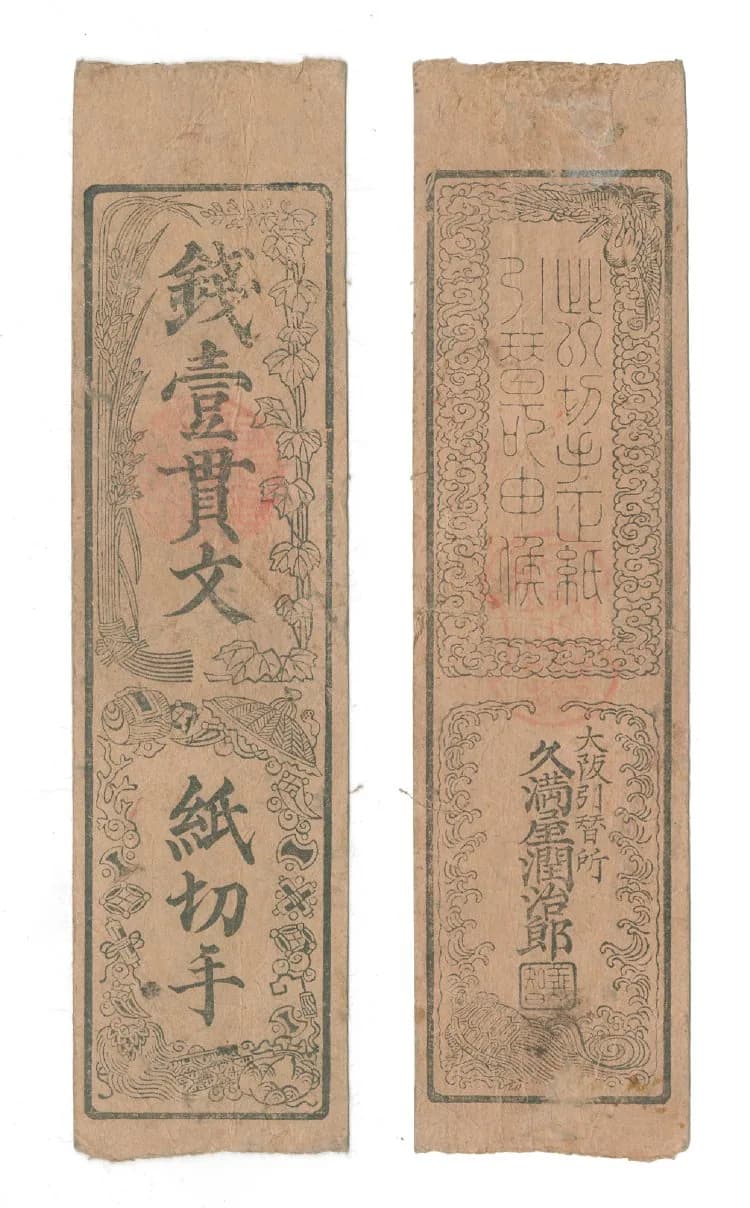
Imagine a day in the life of a coin collector half a century ago.
In the morning, you pull out a specialist reference book to decipher the inscription on an unidentified coin. On weekends, you head to used-book fairs and antique markets in search of hidden treasures. Hard-to-obtain appraisal certificates are replaced by the oral evaluations of a trusted coin-shop owner. Market prices were "unwritten knowledge" communicated only through industry connections and accumulated experience.
A collector's day in 2026 is entirely different. They cross-reference inscriptions, classifications, and variety information in seconds on Coinpedia (古銭図鑑), check real-time prices on the Market Index, and compare auction results across databases using the Price Guide. Then in the evening they share images with fellow collectors in an SNS community — all of this completed on a single smartphone.
This change is not simply a matter of things becoming more convenient. The very essence of coin collecting as a culture is being rewritten: the purpose of collecting, the structure of knowledge, ethical sensibilities, the way fellowship is formed, and how collectors engage with the market. In this article I examine the structure of that change from four perspectives.
1. The Democratization of Knowledge: From Expert Monopoly to an "Open Encyclopedia"
In twentieth-century coin collecting, the greatest barrier to entry was the knowledge gap. Deciphering coin inscriptions, distinguishing varieties, and understanding grading criteria were all highly advanced skills that required years of training and apprenticeship under specialists. This is one of the factors that fixed the impression of coin collecting as a hobby with a high barrier to entry and deterred younger generations from participating.
The digital age has overturned this structure at its foundations. The appearance of NGC and PCGS online grading-standard databases, specialist content sites that serve as substitutes for encyclopedias, and "article-style encyclopedias" such as ITTENDO's Coinpedia has created an environment in which even beginners can access world-class knowledge around the clock.
Yet the democratization of knowledge has both a bright side and a shadow.
The bright side: Groups that previously found entry difficult — younger people, women, those living overseas — are now able to begin serious collecting. The opening up of knowledge is broadening the base of the market and generating new demand.
The shadow: Collectors who "judge instantly on shallow understanding" have increased. The domains of variety knowledge, counterfeit identification, and condition assessment contain many experiential areas that cannot be adequately covered by image searches or AI alone, and the risk of mistaken certainty leading to large financial losses has grown. Paradoxically, in an era of information overload the value of genuine accumulation — reading dozens of specialist books and handling thousands of actual pieces — has grown all the more.
2. Connection to the Market: The New Collecting Ethics Born of Real-Time Data
A glance at the Market Heatmap shows at a glance which categories are currently "Hot," "Cooling," or "Dead." Cross-searching auction records in a database visualizes five-year price trends in minutes.
What has this brought to collectors?
Market information was once "an advantage held only by those in the know." The edge possessed exclusively by antique dealers, auction house staff, and specialist collectors has been leveled by digital platforms. This "leveling of information" has promoted honest price formation (fair pricing), while also generating new problems.
The increase in investment collectors. When market data becomes visible, more people choose collectibles based on the investment logic of "which items will rise in value." A collecting style that prioritizes price trends over pure historical or cultural interest activates the market in the short term, but it carries an inherent "liquidity risk" of large-scale selling when prices fall sharply.
Rethinking collecting ethics. When information about rare items is made public, a "rush problem" occurs in which large numbers of prospective buyers descend simultaneously. Criticism is also growing about rare coins that should be protected as cultural assets being bought and sold repeatedly in short periods for speculative purposes. The twenty-first-century collector is more strongly required to have an ethical self-awareness as a market participant — a perspective on ancient coins as "cultural assets to be passed on to the next generation."
3. The Reinvention of Community: From Geographic Limits to Borderless Fellowship
Twentieth-century coin-collecting communities were geographically limited. Local coin clubs, study groups, and dealer fairs were the main points of contact, and collectors living in rural areas found it difficult to interact with collectors in major cities.
The spread of SNS, online forums, and video streaming has removed this constraint entirely. As of 2026, hundreds of specialized YouTube channels devoted to coin collecting, appraisal, and commentary exist both domestically and internationally, and tens of thousands of posts gather every month on Twitter under the tags "#古銭" and "#日本古銭." On Discord servers, international communities mixing beginners and advanced collectors are active around the clock.
The greatest benefit of this change is the expansion of diversity. The conventional image of a collector was dominated by a skewed set of attributes: middle-aged or older men, high income, resident in Tokyo. Online communities are inclusive of young people, women, rural residents, Japanese living abroad, and foreign researchers, producing venues where diverse perspectives and knowledge intersect.
Interaction with overseas collectors feeds back to domestic collectors the perspective of how Japanese coins are valued internationally. The fact that Meiji gold coins (明治金貨) receive high evaluations at Hong Kong auctions, the distinctiveness of Japanese coins compared with Chinese and Korean coins — these "views from outside" cause Japanese collectors to rediscover the value of their own country's culture, value they tend to overlook themselves.
4. Co-evolution with AI and Technology: Assistive Tool or Threat?
The technology currently having the greatest impact on the coin-collecting field is AI image recognition. Services that return inscription readings, approximate dates, and reference prices within seconds simply from a photograph of a coin taken with a smartphone have spread rapidly.
From a technical standpoint, current AI coin appraisal is limited to "high-speed provision of reference information" and does not match a specialist's visual inspection in fine variety differentiation, condition grading, or counterfeit identification. However, its effect of "democratizing reference information" is enormous. As beginners become able to judge on their own "roughly how much is this coin worth," a reduction in problems caused by fraudulent sales and excessive "treasure treatment" is expected.
The problem is that AI is mistakenly perceived as providing "complete answers." The gap between an AI determination and a specialist appraisal grows larger the higher the value of the piece. For transactions in the range of several million yen, a check by a human specialist such as ITTENDO's photo appraisal service remains indispensable.
AI technology will continue to advance and appraisal accuracy will steadily improve. However, "even as tools become smarter, the judgment, ethics, and understanding of cultural context of the human beings who use them cannot be replaced" — the twenty-first-century collector is required to keep this fact in mind and maintain an appropriate distance from technology.
Summary: The Portrait of the 21st-Century Collector
Building on the above considerations, I summarize the qualities required of an "excellent coin collector" in 2026.
Multi-layered knowledge. While researching quickly through digital means, the collector also holds deep understanding built up through experience with actual pieces and careful reading of specialist books. The simultaneous achievement of "speed" and "depth."
A dual-lens perspective on the market. While making use of price data, the collector retains cultural and historical values that are not swept away by short-term speculative logic.
A sense of duty to give back to the community. An attitude of sharing knowledge, experience, and information about quality pieces within online communities, contributing to the nurturing of the next generation of collectors.
Correct use of technology. Using AI and auction record databases wisely as assistive tools while entrusting final judgments to human sensibility and experience.
A network of trustworthy specialists. Maintaining connections through which information on authenticity, market prices, and rare items can be obtained from multiple angles, through the ongoing cultivation of relationships with coin dealers nationwide.
The digital age has dramatically lowered the barrier to coin collecting. However, in order to enjoy its benefits to the fullest and manage risks appropriately, an "accumulation that transcends technology — a human accumulation" remains as necessary as ever. Collectors who consciously maintain that balance will be the ones who enrich twenty-first-century coin culture.
(This article is a special contribution by Takashi Sato, adviser to the Tokyo Numismatic Society. The content represents the personal views of the author and does not represent the official position of ITTENDO.)
The Portrait of the Digital-Age Collector — Five Axes of Change
The twenty-first-century coin collector operates along five axes that differ from those of the twentieth-century collector. This section organizes how each axis has been redefined.
The first axis is the route of information gathering. In the past, specialist books and oral transmission from specialist shop owners were the central sources of information. Today, online reference resources such as the Systematic Overview of the Coin Encyclopedia, specialist media, and collector SNS coexist, and the wall to obtaining information has dropped substantially even for beginners. At the same time, variation in the quality of information has expanded, and the ability to select reliable primary sources has become a new essential skill.
The second axis is transaction channels. In addition to specialist shops, coin fairs, and mail-order auctions, online auctions, specialist marketplaces, and peer-to-peer SNS trading have become everyday options. As noted in Basic Knowledge of Coin Auctions, risk characteristics differ greatly by channel, so collectors need to use multiple channels in combination while diversifying risk.
The third axis is appraisal and grading. The Current State of International Grading by PCGS and NGC has become widely established in the domestic market, and objective grade evaluation is now taken for granted. The grading system explained in Coin Grading Standards and How to Read Them has become a common language referenced in all contexts of collecting decisions, trading decisions, and insurance valuations.
The fourth axis is community formation. Alongside traditional communities such as local coin study groups and academic societies, broad communities in the form of online reading groups, SNS discussions, YouTube, and podcasts exist in parallel. Ties with the academic world have also strengthened, and, as noted in International Market and Overseas Buyer Trends for Japanese Coins, direct interaction with overseas collectors has become a daily occurrence.
The fifth axis is asset management and succession. Awareness of "handing over a collection to the next generation as a cultural asset" is growing, and the cycle of storage, recording, and disposal is being systematized. The establishment of long-term storage infrastructure as explained in Practical Coin Storage and Humidity Management has come to be recognized as a prerequisite for collecting.
What Is the Essence of Collecting — A Universal Question That Transcends Time
Tools and environments have changed dramatically, but the answer to the fundamental question "why do we collect ancient coins?" does not change across eras. The six motivations — connection to history, resonance with beauty, longing for rarity, the joy of research, belonging to a community, and the succession of cultural assets — are shared by collectors of the nineteenth century and collectors of the twenty-first century alike.
What digitalization has changed is the specific means by which these motivations are fulfilled, not the motivations themselves. Indeed, one might say that as the means of information, transactions, appraisal, and community have been put in place, an environment is emerging in which collectors can focus on their motivations with greater purity.
A New Nexus of Academia, Education, and Community
Twentieth-century coin collecting was often described as a "solitary pursuit." The image was of reading specialist books, frequenting specialist shops, and quietly facing one's collection alone in a home repository. This is by no means wrong, and it captures an essential aspect of collecting. However, in the twenty-first century, a new layer called "open academic activity" is beginning to emerge alongside this image.
Through collaboration with universities, research institutions, and museums, cases in which ancient coins owned by individual collectors are used as subjects of academic research are increasing. This is connected with the expansion of the academic field covered in A General Survey and Research Trends in Modern Japanese Coins, and scenes in which collectors, researchers, and exhibition planners collaborate across boundaries are becoming commonplace.
Changes are also occurring in educational settings. Movements to address practical knowledge such as The Basics of Identifying Counterfeit Ancient Coins within school education, lifelong learning programs, and parent-child experience programs are observed in various places. Numismatics as cultural asset education has until now been mainly within the domain of university specialist courses, but it is now being re-evaluated as a theme that reaches a wide range of people, from middle and high school students to working adults and seniors.
The form of community has also expanded from the traditional two-tier structure of local study groups and national academic societies to a three-tier structure that adds a broad community layer of online reading groups, SNS discussions, specialist podcasts, and YouTube channels. Direct interaction with overseas collectors has also become commonplace, and as noted in The Latest Trends in the International Market and Global Expansion of Japanese Coins, the era has come when domestic and overseas markets are treated as a continuum.
Summary
Recommendations for the Twenty-First-Century Collector
The most important thing for the twenty-first-century coin collector is to consciously distinguish between "means that change" and "motivations that do not change." To accept new tools and markets without losing sight of the fundamental joy of collecting. To consciously maintain — precisely because it is a digital age — the three attitudes of respect for history, responsibility toward cultural assets, and contribution to the community.
Takashi Sato, Adviser, Tokyo Numismatic Society
Recommendations for the Twenty-First-Century Collector
The most important thing for the twenty-first-century coin collector is to consciously distinguish between "means that change" and "motivations that do not change." To accept new tools and markets without losing sight of the fundamental joy of collecting. To consciously maintain — precisely because it is a digital age — the three attitudes of respect for history, responsibility toward cultural assets, and contribution to the community.
Takashi Sato, Adviser, Tokyo Numismatic Society
A Word from a Numismatic Researcher
The twenty-first-century coin collector operates in an environment that the twentieth-century collector could never have imagined. It is an era in which a single smartphone in one's hand gives access to specialist books, auction catalogs, research papers, and collector discussions from around the world. This is the democratization of collecting, and at the same time a struggle with information overload.
What I wish to emphasize as a scholar is that no matter how fully one wields the tools of the digital age, the value of the experience of picking up and observing an actual piece is not lost. The grade evaluations dealt with in Coin Grading Standards and How to Read Them are, in the end, merely auxiliary guidelines for cultivating the eye that judges by looking at the actual object. Certificates, charts, and databases are convenient tools, but they cannot substitute for the essence of collecting — "dialogue with the object."
From an academic research perspective as well, individual collectors are indispensable. It was the passion of individual collectors that maintained across generations the enormous number of ancient coins that museums, universities, and research institutions alone cannot house. The expansion of the international market dealt with in The Latest International Market Trends and Global Development of Japanese Ancient Coins also lies along the extension of the collecting that individual collectors in each country have diligently built up.
The twenty-first-century coin collector bears new responsibilities different from those of past collectors. That responsibility is "to accurately hand down to the next generation the data accumulated in the digital age." Not only the collection itself, but purchase records, appraisal certificates, photographs, transaction histories, and research notes — all of these become invaluable primary sources for future researchers and collectors. Not merely handing over physical coins, but organizing and preserving the records, knowledge, and stories attached to them. This, I believe, is the newly added role for collectors in the digital age.
Records, Succession, and the Next Generation
Finally, I will list three practical matters that collectors should be mindful of on a daily basis. The first is the ongoing maintenance of purchase records; the second is the structured preservation of appraisal certificates, photographs, and transaction histories; and the third is early preparation of a handover plan for the next generation. Alongside the physical storage infrastructure covered in A Guide to Coin Storage, Humidity Management, and Slab Housing, I consider the establishment of these record-succession systems to be a new responsibility required of the twenty-first-century coin collector.
The practice of inheriting respect for history and responsibility toward cultural assets is what defines the twenty-first-century coin collector as a single cultural steward. The more digitalization advances, the more the value of the experience of holding an actual coin in one's hands and directly sensing the breath of its era will, I believe, stand out all the more distinctly.