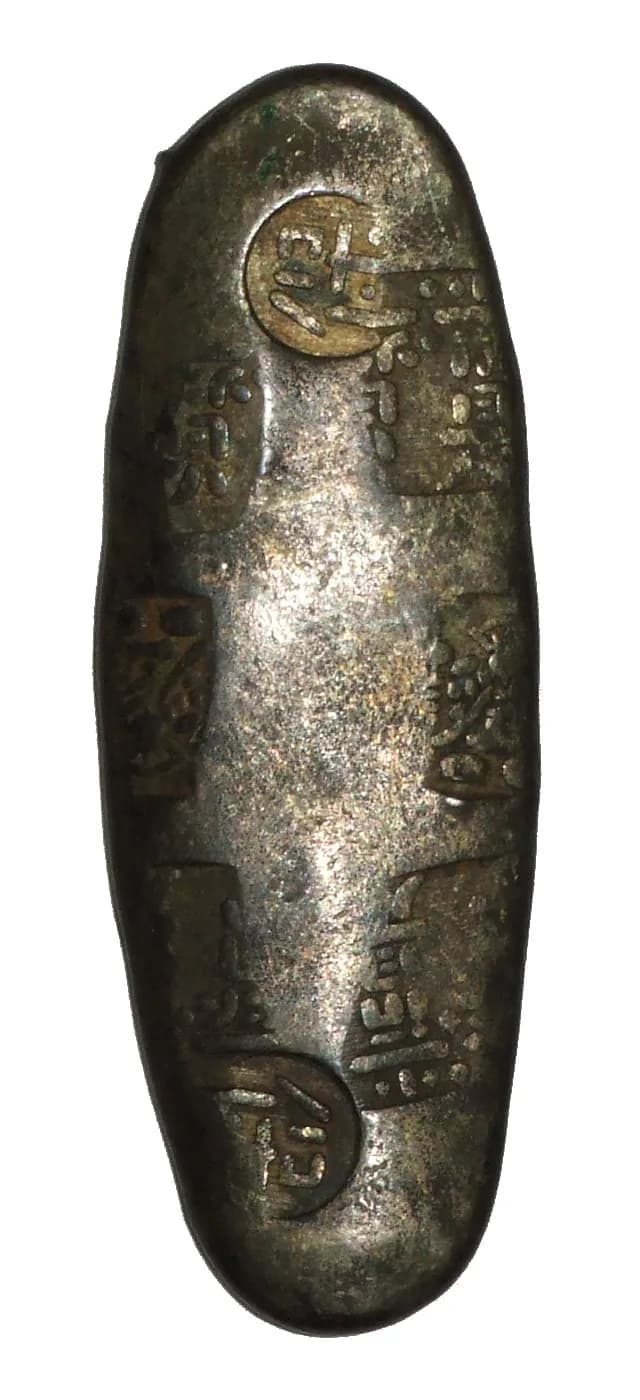
Kyoho Chogin Engraving Research Brings New Perspectives to the Market
Kyoho Chogin, an Edo-period silver coin, enjoys high popularity among numismatists. Its value is determined not only by its condition but also by the type and placement of the 'kokuin' (engravings) on its surface. Recently, a new classification system for Kyoho Chogin engravings has been proposed, sending ripples through the ancient coin market.
This research aims to clarify previously ambiguous classification criteria for kokuin, potentially re-evaluating the rarity of specific engraved Chogin. For example, if certain combinations of engravings are recognized as overlooked rarities, their market prices could transform dramatically. Ichitendo promptly captures such research trends to provide readers with in-depth information, enabling them to accurately understand the current state of the ancient coin market and make informed decisions.
Background and Latest Market Trends of Kyoho Chogin Driving the Market
Kyoho Chogin was a silver coin issued by the Edo Shogunate during the Kyoho era (1716-1736) and widely circulated as a primary currency. As a weighted currency, its weight was paramount, but its value was also guaranteed by the 'kokuin.' Engravings such as the Daikoku deity image and 'Joze' signified official shogunate approval, fueling the curiosity of numismatists for centuries.
In recent years, the ancient coin market has seen growing interest in historically rich and rare coinage. Edo-period silver coins like Kyoho Chogin, with their unique shapes and diverse engravings, enjoy stable demand from specific collector segments. Since the 2020s, with the proliferation of online auctions and specialized dealer transactions, high-grade specimens and rare Chogin with specific engravings have often fetched high prices. For instance, a particular Kyoho Chogin with a rare engraving in excellent condition was reported to sell for several million yen at an auction a few years ago, significantly exceeding initial estimates. Such instances underscore the market's renewed recognition of the importance of kokuin. More details can be found in our Detailed Explanation of Edo Silver Coins (Chogin and Mameitagin).
Explaining Value Creation in Three Layers
For Beginners: The Secret of Value Revealed by Engravings
The value of an ancient coin isn't solely determined by its age. It's a complex interplay of 'rarity,' 'preservation condition,' and 'historical background.' For Kyoho Chogin, 'kokuin' are particularly crucial. Kokuin are marks stamped on the Chogin's surface, typically depicting the Daikoku deity or characters like 'Joze' or 'Ho.' Even seemingly identical Chogin can have drastically different values due to subtle variations in the type, placement, number, and even calligraphy of their kokuin.
For example, while standard 'Ho' character engravings are common, 'zain' (seat marks) stamped in specific locations or rare 'sakasauchi' (inverted stamps) are highly valued by collectors due to their scarcity. This often indicates limited issuance or production only during specific periods or locations. A slight difference in kokuin combination can cause a Kyoho Chogin worth tens of thousands of yen to skyrocket to hundreds of thousands or even millions. This depth is the essence of Kyoho Chogin collecting, and beginners are advised to start by understanding the diversity of kokuin, alongside Ancient Coin Grading Standards and How to Read Them.
For Intermediate Collectors: Reading Supply, Demand, and Market Trends
The market price of Kyoho Chogin is heavily influenced by the supply and demand balance for specific engraved coins. Recent market trends indicate that since the proposal of the new classification system, interest in previously overlooked kokuin combinations has increased, leading to rising prices for some rare engraved Chogin. This is because the research has clearly substantiated their rarity, making them perceived as 'hard to find' by collectors, creating a situation where demand outstrips supply.
Particularly for high-grade specimens (MS64 and above) with specific rare engravings, the absolute number circulating in the market is small. Consequently, when such items appear at auction, fierce bidding wars often ensue. For instance, data indicates that the average auction price for an MS65-grade Kyoho Chogin with a specific rare engraving increased by 15% year-on-year over the past year. Conversely, Chogin with common engravings maintain relatively stable prices, indicating a balanced supply and demand. Therefore, to grasp market dynamics, it's essential to understand the rarity of specific kokuin and Check Price Trends with Market Charts.
For Advanced Collectors: Market Participants and Price Formation Logic
In specialized ancient coin markets like Kyoho Chogin, the logic of price formation becomes more complex. Key market participants include veteran collectors with long histories, researchers who prioritize historical value, and wealthy collectors or investors who consider speculative elements. Academic research publications, such as a new classification system, significantly influence these participants' behavior. When a prominent researcher highlights the rarity of a particular engraving, that information rapidly disseminates through the market and is factored into prices. This can be seen as a process where academic authority creates 'new value standards.'
Regarding capital flows, high-value Kyoho Chogin are often purchased by affluent collectors domestically and internationally. They view these coins not just as collectibles but as historical heritage or part of a diversified investment portfolio. Some specialized dealers also proactively acquire Chogin whose valuations might change based on research findings, anticipating future value appreciation. Thus, academic insights accelerate the market's 'information warfare' and deeply influence price formation in the current Kyoho Chogin market. To decipher market participant behavior, a deep understanding of Ancient Coin Auction Basics is crucial.
How to Read Kyoho Chogin Market Charts
When interpreting Kyoho Chogin market charts, prioritizing the 'median value' is paramount. Chogin prices vary widely depending on the type of engraving and condition, so don't be swayed by isolated high bids. Especially for rare engraved Chogin, trading volume tends to be low ('thin trading'), and prices can temporarily surge due to bidding wars among specific collectors. However, this doesn't always reflect overall market trends, so it's essential to refer to the median value from several years of transaction history to determine the stable value of that particular engraving.
Furthermore, distinguishing between 'real demand' and 'speculative demand' is critical. If transactions are stable over a long period and prices show a gradual increase, it's likely driven by genuine collector demand. Conversely, sudden spikes or concentrated trading during specific periods might indicate speculative activity. As the market is still digesting information about the new classification system, it's crucial to carefully compare and analyze price fluctuations for each engraving type using tools like the Category Heatmap to make informed decisions.
Common Mistakes for Beginners and How to Avoid Them
Several common pitfalls await beginners in Kyoho Chogin collecting. The most frequent is misidentification due to insufficient knowledge of kokuin. For example, mistaking a worn engraving for a rare one and overpaying, or conversely, overlooking a rare engraving and selling it cheaply. Kokuin on Chogin are very delicate, and wear or dirt can make identification difficult, requiring specialized knowledge.
Next, falling for easy claims of 'rarity' is another trap. The world of Chogin contains a considerable number of 're-struck' engravings (added later) or 'fakes/altered items' where lead might be mixed in to falsify weight. These are often difficult for even experts to detect and can lead to significant financial losses. Additionally, misjudging condition is a major cause of failure. As Chogin are made of silver, they are prone to discoloration and corrosion over time, and cleaning or polishing can severely diminish their value. Always refer to evaluations from trusted grading institutions and learn about How to Identify Fakes and Altered Coins, avoiding hasty judgments.
Ichitendo's Conclusion: Kyoho Chogin Collection Strategy Leveraging the New Classification System
The new classification system for Kyoho Chogin engravings presents new opportunities for discovery and value creation in the ancient coin market. However, it will take time for this information to fully permeate the market and be reflected in prices. In the current market, there are still engravings whose valuations are not yet established, making it risky for beginners to immediately invest in high-value rare engravings.
Ichitendo advises that a prudent strategy is to first choose 'beautiful specimens (MS64 or higher)' with 'engravings that already have high established valuations.' These Chogin tend to have a robust transaction history and stable value. For engravings newly identified as rare by the new classification system, rather than rushing in, it's crucial to carefully monitor future market reactions and transaction records. Ichitendo provides tools to track the 'now' of ancient coins based on past auction histories and market charts.